
 On a recent podcast episode of “The Busted Halo Radio Show“, Fr. Dave Dwyer offered some Fatherly Advice to a young caller who was struggling with discernment.
The young man said that he had turned down a great job and the woman he loved to go to a monastery. On the one hand he felt a strong call from God, on the other he had some negative emotion around the things he was giving up. He asked Fr. Dave to give him some insight into what he might do and how he might move forward.
If he had asked you, what would you say? Would you answer one way if he was your son and another if he was a friend or the child of a friend? In the moment — when the question is posed unexpectedly — it can be difficult to know what to say.
The USSCB vocations page has a ‘Frequently Asked Questions‘ section which touches on this:
How should I react if my son or daughter talks to me about becoming a priest, nun, or brother?
If this hasn’t happened yet, maybe you ought to ask yourself how you or your spouse might react. Would it be shock? Concern? Skepticism? Would this be a dream come true for you or your worst nightmare? Knowing and understanding your own feelings and your reasons for them is an important step in knowing how to respond to your son or daughter. The vast majority of teens today feel that if they told their parents they were even “just thinking” about priesthood or religious life, their parents would be completely opposed to the idea, laugh at them, or in some other way not take them seriously.
What you say in that moment may have a long-lasting impact on other’s decisions. Yours may be the voice which confirms someone’s belief or increases their doubts. What is important is to recognize that when someone discusses discernment with you, they are sharing something they’ve probably been wrestling with for a while. They are taking a risk by being vulnerable and sharing their struggle. How you react will influence not only their decision, but also the future of the relationship between the two of you.
If your child says they want to pursue religious life, you may have legitimate questions and concerns. You might believe your child isn’t suited for the life or you may simply be overwhelmed with the unknown. The same can be said of just about any major decision your child makes. Perhaps they intend to marry someone you believe to be unsuitable. Or they might want to pursue a career for the money, while you feel that the job will frustrate and demoralize them. On the other hand, they might be turning down what you believe to be a great opportunity.
No matter what decision they make, they will remember how you made them feel. If you were condescending or dismissive, they’ll remember. If you’re open and attentive — even if you disagree with them — they’ll remember that too. No matter what your personal feelings, it’s best to be thoughtful in how you communicate. The rest of your life is a long time and it’s important to think about the kind of relationship you want to have with your child.
Obviously, Fr. Dave didn’t have to worry as much about the future of his relationship with the caller. Odds are, Fr. Dave and that young may will never speak again. However, Fr. Dave does a great job of modeling how to have a conversation around the topic of discernment. If you’re struggling with how to talk to your child about their vocation, take a few minutes and listen to how Fr. Dave handles it.
 “Do you want
  Two roads diverged in a yellow wood,
 Seems like we don’t post as much here as we did when our son first informed us that he wished to enter the priesthood. It occurred to me that we are in the eye of the storm right now. The quiet time after a storm hits and before the storm ends. He is on his pastoral year getting a taste of what it would be like to work in a parish setting. Next year he will return to D.C. to go back to the seminary and continue his classes toward getting his master’s degree. He is a little more than half-way through this process. We have become accustomed to the thought of his life’s calling and where it might lead him. We are now seasoned seminarian parents who know where he is, how he is being treated, and where he is headed. In a few years however, we will enter the backside of the storm as he approaches ordination. When will he receive ordination as a deacon? What are his responsibilities at this point? What if he changes his mind between the deaconate and priesthood? At his final ordination as a priest, what is expected of us? Are we involved in the ceremony or merely attendees? What is the traditional gift from the parents at ordination? (We think it is the chalice and paten.) Where do you find such thing? Can you get them made special just for your child? Are we expected to have a party for him?
 has been reached after a great deal of discussion with his spiritual director and other formators at the seminary. He has spent many hours in thought and prayer on this topic. Once the thought of discerning out of seminary is on the table, men do not pack their bags the same day. I have read blogs and spoken to seminarians who told me that when serious questions arose, they were counseled to give the decision a little more time, prayer and counsel before making a final decision. Over time, some discerned out, while others chose to continue their discernment.
 Day after day, he will go places and do things that a priest cannot. He will be able to live and share his faith in ways a priest cannot.
 ile he is busy making a living, supporting and nurturing his family, he chooses what kind of jokes to join in on and his attitude toward women in general and his wife in particiular and how he treats people with disabilites.


 He is well schooled to participate in the life of his parish. He may teach Religious Education to children, act as a sponsor in RCIA, run for parish council, act as a lector or extraordinary minister, help run the Cub Scout pack or coach a sport.
 If your objection arises from a belief that your son will not be happy as a priest, take a look at the current research published in: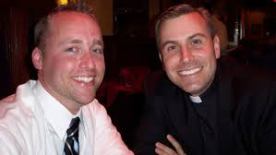
 nd joy which was closely linked to their spiritual health. To be a happy priest necessarily includes having a strong relationhip with God and daily nurturing that relationship with spiritual practices: celebrating the sacraments, private prayer, Liturgy of the Hours, rosary and spiritual reading. Personal celebration of the sacrament of Reconciliation and a relationship with a Spiritual Director also contribute to a healthy spiritual life.
 f celibacy, a positive relationship with the Bishop, having close friends (both priests and liaty), feeling supported by
  other priests, attending priest gatherings, family support of their vocation. making an annual retreat and a regular day off as well as vacation. Each one of these factors is described and discussed in depth if you want to investigate these factors on a deeper level.
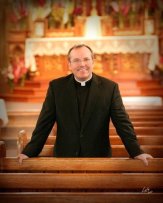 and slanted to show priesthood in a positive light, other social research backs up this study. While researching this concept, I was surprised to find this very topic the subject of a homily by Fr. Jonathan Meyer posted online titled “The Secret to a Happy Life”. Click
  your child’s birth on into adulthood, you worry and care for your child in a thousand different ways that change over time.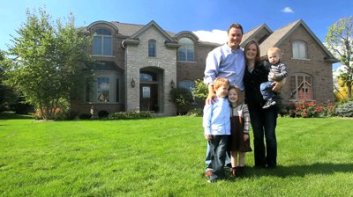
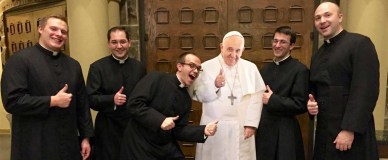 Have you gone to see the seminary or met any seminarians in your diocese? I am always struck by how happy seminarians look. Once you get to know them, it is easy to see that they seem happy in a different way. It is hard to describe but easy to see. They are not happy because they passsed an exam or spring break is coming. Most priests describe their time in seminary as one of the happiest times of their lives.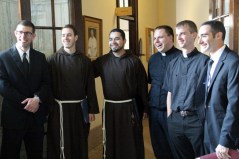


 The first reading for today (December 22, 2106 – Thursday the fourth week of Advent) is from first Samuel (
 As we’ve noted before, the preparation for the priesthood goes beyond just academic and theological work. In fact, those things exist to equip the seminarian to act in the world. The
  Some parents object when their son declares an interest in a vocation. There are lots of reasons given, but I suspect that the root of the problem is lack of understanding of the priesthood. For too many of us priests are remote, mysterious figures who occupy some other plane of existence. We don’t see them as human beings. Fortunately, it’s easy to get past that – just spend some time getting to know the priests in your life.
 We were so taken with the series that I dug a bit and found out it was based on a series of books which had been published in the 1970s. Fortunately, they are available as e-books. The first two
  Recently I was privileged to participate in a week long retreat/seminar at Loyola University on the topic of
  Seminarian Parents