Blog

The Story of a Seminarian from a Mom’s Point of View by Amy V.

One of the best things about this blog is that it provides a place for parents to be brutally honest with how they feel as they watch their son go through discernment. Parents who read these portrayals realize they are not alone.  Every parent knows that it is not about them, but they still need a place to express overwhelming feelings both positive and negative during the process.

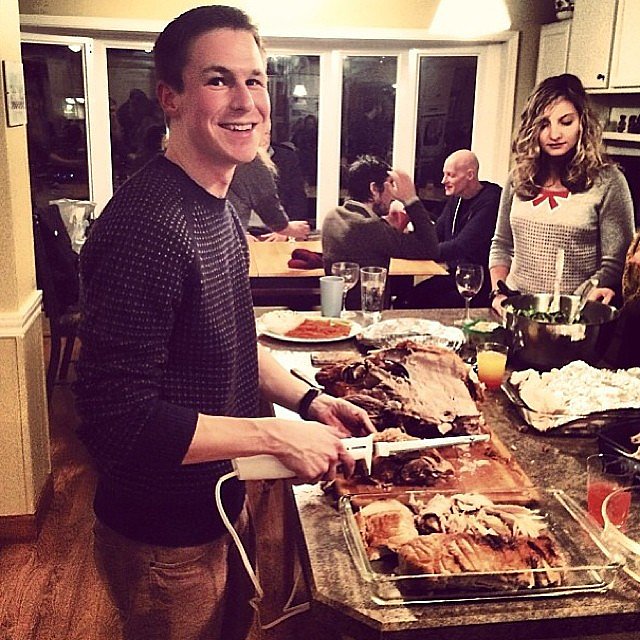
Below is a exert from a post on Amy V.’s blog: Catholicsistas.com about her son’s journey of discernment and entering the seminary. The heart wrenching feelings of love, fear and worry are detailed in an honest portrayal of a mother trying to learn to let go of her son to many unknowns. Since the author included her son’s picture on this blog post, I will include it in this post.

If you would like to read the entire blog post click here:HERE for the site Catholic sistas.com

THE STORY OF A SEMINARIAN…FROM A MOM’S POINT OF VIEW

July 30, 2014

by: Amy V.

We wanted our son to know that even though our hearts overflowed with love for him, God loved him even more. We enjoyed researching, reading, and talking about different ideas to teach him the truths of our faith and to try to prepare the garden of his heart to receive the love of God.

young priest2

One of the ways God showed His love to our son was through the presence of an amazing new priest.  Our son started seeing priests as men who were fully alive and full of joy and men who cared about the small things, like talking to a 9 year old about which Harry Potter book is the best. We never prayed for our son to be anything in particular, but we prayed that he would know, love, and serve the Lord.

When he was in middle school, priests would ask him if he had ever thought about being a priest someday. He hated when people asked him this and from about 8th grade until 11th grade he started saying, “No way!”  My son loved being Catholic, and since he attended a public school, was always looking for ways to defend his beloved faith. So, right before his senior year in high school, my son felt very strongly that the Lord was confirming in his heart a call to discern the Catholic Priesthood with a deliberate and an intentional heart.

mom cringingAt first, he told everyone, and I cringed. “Not yet,” I thought, “Not yet. Don’t tell people yet.” That year, after his initial zeal, I think he felt like maybe God was chaining him in and the only way God would be happy is if he succumbed to the chains. Time passed, he finished high school and went to college, and during this past year the Lord relentlessly pursued him. Slowly, sometimes painfully, and sometimes full of joy, he began to see his calling as an invitation, not a chain. The Lord was offering him a gift.

So what do you say to your son when you know he is seriously worried-mother1discerning this life’s vocation? There is such a fine line. While you want to be supportive, you don’t want to be too excited and honestly, you worry. The life of a priest is not easy, and your son is saying, “Yes, I will consider this completely counter cultural life.” I’ve learned that when a young man chooses to open his heart up to discern the will of the Father in this way, that young man will suffer vicious attacks from the evil one. I’ve learned that moments of consolation can be followed by moments of fear and sorrow over what is being given up.

I’ve learned that people will not hold back what they think of this vocation, for good and for bad. And yet, how proud am I? My child is willing to say, “Yes!” to consider taking up the cross of my Lord, and follow Him. He is willing to sell all he has for the pearl of great price. But if he changes his mind, I want him to know that’s ok. That means it wasn’t his calling.

Mary and baby Jesus

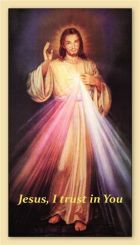
Jesus, I trust in You. That’s all I can say. I love my son, but I love You more. I want Your will for his life, whatever that is. This is so not about me, but I feel like when he is suffering with this decision, a sword is piercing my heart too. Mother Mary, pray for me to be strong like you. Mother Mary, how did you let Him go? Mother Mary, how will I let my son go? I love you, my son. The world is hurting and needs you to show them the way. If you don’t, who will? Who loves people more than you? Who has a smile like you that brings light to the darkest places?

Amy V's seminarian sonLast month I had this notion that I needed to go see the seminary where he was going to be staying. I needed to see if he should bring Tide HE or regular Tide for crying out loud. Due to various circumstances, the Lord said no to this notion. My son has already seen the seminary and he has made this choice himself. He didn’t need his mom going there and hovering. So the Lord showed me, “This is not your journey, this is his. Walk with him, but trust Me and honestly trust your son.”

I cried very hard that day.divine_mercy_78_f_small

There are so many unknowns still, but there is peace because I know he is where God is calling him. When he looks back on his life, the Lord has been calling him for a long time. My son has a heart for the Lord.

God help me to keep walking with him and encouraging him. Help me, dear Lord, as my heart is sad sometimes because my world is changing. It is changing for the better, but it is changing.


Please know the authors of this blog pray daily for parents of discerning sons & daughters to find understanding & peace.

We must have done something right.

When I read blogs of parents encouraging vocations in their children, I can’t help but feel a little inadequate.  These blogs have many wonderful ideas I wish we had done when our children were younger.  For example, I wish we have said    “What do you think God wants you to be?” instead of “What do you want to be?”

As parents,  the list of things we did wrong is much longer than the things we did right. So it is easier to share this short list of things that I can see now had a positive impact in the long run.

I know a religious vocation does not come from anything overt that parents did or didn’t do, but from the Holy Spirit.  With the youngest in seminary, the other 2 appear to have grown into responsible, compassionate and generous young adults.  So, I can’t help but think, “We must have done something right.”   Looking back, I have come up with a list of things that in the long run seems to have had a positive impact.

Number one has to be attending catholic schools.
I know many vocations come from those who attended public schools.  But, after putting 3 children catholic school kidsthrough 12 years of catholic education I can’t help but reflect on all the positive benefits not available in public schools.
The example of the sisters, priests and lay teachers was a powerful factor as well as the transmission of our values and beliefs.  But the other factor is related to the cost and sacrifice related to attending catholic school.  Here are a few examples:

They saw our family sacrifice to pay for catholic education.  When they would complain about not going on a fancy vacation or getting a new car, we would remind them that we have decided to spend our money differently: sending them to catholic school.

2kids in catholic uniforms

Buying school uniforms every year was always difficult. We utilized the donated uniforms at grade school and high school while donating what they had outgrown.  Looking back, I realize the kids never complained.  It was just accepted that this was a way to help with the expenses of a catholic education.

nun teaching boy

We never allowed any disrespect or criticism of priests, religious sisters or any authority figure in their life. If a child made a negative comment in this regard, it was addressed immediately.

3 alter servers

Weekly mass  This is a no brain-er in our home. Even on vacation, we would plan where we would be able to go to Sunday mass.

Supporting and encouraging participating as altar servers and in youth group.

Actively participating in the life of the parish. I can honestly say we did not do this to specifically “encourage vocations.”  At best, we thought it was part of showing them how to be a responsible adult.

boy shoveling snow

Encouraging service to others
They were expected to shovel snow for their grandfather & other elderly neighbors and refuse money.  They helped to gather and deliver donations  to those less fortunate at Goodwill, donating to homeless shelters and pro-life baby showers.

1381656446_Grieving-girl-with-motherUsing a death in the family as a way to share more deeply in the application of our faith.
Our children lost a beloved grandfather suddenly. We shared our sorrow and grief with them, but communicated that we were happy he was in heaven with God.

Please know that the contributing authors on this blog pray daily for parents of discerning sons and daughters to find peace and understanding.

Objection Series: Where did he get this idea? We aren’t even that religious!

If you have read some of the parent stories on this blog, you have seen that a vocation does not have to come from the super catholic families with 12 children who pray the rosary every night.  Everyday, parents try to do the best they can to raise their family saying gradechildren in the faith.  Some days we succeed and some days we fail. Looking back on how we raised our children, it seems the list of things we did wrong is much longer than the things we did right.  Does this sound like your parenting experience?  If so, you may be asking yourself,  “How did this happen in our family?”

Here is a post from a website from the Vocations Office in Newark NJ called New Priest NJ.  There is a category of blog posts labelled “Parents” on the lower right side of the page.  This post talks about how the thought of a vocation can grow in a person’s mind and heart and how it needs to be explored.  Read this excerpt to see how this young man answered his call to discernment.

“Just a Thought”         posted  May 22, 2015

It starts with a thought. It develops with a question. The answer leads to fulfillment.

Many men who have grown up in the Church have, at one point or another, considered the priesthood. Even if it altar boyswas a fleeting moment while serving as an Altar boy or on a Youth retreat, men in the Church consider the priesthood. As these men witness the lives of their parish priests, oftentimes they think, “I wonder what made him want to be a priest…Could I do that?” Unfortunately, for many men, the discernment process ends with that one thought. It is either quickly disregarded or not encouraged enough to develop or bear fruit.

As with any way of life, when we see a good or positive role model, we are drawn to be like that person.

Part of desiring to be like that person naturally brings about the question, HOW are they like that? When we are blessed to have good, holy men in our parishes, it can lead to developing good and holy men discerning God’s fathermike2_outwill in their lives. Growing up, I saw the hardworking priests in my parish that made me feel welcome and that I mattered. I saw how happy they were as priests-administering the sacraments, leading ministry groups, running pilgrimages, and much more. They were kind, thoughtful, faithful, and dedicated to the people of the parish. Their words spoke to my heart and I often thought that I could be happy living a life like that.
It is very common for that thought to enter the head of men with similar experiences. It is that very thought that begins discernment in a man’s life. The thought must be developed and nurtured. It must become a question—“Is Jesus calling me to be one of His priests?”

The question is nurtured through prayer and discernment. For some this question leads them to study and enter into formation in a Seminary. For others this question is considered while working or studying full time.
young man praying in natureEventually, when he asks the question sincerely and is completely open to receiving the answer, the Lord responds. For some the answer is YES, for others the answer is NO. For me, the answer was no, but I can now live out my vocation to married life with confidence that I laid it all on the table—I have no regrets—and I am a better husband and father because I allowed that thought to become a question and the answer brought about fulfillment in my life.

Please know the contributing authors on this blog pray daily for parents of discerning sons and daughters to find peace and understanding.

Welcome to National Vocations Awareness Week!

124px-Spas_vsederzhitel_sinaySince 1976 the United States Council of Catholic Bishops has been promoting growth in vocations through “Vocations Awareness Week”.  Over the years it has moved around the calendar — from the 28th Sunday of the year to the Feast of the Baptism of the Lord and Finally to the first week of November.  Through all of that, the aim has always been to develop a “culture of vocations”.

According to a press release on the USCCB website:

“Encouraging others to recognize the promptings of the Holy Spirit and to follow Christ without reservations are key elements in supporting a culture of vocations,” said Bishop Michael F. Burbidge of Raleigh, North Carolina, chairman of the U.S. bishops’ Committee on Clergy, Consecrated Life and Vocations. “With God’s grace, we can have a positive impact on others who may be open to considering a vocation to priesthood or religious life, by simply inviting them to think and pray about it. Our enthusiasm and willingness to speak directly to others about vocations just might be the conversation someone need to respond to God’s call.”

The USCCB website supports Vocations Awareness Week with a variety of resources including a parish prayer card, homily points for priests and deacons, Holy Hours for Vocations (both with and without a priest) and prayers for vocations.

Please take a moment during your busy week and pray for vocations — both for those who are actively pursuing their vocation and for those yet to be called.

Priestly Formation: Basic Supervised Ministry

When we started this blog, one of Evan’s seminarian brothers commented that there’s a lot to write about at the beginning of the journey and a lot more at the end — but not much in between.

There’s some truth to that.  After the novice year, it’s mostly about being a graduate student.  Like all graduate students seminarians have books to read and lectures to attend and papers to write and tests to take.  Some of the content is what you’d expect; close readings of scripture and a good understanding of Christian history.  Some of it, though, is more practical that you might realize.

Students preparing for the priesthood at CUA are required to take a two semester course called Basic Supervised Ministry.  This course is practical in every sense of the word.  Much like the clinical rotations of those training for health care, the Basic Supervised Ministry course gives those in formation the opportunity to learn and practice the skills involved in being a minister.

The course descriptions sums it up this way:

652A: A student spends a minimum of four hours each week at a designated ministerial placement and two hours in a supervision seminar. Through the use of verbatim presentations, the seminar explores communication skills, interpersonal dynamics, theological reflection on issues raised, and the student’s emerging pastoral identity. Students receive a written evaluation at the end of each semester.

652B: Building on TRS 652A, the seminar explores how to communicate the gospel in an appropriate, pastoral, caring way. Through the use of verbatim, video and role-play, attention is given to the process of theological reflection on ministerial encounters. Students receive a written evaluation at the end of each semester.

In simple terms, this means the student is assigned to go into a pastoral setting such as a hospital to minister to those in need.  After each encounter, they document and reflect on their experience in writing so they can discuss it later in a classroom setting.  As the course descriptions note, they also use video and role-playing to further hone their skills.

It sounded pretty intense to me and, I expect it can get that way at times.  I was encouraged, though, by a recent blog post from Msgr. Charles Pope.

As a younger priest I felt a lot of pressure to “have the answers” when tragedies occurred or when people experienced persistent setbacks in their lives. In more recent years I’ve learned to say less and to be more willing to sit quietly with people in their pain. To be sure, we have some answers, but explanations are poor substitutes for understanding and acceptance. Whatever explanations I can offer still leave even more things unexplained.

This seems consistent with the two principle texts that Evan is using; Availability and The Good Listener.  In the end, it seems, the beginning (and perhaps end) of ministry is the simple act of being mindfully present to those who are suffering and need a companion on the journey.

Objection Series: “He will be so lonely!” or The difference between being alone and lonely

Priests are surrounded by people all the time.  Their entire role is to interact with people.  A priest can be so busy with people that it may difficult to carve out time alone for personal prayer each day.

Everyone feels lonely at times in the course of any vocation.  How you perceive it and utilize an established network of resources can influence having a negative or a positive experience of being alone. Knowing that you have established strong resources in friends, family, peers and mentors can go a long way when feeling “lonely”.

Being alone does not necessitate feeling lonely. Everyone spends time alone at work and at home.  In a busy life, time alone can be viewed as either an oasis or a burden based on your perception.

alone in a crowd

You can feel lonely even when surrounded by people if you do not feel connected or engaged in the relationship.  There can be plenty of loneliness in marriage while sleeping in the same bed.  Every parent has wanted even a few minutes alone and found that the bathroom is not even a refuge when you have small children.   Some mothers get up early just so they can have some time alone before the chaos starts.

A Network of Support

sems cheering

Suppose you spent between 6 –  8 years in college and graduate school with everyone having the same major and career goal.  Your school was small enough that you got to know the guys who are ahead and behind you.  In this school, you sems prayingspent a lot of time together in class and studying together since everyone took the same courses over the years.  Your school had a very structured schedule so students were able to spend quality time with each other several times a day at events everyone found  meaningful.   You would have a pretty wide circle of friends and acquaintances. Depending on your personality, you would have built some strong friendships.
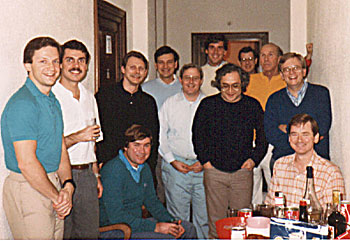
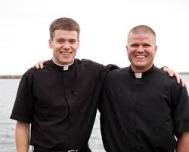
Now suppose that every year, many graduates are hired by the same company.  Over time, many guys you knew in graduate school are working for this company.  They may be located at different offices in the same area, but you are all doing the same work, have the same challenges and concerns as you grow in your new role, learn new skills and begin to master challenging assignments.

fraternal meetings

Suppose your employer asked you to meet periodically with some of your peers to support and encourage each other.  You also are expected to meet periodically with a more senior member of the staff as a mentor.

How connected would you feel to these colleagues whom you have known for years?

Feeling connected with others who support you is a significant benefit when someone is feeling lonely, whether alone or surrounded by people.

Not many people have these built- in opportunities for support and fraternal relationships in their career.  The closest I can compare this to is the military.  The people you go through boot camp with and then deploy together always have a special bond.  It is easy to see how these people would stay in touch and reach out to each other in times of need.

2 priests

Besides the relationships with family and friends, a brother priest can provide support and understanding on a different level when needed.  One  needs to know when to ask for support from the right resource.

If you are a little puzzled by this analogy, here is the key to the terms in bold:

College and Graduate school program =  Seminary

Career goal = Priesthood

Quality time = Liturgy of the Hours, Mass, sports etc…

Company  = Diocese

Offices =  Parish assignment

Employer/Boss  =  Bishop

Meeting periodically with peers  = Fraternal events, formal and informal gatherings

Mentor =  Spiritual Director

Colleagues/Peers = Brother priests

Please know the authors pray daily for parents of discerning sons and daughters to find understanding and peace.

Objection Series: “I will never see him, especially on the holidays!”

Are you suffering from the delusion that your adult children will come home for every holiday?   Let’s have a little reality happy-family-and-grandparents-handing-out-presents-on-christmas-daycheck on the “I will never see him on the holidays” objection.  Compare the circumstances of a married son to a son who is a priest in your diocese.  I cannot speak about a son or daughter in a religious order, so I will let the other contributing author provide insight into that situation.

Every year, you may have had the pleasant or not so pleasant discussion with your spouse on which set of in-laws to visit for which holiday. This conversation can start as early as summer and be revisited for months.  Once grandchildren are in the picture, this only increases the stakes for all parties involved.    Some couples try to keep everyone happy by eating 2 meals and running between both families.  Some families take turns between Christmas and Thanksgiving, so you end up on the phone for at least one holiday each year.  Others live too far away to even visit regularly.  All this adds up to holiday stress.

carving turkeyNow, suppose your son is a priest in your diocese.  In Fr Brennan’s book “To Save a Thousand Souls”, he quotes a priest on this topic:

“When my siblings have to divide their time with the in-laws at the holidays, it ends up being just me at home carving the turkey with Mom and Dad.”

Sure, he will be busy on Christmas Eve and Christmas morning and I doubt you will see him between Palm Sunday and Easter.  But he will most likely be at your house for every holiday meal at some point.  The reality is that you will most likely be able to spend far more holiday time with your son if he is a priest in your diocese than a married  son.

I will be posting soon on a related the objection:  I will be losing him to the Church or I will never see him.

Please know the authors of this blog pray daily for parents of discerning sons and daughters to find understanding & peace.

Objection Series: “He will be so overworked” or A vocation vs. a job

This objection is a good example of how the vocation of parenthood and priesthood have different but closely related demands.   You have more in common with your priest than you think.   If you haven’t watched the video in the post “Everyone has 3 Vocations”, click HERE  to get a little background.

 Vocation vs. Job

Your job is what you do to earn a living.  You may love it or hate it.   But your primary vocation is a spouse and parent: it is who you priest and school childrenare.   As your vocation, it is who God created you to be.   For us as laity, your job and your vocation are 2 separate things.  For a priest, they are one and the same.   I don’t know if that is better or worse, it’s just a fact.  The activities of their day are seamlessly woven into who they are as a person.   We can leave our work at the office and switch into parent or spouse mode at home.

Have you ever seen a working mother take a phone call from her child at work?  She completely changes: her voice, her language, her work persona falls away instantly into being “Mom”.

Look at your vocation as a parent.  Do you ever stop being a parent?   No, being a parent is a 24/7/365 job whether you are sick or mom and sick childexhausted from a long day at work.  Every parent knows that the second shift starts the minute you come home from work and open the door.  That shift can go all night if kids are sick or are having a problem regardless if you have to get up and go to work in the morning.

How is this different for a priest who gets called in the middle of the night to go to the hospital to see a dying parishioner, but still needs to get up and say 7am mass?   It’s not.  It is just a different vocation of being a father.

When you look at life from a vocation point of view, you will begin to see more similarities in the vocation of  parent and that of a priest.  Yes, children grow up and the role of a parent changes.  Do you ever stop worrying and supporting them?  If your adult married daughter called you at 3am would you not go to her if it was needed’?

Long Hours

Your job may be a sales manager which is a full time position and then some at certain times of the year.  If you have ever been in a “salaried” position you know that never means a 40 hour work week.  We have a family member who is a tax accountant whom we rarely see between January and the end of April.  As a corollary, no, you probably are not going to see your son the priest between Palm Sunday and Easter.

Do you realize that priests are required to have time off and even go on vacation as well as retreat?   To remain effective in any role, you need time off to relax, pursue hobbies. play sports and spend time with family and friends.  The church is wise enough to know that no one can function in any role without balance.

fireman helping in floodBoth my husband and I work in what are considered “helping” professions.  My husband works far more than 40 hours per week, but loves his job and finds it fulfilling.  At times, he works crazy long hours, but does so with the knowledge that he is helping others.

Catholic-hospital-chaplain-anoints-patient

When you find meaning and purpose in your work, the long hours don’t seem like such a burden.  Knowing that you are making a difference helps you to push through the times of fatigue  and stress.  What you do becomes who you are.

Over the years, both my husband and I have had periods of unemployment with the changing economy.  When supporting a family, unemployment creates tremendous stress and anxiety which only escalates with time.  Growing up, our children have seen the positive and negative impact this can have on day to day life in the family.

It is funny now to think that if our son does becomes a priest, he will never be laid off or down sized for lack-off work!

Please know the authors of the blog pray daily for parents of discerning sons & daughters to find understanding and peace.

Cassock Day: A Rite of Passage

Early in my son’s discernment process, one of the biggest shocks was related to something very concrete, not spiritual.

About 2 weeks after my son first told me he thought God was calling him to the priesthood, I attended a women’s retreat that had been planned for several months.

In God’s perfect timing, it was exactly what I needed to get away and spend time in prayer and reflection to sort out my feelings, confusing thoughts and my imagination running wild.

At that time, I was struggling with the objection: “He is too young”.

It wasn’t the idea of discerning a vocation, just not right now.  He hasn’t even been out in the world yet to see what else is out there.  I didn’t want him to rush headlong on a whim or idealized fantasy and then feel trapped with a decision he made when he was so young. Remember, this was 2 weeks in, so it is easy now to pick out my misconceptions about discernment.

Arriving at the retreat a little late, I was looking for my assigned room, when I spotted a young man with a cassock and collar up ahead.

“Excuse me, Father, can you tell me where Tannery Hall is?”

When he turned around, the shock almost knocked me over.  This young man looked about 16 years old!  He graciously showed me where to go and helped me with my luggage.  At this point, I was reeling.  A few hours later I found out that this was a 19 year old seminarian who had just finished his first year in college seminary. He was helping the priest leading the retreat.

Now in my Catholic playbook, if you are wearing a cassock and a white collar, you are a priest.  I know I haven’t been around a lot of seminarians in my life, but I thought this was a pretty stable concept.     When did this happen?  When did seminarians start dressing like priests?

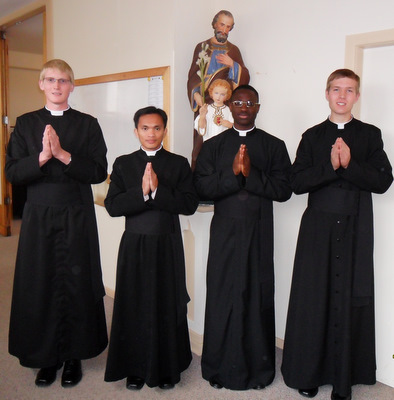
One of the traditions for new seminarians is something called “Cassock Day”.  This is when the new men have their new_cassockscassocks blessed and are now allowed to wear them for specific functions in seminary; sort of a rite of passage.

Cassock Day last year was the first time I ever saw my son dressed like a priest in a cassock and collar.  My very first thought was that it looked like he was dressed up for Halloween.  The clothing was in such a juxtaposition to the son I knew.  But he was so happy and proud, I couldn’t help but be happy for him.

All this back story is leading up to a posting on Seminarian Casual, the blog for St Charles Seminary in Philadelphia, about Cassock Day this year.  It describes the history and significance of the cassock.  Once you read it, you will understand why seminarians wear the cassock proudly.

The Cassock: Sign of Love

This weekend here at St. Charles is the annual “Cassock Day” celebration for every new man. Cassocks are the black, button-down robes that seminarians and priests, wear for liturgical functions. On Saturday, our cassocks will be blessed and we will be allowed to wear them for the first time since entering the seminary.

As a new man, I wanted to find out many things about the Roman Cassock in preparation for this day. There are many interesting facts that I found about the cassock, such as the normal cassock has thirty-three buttons symbolizing the Earthly life of Christ. Or that the five buttons on either side of the sleeves symbolize the five wounds of Christ. But the most interesting fact that I found was that the cassock was once worn by highly esteemed soldiers riding to the battlegrounds of war. The new soldiers would ride after them, recognizing the garments in which they had on.

We, no matter what denomination, are being thrown into battlegrounds between good and evil every day. The sad truth is that most of us choose not to follow the “esteemed soldiers,” but rather try to lead ourselves with no aid. We abandon our brothers and sisters and end up being berated by the enemy. But, lucky for us, those “esteemed soldiers” never turn their backs on us. When they see us turning away, they find us and remind us that there is a battle to be won, a battle for Christ and His love!

The cassock is not just a cloth priests, deacons, or seminarians wear “just for the heck of it”, but it is a sign. It is a sign of Christ’s love for the world. It is a sign of “esteemed soldiers” who try to lead all to victory. Gustave Flaubert, a famous French author, once said, “The true poet for me is a priest. As soon as he dons the cassock, he must leave his family.”

The priest, or seminarian, must leave his family for the sake of protecting and leading God’s children. He symbolically accepts this task by putting on the cassock. He is now an “esteemed soldier” for Christ and His Church.

Now all of us seminarians, whether new men or old men, are not worthy to receive or to even wear the cassock. To think of all the men who have worn it before is quite literally feeling like a midget in a giant’s footprint! But whether we feel like this or not, it is a symbol of Christ in the world in which we are all called to share, especially those discerning the possibility of priesthood.

The cassock, out of everything it is, is a pure sign of love. And that, for all of us, should give us a motive for praying for our priests, bishops, and pope. We should pray constantly for our “esteemed soldiers” and pray that one day these warriors for Christ and His Church may lead many into His Kingdom.

You are all in our thoughts and prayers, but I also hope we are in yours. We need good people of God, and you need holy seminarians that can discern if we can fully take on the cassock, a sign of love.

Please know that the authors of this blog pray daily for parents of discerning sons and daughter to find understanding and peace.

The Pope Frances Effect and Hope for the Future of Religious Vocations

pope fances 2As the US welcomes Pope Frances, I can’t help but wonder what the effect will be on those discerning or even thinking
about discerning a religious vocation.

I have read the accounts of Saint John Paul the Great at World Youth Day in Denver in 1993.  The strength of his personality and his ability to communicate the truths of the faith inspired young people all over the world.  His love of the youth inspired an entire generation.  Many religious vocations came out of the Pope John Paul 2 years and today are referred to as JP2 priests and religious.

Here is a exert from a National Catholic Register article: “Looking at the Good Fruit of World Youth Day Denver ’93 about vocations that sprang from the 1993 World Youth Day in Denver:

Among the young attendees was Giovanni Capucci, who traveled from Italy at the age of 19. Today, he’s known Pope_John_Paul_Youthas Father Capucci, judicial vicar for the Archdiocese of Denver.

“It was such a marvelous event that it’s difficult to express,” Father Capucci said. “It was a beautiful experience of communion, with hundreds of thousands of people coming from all over the world. Pope John Paul II was able to transmit the Holy Spirit to all of us. You could just feel the holiness and the presence of God. It so radically changed my life that every single day since has been fulfilling.”

As the authors on this blog pray for parents of discerning sons and daughters, we hope Pope Frances will inspire other young men and women to be open to the idea of a heroic life spent serving the people of God.

.

Objection Series: “You should get out into the real world and live a little!”


pope selfieSince you are reading this blog, you might be interested in following a blog where seminarians and faculty post regularly.  “Seminarian Casual” is the blog on the website for St Charles Borromeo Seminary in Philadelphia.  FYI:  This is where Pope Frances will be staying when he comes to Philadelphia for the World Meeting of Families (WMF).  I expect we will see more posts from an insider’s perspective on these events, including hanging out with Pope Frances.
 

The post,  Discernment: How Long is This Going to Take?, quotes and links to a “Seminarian Casual” post on the myths about a time frame for discernment.  Scanning  the blog reveals a a wide ranges of topics; some spiritual, others temporal including pop culture, music, politics and sports.  This gives you an indication of how seminarians spend their free time.
__FS__world

One of the objections parents express about a son attending seminary is “You should live a little, get out there in the real world.”   One myth of seminary is that you are completely cut off from the world and surrounded by an intense environment of indoctrination, discipline and sacrifice with little to no personal freedom.
 
When a young man goes to seminary, he does not stop living in the world.  Between the Internet, cellphones, TV, Netflix, Facebook, Twitter, Snapchat and instant messaging, your son is NOT cut off from the world. The post HERE: Advantages of Going to Seminary, describes the positive environment of the seminary which balances boundaries and responsibilities with free time.  I was happy to learn that one of the boundaries was the same in our home: no TV in your bedroom.
 

The “Seminarian Casual” blog  gives you an inside look at what seminarians are interested in, talking about and how they spend their free time.  These thoughts came to me when I read the most recent “Seminarian Casual” post titled   “2015 NFL Season Preview”.   Now it is not so men-football-television-mainunusual for young guys to follow football.  But when I read this post, I was astonished at the level of detail on the history, stats and current status of teams in the NFL divided by division.  This level of detail has to come from a deep and ongoing passion for keeping up with everything from player trades to injuries to coaching strategies.  I am sure there are obscure points of significance not in this post, which the author would be happy to discuss over a cold beer.
 

st thomas

eagles touchdownTheir major in college may be Philosophy or Theology in graduate school, but you can bet these guys can argue the merits of the offensive strategies of the    Philadelphia Eagles with the same passion as the classic works of St.Thomas Aquinas.
 
 
Here is just a sample of the post:

To read the rest of the post click HERE. 2015 NFL Season Preview for more analysis and predictions for this season. Last season, this blog periodically posted ongoing NFL analysis and commentary through the post season which I expect will continue this year.

Please know that the authors of this blog pray daily for parents of discerning sons and daughters to find understanding and peace.

Objection Series: “I Will Never Have Grandchildren.”

As parents, you know that if your son becomes a priest it is a great gift to your family.  But it also necessitates a sacrifice of the traditional dream of seeing your son happily married with children of his own.

Grandparents-and-Grandkids-Epcot-570x427      I admit that this may be the toughest objection for any parent, especially if this is your only child.
I have read beautiful accounts of parents appreciating all the spiritual children that will come from their son’s vocation.  The problem is you can’t take spiritual grandchildren to Disney World.

CNN produced the documentary “This is Life with Lisa Ling: Called to the Collar” about the increase in priestly vocations in rural Michigan.  It is an unusually balanced documentary on this topic done with respect and an open attitude. You can watch the entire program HERE.   When Lisa Ling asks about the issue of grandchildren, parents of twin sons who are both priests point out something obvious. “Even if he did marry, there is no guarantee that he and his  wife would have children.”

I have 2 other children who I hope will marry and have children someday, so this one is not a big issue for me.  If my seminarian son was an only child, it would be a very different story.

For parents in this situation, I think it would take a good amount of prayer and reflection to re-evaluate how you see your golden years.  If you have been waiting to go to Disney World with grandchildren, then this may be God’s way of telling you He has something else in mind for you.  This will be a discernment process of your own.  The love and attention you would have spent on grandchildren can be spent in other ways that you will find satisfying.

Recently, our parish held a reception for a beloved pastor of over 10 years when he was transferred to another parish.  Many parishioners were there to wish him well, thank him for his fatherly care and relay how he had touched their lives.  His elderly mother was there with a few family members.  Many people spoke to her about what a wonderful priest her son was and how grateful they were for his service to our parish.  This went on for several hours to the point that she had to sit down to be able to speak to all the people.  As a parent, this must have been an amazing experience to hear how her son touched so many lives and how much he was loved by the parish.    divine_mercy_78_f_small

In dealing with this objection, it seems that parents need to let go of one dream and reach out for another which is not well defined today.   Trust is an essential aspect of faith in this journey.  To resolve this objection, you will need to rely heavily on trusting the Lord’s love and plan for your son and for you.

Repeat as needed:  “Jesus, I Trust in You.”

Please know that the authors of this blog pray daily for parents of discerning sons and daughters to find understanding and peace.

Objection Series: “He Will Have to Give Up So Much!” or Giving vs. Getting

Alright, can we just agree that every vocation has its difficult moments, challenges and rewards?   You can’t compare one to another and say one is more difficult than the other. Perhaps it looks so difficult to you because you don’t have a realistic view of the day to day life of a priest.  YouTube has many videos on “A Day in the Life of a Priest”   Refer to the post HERE: Another Vision of the Future with reflections by a priest of 25 years.

I admit that one of my first gut reactions to my son’s announcement was the politically incorrect comment, “He doesn’t know bishop playing soccerwhat he is giving up!”  My concept of being a priest meant you had to give up so much.   My unconscious bias from childhood imprinted the idea that a priest’s  life was full of sacrifice and suffering.  (I will explain this in another post on exploring where your attitudes and biases originate.)

What helped me understand this objection was the idea of “giving up and getting”.  Every vocation has its own aspects of things you are giving up and things you are getting.   Although as parents, we don’t know the joys and sacrifices of being a priest, the same concepts apply to the vocations of marriage and parenthood.

If you have been married for any length of time, you know that marriage can be filled with sacrifice and suffering. When I got married, I knew that I was giving up every man in the entire world in ordbride and groomer to marry my husband.  Did I see this as a sacrifice?  No!  I wanted to do it. I did it happily, whole heartedly, joyfully.  Did I understand the full implications of those vows?   At the time, I thought I did.  But of course as the saying goes, you have to say “I do” every day, even when you don’t want to, even when it is hard to love.  Did I fully know what that meant?  No, no one does on your wedding day

When I got married, I knew I was giving up my financial independence because I wanted to make a life and a home with my husband.  Was this a sacrifice?  It didn’t seem so until I wanted a new pair of boots, but the car needed new tires.

unncomfortable pregnant woman

Parenthood has a significant amount of giving up.  Giving up control of my body for 9 months of pregnancy and then
another year of breastfeeding was difficult, but I wanted to do it.   The minute you see that little face, you know any sacrifice is worth loving this little person and watching them grow.

Parenthood has incredible bursts of joy on a daily basis, but the proportion of sacrifice and suffering ismom and daughter far greater.   As a percentage, parenthood has far more times of fatigue, sacrifice, frustration, anxiety, and suffering than joy.  Do I regret all the sacrifices and struggles of parenthood?  Absolutely not!  The sacrifice is part of the nature of being a parent and makes you cherish the times of joy.  If I only focused on all the things I was giving up as a parent, I would have missed the everyday joys and the big picture of the vocation of parenthood.

Realize that no matter what a young man gives up to be a priest, he will be getting his own set of joys to cherish that we will never be able to fully comprehend.

Please know that the authors of this blog pray daily for parents of discerning sons and daughters to find understanding and peace.

A Proper Reason?

Picture courtesy of Matthias Ulrich via Wikimedia CommonsThere have been a number of reports of a surge in vocations for priests and other religious.  The Center for Applied Research in the Apostolate (CARA) reported that an estimated 595 priestly ordinations in the U.S. in 2015.  That’s a 25% increase over 2014.  That’s a good growth no matter how you slice it.

Naturally, when people hear about the increase they tend to wonder what’s up.  Dominican brother Dominic Bouck, O.P. has certainly heard the questions.  In a recent blog post he says:

One thing that I’ve heard from several people when I mention the surge in Dominican vocations (and the surge of many dioceses and orders male and female) is “Oh, it must be the recession.”

That’s a natural reaction — particularly for us in America who tend to evaluate a person’s success in terms of professional or material accomplishments.  It also has a whiff of “well, he can’t make it in the real world so he’s going to retreat into religious life.” Except, as Dominic explains, those perceptions are completely wrong.

Truly, I have not met one religious who set aside marital joys, self-determination, and wealth because he or she couldn’t find a job.The man who sets aside his personal dreams to more perfectly subject himself to God is not primarily saying “no” to the world, but saying “yes” to a renewed life with God … there are over fifty of us studying for the priesthood or preparing to live life as a consecrated brother, about to be joined by fifteen more on July 25.

Among those roughly 75 men are lawyers, a medical doctor, a congressional staffer, professional musicians, a radio host, several PhDs and professors, a particle physicist from Stanford, a former Google employee, a dean of admissions at a medical school, Ivy Leaguers, Golden Domers, and more who were successful in the world, but sought a deeper relationship with Jesus Christ and his Church, and desired to serve his people.

A similar phenomenon is taking place among religious sisters.  Another CARA report (cited as part of the Global Sisters Report) points out that the age of women professing final vows is creeping upward.

In 2010, 47 percent of women professing final vows were aged 40 to 59. Another 26 percent were between 30 and 39. The median age for the class was 44.

Those numbers have steadily changed in the years since, reflecting an increase among younger women: By the class of 2014, only 27 percent of women taking final vows were aged 40 to 59 and those younger than 30 had increased from 18 percent to 25 percent. The median age of the class had dropped to 35.

But 75 percent of the class was still 30 or older.

The report tells the story of Marie Racine.

Marie Racine was well established, a software engineer for 17 years, when something happened.

“We had a meeting, and all of the sudden when they introduced the new projects, I just wasn’t interested anymore,” Racine said. “It just no longer mattered to me.”

That awareness propelled Racine onto a new path — and into an emerging trend about women committing to religious life: Racine entered a Benedictine monastery the day before her 40th birthday and made her final vows seven years later, in 2007.

All of this is consistent with what I’ve seen among the Paulists.  Among the students and priests in the Paulist Community we’ve met Financial Advisors, Mechanical Engineers, Park Rangers, and an actor. Some of them entered formation after they had established themselves in “respectable” careers and (to a worldly point of view) were on a successful path.  Yet, for all of them, God’s call drew them into a new venture which allowed them to use their gifts in service of the Faith.

When you’re looking at your son or daughter who is in discernment and you’re wondering what’s going on with them — set aside your notions of success and consider the work that God may be doing in their life.

— Dad of Evan