A Series of Objections

I will be posting a series on common objections parents have surrounding a son’s interest in discerning a vocation to priesthood or religious life. I will take one objection and go deeper on the topic. Some of these objections are things you man-explaining-woman-arguing-living-room-young-men-women-40422131may have already discussed with your son, while others may be too embarrassing or politically incorrect to say aloud or even admit to yourself.

I hope to pull back the curtain on these concerns and help parents reflect on why they may have these objections. Understanding the reality behind an objection with concrete and accurate information can help you gain some perspective on the concern.

In a critique of Fr. Brett Brannen’s book: A Priest in the Family, the reviewer acknowledges that the concerns of parents are legitimate:

…he [Fr. Brannen] explains priesthood, seminary, celibacy, and how a man discerns his vocation—all while keeping in mind parents’ legitimate concerns.

I found this very comforting when I read that. I am not being unreasonable or reactionary in my concerns. They are legitimate and deserve respect, information and time to address.

Every one of the objections below is addressed in either one of Fr. Brett Brannen’s books: To Save a Thousand Souls or A Priest in the Family. These books give good basic information along with stories of how seminarians and their families handled common objections.  These books are introduced in the post HERE: 5 Myths and Facts about Discernment or Isn’t there a book about this somewhere?

I plan to blog on each of these objections over the next few weeks, but from a mother’s point of view. Some of these objections did come out of my mouth early on as I struggled to understand. I will own up to which ones I did say or at least think and how I dealt with them.

Objections:
• How can you know what you are giving up when you haven’t even lived yet? You are so young, you don’t know what this means

• What if he is falsely accused?  People will be suspicious of him. He will always be under a microscope. People are so critical of priests.

• It’s such a hard life

• He will be lonely

• He will be so overworked

• I just want him to be happy! Part 1: What is happy anyway?

• I just want him to be happy Part 2: Where do my objections come from? Why do I feel so strongly about this? Why am I so angry, frustrated, or emotional about this?

• How/Why did this happen in our family? We aren’t even that religious.

• How can this be real when it has happened so fast: See the post This is just a phase or I don’t want another trumpet in the attic HERE

• What will _____________ think or say?

• I will never see him, especially on holidays

• I will never have grandchildren

If you have an objection or concern that is not addressed here, just leave a comment and we will address it.

Please know that the authors of this blog pray daily of the parents of discerning sons and daughters to find peace and understanding.

Do You Remember the Day You Became a Vocation Director?

Our parish does infant baptism on the first Sunday of the month.  So today after the noon mass there were 6 babies and a large number of friends and relatives in attendance.  I didn’t think any more about this until I read the article below and infant and parents baptismremembered the day my seminarian son was baptized.   Do you remember that day long ago when you brought your child to church to be baptized?

Of all my children, I know the exact date of my son’s baptism because it was Christmas Eve 1995.  That year, December 24 was a snowy Sunday.  With relatives in for the holiday, it was the perfect time to have him baptized.   Having a new baby at Christmas is so special because everything revolves around baby Jesus.  Holding my son in my arms, he was the perfect baby as he slept so peacefully just like baby Jesus  in the Christmas carols.  I remember the lovely smell of the chrism which lasted for days on his little head.

On the day of your child’s baptism, you make solemn promises to raise him in the faith that are a joy to make.  Just as on your wedding day, it is a joy to say your marriage vows.  But, you really don’t know how hard those vows are until you have to live them out.  When your child is small, hearing his prayers at bedtime and reading bible stories can be a joy.  But paying for catholic school tuition or getting a child to religious education classes can be struggle.

This article has been edited to focus on the promises of baptism by the parents to take on the role as the child’s first vocation director in the domestic church of their own home.

Children’s First Vocation Directors – Their Parents

Rev.Michael L.Griffin    6/24/2009       (www.sfcatholic.org/communication/bulletin.aspx)

Sioux Falls, South Dakota (Bishop’s Bulletin) –       Many years ago I had the opportunity to speak with a priest who had quite a reputation as a vocations director. While we sat at lunch a few of us younger priests and seminarians began to ask him what he did to bring about so many vocations.

He said he always spoke about vocations during the celebration of baptism. He always reminded the parents and Godparents that Christ was giving this child a vocation, right there, right at this moment of new life in baptism. He said he invited those present to rejoice in this vocation, whatever it might be.

One of us asked, “Do the parents appreciate that?”
His response was simple and interesting, “They do at that moment, I just hope they do later.”

I was a little taken aback by the question and the response. It had not occurred to me that any parents would not be proud and pleased in their children as they grow up and embrace the life God gives to them.

I have come to discover that there are parents who will sometimes actively stand in the way of their son or daughter as they explore the possibility of serving Christ, their brothers and sisters, the Church, as a priest, religious sister or brother.

I have sat with young men and women who have cried as they spoke about the pain they feel in their hearts because one of their parents refuses to allow them to be open to the possibility.

I would imagine if I had the chance to ask why, the parent would have their reasons…

These parents stood at the [Baptismal] font of new life and promised to raise their child in the faith. This they did embracing their child as a gift and recognizing their role in guiding and blessing the child’s life, but also recognizing that the child’s life is not theirs. This is a profound and amazing relationship, and a source of blessing to all when embraced in love by parent and child.

In this powerful relationship, the voice of God and the gift of His call are given to be nourished and revealed.

It is a hope that if children are called to the Sacrament of Marriage, that they see this vocation lived with love and joy by their parents, and the couples they see around them at Mass.

It is a hope that if children are called to the priesthood or religious life, that they would see the joy of these vocations lived out around them in their parish life, but also come to appreciate the gift of self-offering and the gift of love within their home. [emphasis added]

Each night, as parents bless their children, each day as they teach them to pray and to listen and to grow, the voice of God becomes clearer, more easily heard. That voice might call them to enter the Church as a bride or groom, or as a religious, or as priest, but the first steps are taken in the domestic Church, in the home.

…We are all called to be vocations directors, but in a powerful way, parents are the first, and greatest of all vocations directors. This is both a challenge and a glorious gift.

Please know that the authors of this blog pray daily for parents of discerning sons and daughters to find peace and understanding.

Another Vision of the Future

What if you could look into the future and see what your son’s life could be like in 6 years, 16 years or  26 years?  This ‘Vision of the Future’ series is intended to provide real life examples of an authentic discernment process that led to priesthood and then the expression of a joyful and fulfilling life.

The preceding post ( See: A Vision of the Future HERE ) shows a video of 2 young priests going through a discernment process that led to their priestly vocation.

Fr Joshua Johnson Fr Joshua Johnson was ordained in 2014,                                                                                         while Fr. MIke Schmitz was ordained in 2003.Fr Mike Schmitz

This post details Msgr. Charles Pope’s narrative of his discernment process 26 years ago and his reflection on ‘The Mystery of being a Priest.’  As a parent, you may identify with his  history of coming of age in the ‘beige Catholicism’ of the 1970’s and 80’s. He was ordained in 1989 and blogs regularly HERE at the Archdiocese of Washington DC blog

The Mystery of Being a Priest
Msgr. Charles Pope • June 23, 2015
Each year I concelebrate with hundreds of others priests in the ordination Mass of new priests. I find such Masses deeply spiritual. I have no role other than to quietly Monsignor Charles Popeconcelebrate, so the readings and the rites move me deeply. As I sit quietly, I ponder the mystery of my own priesthood.

When I was growing up, there was little to indicate that I would ever become a priest. I was not a particularly spiritual child (at least not after age 7). I did not “play Mass.” In fact, I did not like church at all. At the end of Mass when the priest said, “The Mass is ended, go in peace,” I responded, “Thanks be to God!” much more vigorously than necessary.

My teenage years were marked by rebellion and pride. And while it is true that I joined the parish youth choir, it was only so that I could meet girls. It was not an evil intent, but not particularly spiritual. I did indeed date a few of them, two of them seriously.

But sometime during college a strange and uncomfortable notion came over me that I was being called to the priesthood. It was an odd desire, one I could not explain.

It was true that by that time I had become a Church musician, organist, cantor, and choir director. But again, I do not think I was particularly spiritual.  Music was something I enjoyed, but my involvement was more about leadership and impressing others, especially girls.

The growing desire to be a priest was inexplicable to me. At the time I was dating a real beauty queen, Denise. She was pretty, kind, and did not bring a heavy agenda to the relationship. Her greatest desire was just to get married and start raising children. I was two years away from graduation from college. I already had a job lined up with the Army Corps of Engineers. My life seemed pretty well set. And now this? The priesthood? How crazy is that?

And it wasn’t just a fleeting thought; it was a desire and it was growing. It was so mysterious, so strange, so unexpected. Somehow in my most honest moments I knew that the desire for the priesthood was stronger than the desire for marriage. But it seemed disloyal to Denise and I wasn’t going to break her heart, no way! And frankly I did not respect most of the priests I knew at that time. It was the late 70s and early 80s, the era of beige Catholicism, and the priests I knew seemed worse than irrelevant. I often fought with the pastor about music. He couldn’t think past Carey Landry and the St. Louis Jesuits, while I had met Palestrina, Bach, Mozart, and Victoria.

What on earth (or in Heaven?) was this thinking about being a priest? I just couldn’t make sense of it.

I will spare you all the details, but God won. Denise had a change of heart (or maybe she got glasses and saw that I wasn’t all that great   ). Or maybe she sensed my growing ambivalence. I won’t go into the details, but our dating ended. The troublesome pastor and I also parted ways (he later left the priesthood).

Two years later I entered the seminary.  And now here I am, today, celebrating my 26th anniversary as a priest.

Sitting in the Basilica the other day seeing nine new priests ordained was a great joy. And there again were those words that spoke to the mystery of the call: Before I formed you in the womb, I knew you, before you were born I set you apart; I appointed you as a prophet (Jer 1:4). Well, God always knew, but it sure was news to me before I was 22.

Yes, the call of God is a great mystery to me. Before I was born, God knew I would become a priest, but surely I did not know until long after birth.

Even after my ordination I would not have selected most the assignments I was given over the years. I came forth from the seminary as a Thomist, a Moral theologian. I graduated at the top of my class. I was skilled in Latin and the ancient liturgy, a lover of chant and polyphony. But my assignments were in African-American parishes that knew little of these, and where Gospel music was the mainstay.

Yet I could not be happier. I lost nothing of what I had; I only gained more. The mystery of God’s call makes our own notions and plans seem laughable in retrospect.

The second reading at ordination this past Saturday also speaks volumes to my experience. Paul wrote to Timothy, Until I come, attend to the reading (or Sacred Scripture) exhortation and teaching … Be diligent in these matters, be absorbed in them, so that your progress may be evident to everyone. Attend to yourself and to your teaching (1 Tim 4:12ff).

Here, too, God has been good to me. I can only say that for 30 years now, 26 of them as a priest, I have prayed every day, celebrated the liturgy every day, read and studied God’s word every day, and confessed every week. And through it all I am a changed man. I’m not what I want to be, but I’m not what I used to be. A wonderful change has come over me. I am more confident and serene. I have seen sins put to death and graces come alive. I love God more than ever. I love to pray and to teach. I have come to love God’s people so much more.

Surely my faults are still quite manifest. I am proud, opinionated, and too rash in many of my judgments. My zeal makes me impatient and too quick to judge. Have mercy on me, Lord and dear people of God!

But so many good things have come to change my life and to make a new man of me. Thank you, Lord. I do not boast, except in the Lord, for it is He who has accomplished all through the means above and by the prayers of his Holy people.

Please know that the authors of this blog pray daily for parents of discerning sons and daughters to find understanding and peace.

A Vision of the Future

One of the problems with a son discerning a vocation to the priesthood is the unknown.  What is in his future?  What will his life be like?   If your son was going to be an accountant, you would have a pretty good idea what his life would be like.  An individual’s view of priesthood is limited by their own experiences for better or for worse.

Parents need to see authentic examples of a discernment road that has led to priesthood.  Perhaps you don’t have a view of what a joyful, fulfilling life of a priest looks like.  Knowing that you are doing exactly what God put you on this earth to do yields a peace, contentment and joy that is difficult to describe, but is plain to see.

This video shares the story of 2 young men who grew up with the typical life experiences of girlfriends, sports and school.   They share how, over time, they grew to understand that God was calling them to a different way of life; something totally unexpected and unknown.

Yes, the road ahead is filled with question marks for you and your son.  The difference is that your son wants to take the road of questions with a trust in the Lord that you may not be able to understand at this moment.

So what should you do?  If your son is willing to travel that road with trust; it is your role to trust your son, the vocation director, your bishop, the seminary and the discernment process.

If you want to see more examples of the daily life of a priest, go to Youtube and type in “A Day in the Life of a Priest.”

Please know that the authors of the blog pray daily for parents of discerning sons and daughters to find understanding and peace

Objection Series: “He’s Throwing His Life Away!”

Although this statement sounds pretty harsh, you may have heard this about your son’s interest in priesthood or religious life.  Maybe you worry that you are going to hear it from a family member, a friend, a co-worker, your spouse or even yourself.

I heard variations on this comment a few times from acquaintances when they first heard the news that my son was going to college seminary right out of high school. Among the variations were:

car off bridge1

Why would you let him throw his life away like that?

I would never let my son throw his life away!

Why does he want to throw his life away?

But he’ll never have a normal life with a wife and children!

At first I was shocked at how rude these comments were.  Once the news was out, I had heard some negative and less than supportive comments, but this was the most severe response I heard.   The first time I heard it, I was taken aback and managed to stammer, “Oh, no, we’re very happy with his decision and proud of him.”  Then they would give me that ‘Are you crazy?’ look or just roll their eyes.

None of these negative comments came from Catholics.  I heard nothing but positive comments from the people in our parish and other Catholic friends and relatives.  The phrases “wasting his life” and “throwing his life away” have given me a lot to think about.  How is it that some people view the very idea of a young man considering becoming a priest as so terrible that they liken it to wasting his life?  Are these people so materialistic and achievement focused that they view a life of service to others as a waste?

After I got past being judgmental, I began to have empathy for these people who have so little awareness or appreciation of the spiritual needs of others and serving these needs. Then it occurred to me that I should pray for them to come to an understanding of the value of spirituality in their own lives.

Other comments have not been as overtly negative, but have an undertone of disapproval or express a lack of value in my son’s choice.  Over time, I began to see that the comments I received gave me an indication of the individual’s misunderstanding about the priesthood, religious life and seminary.  I got to the point, that when I heard a comment, I was able to counter with a little bit of information to provide some reality to their false assumptions.  Here are a few samples.  Help yourself to any of these responses when you find yourself on the receiving end of a less than enthusiastic comment.

Comment: “What happened to computer science?  He would have a great career if he stayed in computers.”

Response:  “If he is called to be a priest, I’m sure he will have the opportunity to do many different things in his life.”

False Assumption: Only a career with a high income and career opportunities are valuable and worth pursing.


Comment:  “I thought he went to the prom with Susan?  She was gorgeous!  What happened?”

Response:  “They went to the prom as friends and still are friends.”

False Assumption:  Going to seminary means you can’t have any contact with girls.


Comment:  “Couldn’t he get into the state university?”

Response:  “As a matter of fact, he was accepted into a computer science program at State, but he decided not to go.  Actually, it was much harder to be accepted as a seminarian for the diocese and the college seminary than getting into State.”

False Assumption:  Guys who go to seminary are those who can’t get into a regular college.


Comment:  “You mean, no sex? Ever? And you’re okay with that?”

Response:  Okay, you try explaining the gift of celibacy in 2 minutes or less. I tried. I think I went with “…if he does have a vocation to priesthood, he will be given the grace to be able to handle it…..” and  “Yes, I am okay with that if he does become a priest. It’s part of the package.”

False Assumption:  Living a celibate lifestyle is impossible.


Comment:   “Is he gay?”

Response:  “No, that has nothing to do with it.  He is going to seminary to determine if God wants him to be a priest.”

False Assumption:  A healthy male attitude toward girls cannot be compatible with going to seminary.


Comment:  “Doesn’t he like girls?”

Response:  “Of course he does.   He has lots of friends that are girls.”

False Assumption:  A healthy male attitude toward girls cannot be compatible with going to seminary.


Comment:  “Don’t worry, he just hasn’t found the right girl yet.”

Response:  “I’m not worried.  He is just trying to figure out if God wants him to be a priest. If he doesn’t, I am sure the right girl will find him!  If he does determine he is not called to be a priest, he will be a great catch!”

False Assumption:  The “right” girl is an antidote to these thoughts of being a priest.

 
Please leave a comment if you  have had any experiences like this and had a good response or if you did not know what to say!  We will help you come up with a response.

Please know that the authors of this blog pray every day for parents of discerning sons and daughter to find peace and understanding.

What is a Vocation Story?

I have heard my son give his “vocation story” many times in different settings.  This is the story of how he decided to go to seminary and how he felt that God may be calling him to the priesthood.  I have heard many variations depending on the person asking and the situation.Asian man giving speech

The first time I heard my son give this talk in public was from the pulpit during a seminary appeal weekend for the diocese where the seminary is located.  It was interesting to hear him describe our family and how he grew up.  In that situation, I was surprised to hear something I did not know.

He explained that the first time the thought of priesthood came into his head was in 5th grade at the weekly school mass.  He said “I thought to myself:  A priest?  I don’t’ want to be a priest.  I want to get married and have a wife, kids, a family.”  Then he promptly dismissed the idea.  I had never heard that little detail before and realized he never spoke about it while in grade school.

When a friend or acquaintance meets my son and hears that he is in seminary, it is common for them to ask him “How did you know?”  When he is in a situation where it is not really appropriate to go into a long explanation, I have heard him say:  “Well, there was this burning bush….”  Then he pauses just long enough to crack a mischievous smile and say “Just kidding.”

My son’s first serious idea of a vocation started at a high school retreat during his Junior year.  In this retreat program, the Juniors from the previous years can act as student leaders the following year.  By the spring of his senior year, he was applying to the diocese.  Only a small, close circle of friends knew about his plans.  He did not want to make the news public until he was accepted by the diocese.  As a student leader at the retreat, I am sure it took no small amount of courage to tell his story to his peers who had no idea this was in the works.

I was there when my son told my mother about his plans to enter seminary.  He gave great detail and answered her questions.  I was sure my mother would say what she always did about priesthood: “It is such a hard life” with an extremely heavy sigh.   She didn’t.   She just cried and said how happy she was for him.  Of course, she said it to me, right after he left the room.

I was there when he told his Aunt, my sister, who is his godmother and confirmation sponsor.  She cried through the entire story and kept asking him “Really? Are you sure?”  This is where more information about the discernment process was needed to clarify. “No, he’s not sure, that’s why he is going to seminary.” (Note: Aunt Becky was crying because she was happy for him!)

Listening to your son talk about his vocation story gives a parent new insight into his mind and heart.  You may be surprised by what you learn as you hear his story repeated over time.

Please know that the contributing authors on the blog pray daily for parents of discerning sons and daughters to find peace and understanding.

Advantages of Going to Seminary or What is the Next Right Step?

If you are reading this, most likely, you and your son have had some contact with the vocations director for your diocese or religious order.  There is talk of applying to seminary, but it seems like such a dramatic step at this point in his life.

Mt St Mary's Sem.

This post will describe the significant advantages for any young man to go to seminary to continue to discern his vocation.


2 sems talking to priest

Do you think he will be wasting his time if he discerns that he is not called to the priesthood?  I can assure you, that no time spent in the seminary is ever wasted.  It has been said that there should be a lot more former seminarians.


The advantages of attending seminary for any length of time will last a lifetime for your son.  If he determines he is not called to priesthood,the time spent in seminary will make him a better man, husband and father.  If your son has been thinking about the priesthood and is not sure, he will never know for sure outside of a seminary environment designed to support him on this path of discernment.  The goal here is to help your son determine if he is being called to the priesthood.  Your son can only discern young-man-praying-church-handsome-41152818to a point outside of a seminary environment.  Inside, there are significant opportunities and advantages to help him come to an understanding of whether or not he is called to priesthood. The advantages of seminary described here can help you understand that going to seminary may be the next right step Those who do not take this next step may spend the rest of their life wondering if they were called to be a priest.  No one wants their son to live with a lifetime of questions and regret.

So what are the advantages of going to seminary?

Spiritual Direction

The opportunity to have a Spiritual Director walk with your son through the discernment experience may be the biggest advantage in going to seminary.  A Spiritual Director is a trusted mentor who cares about your son and helps him grow over an extended period of time in faith, virtue and maturity.  This is an enormous advantage that seminarians are priest talking to manprivileged to experience.  You can think of it as coaching in order to determine what God wants you to do with your life and become a better person.  The environment at seminary is conducive to this discernment by having the time and resources available in a structured, positive environment.  Every year, seminarians come to the decision, with the assistance of their spiritual director that they are not called to be a priest and decide to leave the seminary.  Some refer to this as “discerning out.”  When they leave may have more to do with finishing the semester to finish academic credit than anything else.

The vocation director is not a recruiter trying to talk your son into this.   A spiritual director will not coerce or brainwash your son into “signing up”.  No one, not the vocation director, your bishop or the seminary wants your son to continue in seminary if he is truly not called to it.  This is not like an Army recruiter who is trying to get as many recruits as possible to meet a quota.  Besides growing up in your family, this may be the only time in life where your son will be surrounded by people who only want what is best for him and determine what God wants him to do with his life.

The Environment

Several aspects of the seminary environment itself provide advantages to a young man discerning.

“Everybody gets it”

The summer before starting seminary, my son would frequently say that he couldn’t wait to get there so he could stop explaining himself to people all the time. He said “Everybody there gets it.  Everyone is there for the same reason.”  In seminary, no one thinks you’re crazy or strange.  No one gives you that questioning look when you tell them what your major is.

men taking selfie


It is true that having a group of young men live together with a common purpose is a positive environment.  They study and learn together, pray and attend mass together, play and eat together or just hang out like any other guys their age. Sounds sort of like a college fraternity without the  girls, alcohol, drugs and other near occasions of sin.

Accountability

Seminary has a structured environment designed to grow your son in self-discipline, prayer, virtue, and knowledge of the faith.  Which one of these do you not want for your son?

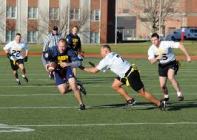
The environment at seminary is not as austere as you may think.  Seminarians play sports, watch TV, go to movies, hang out with friends playing footballand drink alcohol in moderation if over 21 years old.  They aren’t roaming  the halls singing Gregorian chant.  They do have mass every day and pray the liturgy of the seminarians in churchhours together and have curfews.  Faculty take note if someone is not in class and they look into it.  You can’t hide in seminary.   Even as his mother, I am not allowed in my son’s room if he needs something from home.

Does the seminary environment have boundaries, requirements & expectations?

Yes.

Is this a bad thing?

No

Compare seminary environment with a typical college environment today

As a parent, you may remember the way that college was back in the day.   There were curfews, at least for freshman, and dorms were single sex.  Boys were not allowed on the girls’ floor or in the girls’ dorm at all.  Students signed in and out of the dorm on weekends and evenings.

Today, it is a complete free for all.  No curfews and all dorms are co-ed, so there is no need for rules about “visitation”.  In the name of frat partyconfidentiality, parents have absolutely no right to knowledge about the
student’s grades, academic progress, attendance, health care issues or even situations involving campus or local police.  The typical college environment today requires a significant level of self-discipline to manage all the competing activities and opportunities available.  It is common for students to “crash and burn” when they cannot manage so much freedom with no accountability.

Sending my older 2 children off to a state university, I had many worries and sleepless nights.  When you send a son to seminary you may have different concerns, but you will not have to worry about the following:

I am not worried:

       That he will get mixed up with the wrong kind of girl.

       That he will end up at a drunken Frat party at 2am.

       That he will never go to mass on Sunday.

       That he will never go to confession.

       That he will cut one too many classes and get behind.

       That he will have too many distractions on campus and most of them a   bad  influence.

Even one year in college seminary can provide your son with a lifetime of perspective on his vocation, an increase in his faith and prayer life as well as personal maturity and character.  Every year increases these benefits exponentially.  If your son is thinking about going to the seminary, these advantages can help you have more peace about taking the next right step with your son.

Please know that the authors of this blog pray daily for the parents of discerning sons and daughter to find understanding and peace.

Come and See!

Pam’s post about visiting the seminary with her son reminded me that I’ve never mentioned the “Come and See” weekends.

A “Come and See” is a retreat which offers discerners the opportunity to taste religious life.  The Dominican website OpCentral.org describes it this way:

Information is always helpful, digitally, in print, or otherwise, but there is no substitute for a real human encounter. That’s why a Come and See Weekend is a must for anyone seriously discerning their vocation. Dominican Come and Sees are a sixty-four hour immersion experience into the very rhythm of religious life. It’s that “gut” experience which offers the visceral clarity that is the goal of discernment and the only true test of whether or not your home is here.

Fr. Larry Rice, the Vocations Director for the Paulists, confirms this:

When a man is contemplating a vocation to the priesthood or religious life, most of the discernment is internal work: prayer, reading, prayer, spiritual direction, and prayer. This is a good and necessary process. But it can also feel a bit isolating, as if no one else is wrestling with these issues and questions. And it can also take on a hypothetical and imaginative quality. What will life in the novitiate be like? Is the seminary a strange place where I’ll feel uncomfortable? Will I be out of place, surrounded by people who are so much holier than I am? Can anything good come from Nazareth?

Come and see. That’s the invitation that the Paulist Fathers make three times each year. Come for a visit. See and experience our common life. Pray with us. Dine with us. Come to class. Come to the chapel. Have a soda or a beer, and ask your questions.

Evan participated in a couple of these weekends early in his discernment.  He came back enthused about the community and taken with the beauty of the liturgy of the hours.  Each visit increased his conviction that he needed to pursue the call.

Now that he’s a member of the community, Evan gets to experience these weekends from the other side.  Meeting potential seminarians is a great opportunity for him to share part of his journey and to remember his early days of discernment.

“Come and See” weekends are pretty common.  A quick Google search turns up a long list of possibilities.  Some of them are associated with particular communities like the Dominicans, Paulist and Mercedarian Sisters — yes, there are “Come and See” retreats for women discerning religious life as well.  Some of them are associated with diocesan seminaries.   All of them follow the same basic pattern of welcome, prayer and participation.

The point, I guess, is that discernment is something to be lived.  That means actively exploring religious life.  Don’t just sit in a pew and say “I think God is calling me”.  Get up and answer the call.    Find a “Come and See” weekend, talk to a vocations director, immerse yourself in experiences that will let you encounter God.  You might be surprised at what you learn!

— Dad (Evan)

Discernment: How long is this going to take?

I don’t know how many times I have heard the word “discern ” or “discernment” in the last 2 years. Even so, this word still has a vaguely mysterious quality.  It seems that it requires a certain amount of openness and getting  comfortable with some level of woman-watching-hourglassuncertainty.  As a parent, I don’t like uncertainty.  I get it, but I don’t like it.  You may be thinking, “When will he know for sure? How long is this going to take?”

How long…. is a relative question.  Discerning a vocation is not like deciding between going to one college vs another. That kind of decision weighs pros and cons and evaluates data like student/faculty ratios and graduation rates. Discernment is completely different. It is not a once and done decision.  I was surprised to learn that the individual discerns one year at a time in collaboration with his Spiritual Director and Vocation Director.  Discernment is taken one step at a time with input from experienced mentors who want your son to make the decision which is right for him.

Michael Bollinger is a college seminarian at St Charles Borromeo Seminary in Philadelphia.  Below is a portion of a blog post on the seminary website on the reality of a “timetable” for discernment..

Easily the most misunderstood thing about seminarians is why we are at the seminary. More times than not, when a Catholic comes up and talks to me, knowing that I’m a seminarian, he or she speaks as if I’m undoubtedly going to be a priest.

However, the reality is that guys go into the seminary precisely because they don’t know if God wants them to be a priest or not. They’re at the seminary to figure that out. I first learned that the hard way when I first entered seminary this past fall.

It was a Friday night, and I went out to dinner with four or five older guys (seniors in the college seminary) and as the conversation got going, I asked each of them if they “knew” that God was calling them to the priesthood (expecting a resounding “yes”). To my surprise and embarrassment, as they went around the table answering the question, the answers were a repeated “no”.

The fact is, I had the perception of most people—I figured guys that had been in the seminary for two, three, or four years had a fairly firm understanding of God calling them to be priests. But that’s just not the case.

Click here to continue reading the full article St Charles Seminary blog: Wait, We’re Discerning?

wasting timeIt is understandable for a parent to want some kind of assurance or timetable on their son’s discernment path.   Whatever your age, it seems the older you get, the faster time goes.  We may see time passing quickly.  Is the time in seminary going to be wasted?

Consider this: your son will probably live well into his 90’s or longer without any serious illness or injury.  Taking a few years in seminary to determine if he has a religious vocation is not a long time considering it will provide an opportunity to develop virtue, self-discipline, a deeper knowledge of the faith and a strong prayer life.  Which one of these things do you not want for your son?  These are all benefits for men who have spent time in seminary and discerned out to discover their true vocation.

Please know that the contributing authors of this blog pray for parents of discerning sons and daughters to find understanding and peace.

5 Myths and Facts about Discernment or Isn’t there a book about this somewhere?


When my son first told me he thought God was calling him to be a priest, I had no real family meetingunderstanding of the discernment process.   Being a cradle catholic, I was surprised to realize that all of my questions and concerns were based on misunderstandings, false information or myths.  Within 2 weeks of my son’s announcement, I found a book that answered all my questions and some I had not thought of yet:  “To Save a Thousand Souls” by Fr. Brett Brannen. Although the book is written for the young man discerning, I found it gave me accurate information, interesting anecdotes and a better understanding of the discernment process. Here is how Amazon.com describes it:

In what has been hailed as “a groundbreaking work” Fr. Brett Brannen compiles all the wisdom of a master VSave a thousand soulsocation Director into one volume. Using powerful and entertaining stories, the book explains in down-to-earth language how to discern a vocation to diocesan priesthood.

The book has received universal praise from bishops and vocation directors: “Fr. Brannen’s book is tremendous—inspirational, imminently practical, and amazingly comprehensive. It is a clearly written ‘how to’ manual filled with solid advice for men discerning the priesthood. A marvelous work of immense value.” – Fr. Len Plazewski, President, National Conference of Diocesan Vocation Directors

Fr. Brannen has since published another very good book to specifically address the concerns and questions of parents, “A Priest in the Family”.  Here is a description:

“A Priest in the Family is a comprehensive resource for the parents …. thoughtfully addressingPriest in Family common questions and concerns about seminary, celibacy, and the life of a priest. Whether you’re uneasy or elated about your son’s interest in the priesthood, this book is for you.”

and

Like his previous book, To Save a Thousand Souls, Fr. Brannen’s new book for parents is filled with humor, anecdotes, and dramatic stories from his own life as a priest. In twelve short, easy-to-read chapters, he explains priesthood, seminary, celibacy, and how a man discerns his vocation—all while keeping in mind parents’ legitimate concerns.

Readers have praised A Priest in the Family as an entertaining read that manages to allay parents’ fears and show them how to support their son, while offering a few laughs and a dose of inspiration along the way.

If you are struggling to understand what is going on with your son or have some questions that are just too embarrassing to ask,  I urge you to open up a new window in your browser and go to  vianneyvocations.com  and order one or both of these books today.  Until you can read these books for yourself, here is a brief summary of what I learned:

 5 Things I Learned about the Discernment Process:

Myth:
Once you enter seminary, you are pretty sure that you will become a priest.
Fact:
Discernment is a long, gradual process that is ongoing. Many people are involved with helping an individual during the discernment process: spiritual director, vocation director, seminary faculty and others.

Myth:
Once you enter seminary, you are expected to go all the way through to ordination. Leaving seminary is a failure, shameful and humiliating. Everyone will be disappointed if you leave.
Fact:
“Discerning out” of seminary is actually a good thing. A few rough weeks in seminary is not a reason to discern out. The decision to “discern out” is made in conjunction with the Spiritual Director, Vocation Director and others involved in his discernment process. It means the man has determined that priesthood is not his true vocation. For the rest of his life, he will not need to wonder if he should have been a priest. This is not considered a failure or an embarrassment. Others at the seminary are actually happy for the man to be able to pursue his true vocation. Guys do not sneak out in the middle of the night. The seminary community, faculty and peers wish him well. The time spent in seminary is not wasted. The growth and maturity in his faith can only be a benefit to a young man as a future husband or single man.

Myth:
You are too young to go into college seminary right out of high school.
Fact:
The Father calls men at many different ages and at different times in their life. If your son feels called, he should take the time to discern if this is his vocation.  There are significant advantages in going to college seminary right out of high school that are outlined in the book for parents by Fr Brannen.  A post on this website also addresses this: Advantages of Going to Seminary

Myth:
You need to go to college, date more and live in the “real world” before you go to seminary.
Fact:
If your son is feeling called now, it is best to discern now rather than try to put it on the back burner or push it away. Going to seminary is not leaving the “real world.”   Seminarians do have a more structured, healthy environment than a typical college. This environment allows more opportunity to focus on courses, strengthen their prayer life, increase knowledge of the faith and self-discipline. These are all good things for any young man to learn. Seminarians still hang out with friends, go to movies and parties, work summer jobs, drink beer and play sports. Finding the” right girl” is not a “remedy” for discerning a priestly vocation.

Myth:
You should go to college and get a degree first. Then you can go to seminary if you still want to.   If this priest thing doesn’t work out, you’ll have something to fall back on.

Fact:
Priesthood is a vocation that God has designed for the individual  where he will find the most happiness in his life. It is not something that “works out.”  He will find he either has a priestly vocation or he doesn’t. You can’t put discernment on hold for 4 years just so he can have something to “fall back on”.

Forest road. Landscape for backgroundAlthough this post is all about getting factual information, please do not let gathering data be your only method of understanding. As a parent, you will never be able to understand this with only your head.  You must take your concerns and questions of the heart to prayer consistently until you find some peace which the Father will give you.  Please know that the contributing authors of this blog pray for all parents of discerning sons and daughters to find understanding and peace.

E-mail and a Note about Discernment

This week a lovely note landed in the Seminarian Parents inbox.  It came from the Mum of a seminarian who…well, since she graciously offered permission to share her letter, I’ll let her tell the story.

Three years ago our 19 year old son entered a Diocesan seminary.

While not shocked – we were initially quite surprised and unsure that this was a good idea for someone so young.

At the time my husband and I tried to encourage him to ‘live’ a little before he entered. Maybe gain a bit more maturity, and life experience.  To his credit he was not to be deterred by our initial reticence and lack of enthusiasm : he was sure of his decision. He proceeded initially to ‘pre-seminary’ for a year and then the national  seminary.

And of course we supported him, loved him and were proud of him.

As parents we have always tried to support our children (he has an older brother & sister) – and when necessary offer guidance – in their life choices. University, and overseas travel for the others was a more familiar path for us  – but the seminary and priesthood was an altogether different scenario – and one I assumed other people’s sons would follow – not ours!

I desperately wanted to talk to someone in my situation who understood what I was going through – another mother of a seminarian. There seemed to be no one around – I assumed that they must all be very holy – too busy praying and going about the Lord’s work – and would have no understanding of my feelings, fears and worries for my son and his future!

I quickly became aware that the role and relationship of parents and their seminarian son is at times different than that of our other children. (Not better or worse – just different)

Because of this unique role, the opportunity for the parents and families of our seminarians to meet and get to know one another (for both support & friendship) is important.  Whether the family are heavily involved in ‘church’ – or not at all – the procedures, processes and emotions are usually uncharted territory for everyone. But nothing seemed to exist – at a local level or online.

Towards the end of last year, our son decided to leave the seminary  – I didn’t want him to enter – but now I found I didn’t want him to leave! More uncharted waters – and once again, another parent to talk to would have been great.

While he has learnt a lot in these 3 years in the seminary – I know we as parents have as well.

In immersing himself in all things ‘Catholic’ – much has also been absorbed by us too. There have been many conversations as we talked with him before he entered – and in holidays when he was home

(I am a ‘cradle Catholic’ though I think the term ‘cultural Catholic’ would have been a better description. I loved the culture and familiarity of being catholic – the nitty gritty of my faith was largely ignored. )

For me I know my knowledge of catholic ‘stuff’, liturgical matters, seminarian studies and subjects, canon law, has increased – but above all this superfluous information, my Faith has deepened and (I think) matured. For that I will always be thankful and grateful to my son  – for testing my understanding of my faith, challenging my assumptions and encouraging me to seek and develop a more personal relationship with God.

This letter was encouraging to all of us.  We recognized our own questions, fears and concerns in this mother’s story.  Cathy and I chuckled at her assumption that the parents of prospective priest must somehow be above-average on the holiness meter.  We certainly aren’t, but we are trying to improve our relationship with God.

One of the concerns she had was her son’s age.  Cathy shared that concern and … well … I’ll let her explain:

Worry about Evan being too young was a big concern of mine as well. I spoke to the formation director of his order and he offered me an interesting perspective. He stated that they encourage men to explore the priesthood as early as possible (as soon as they hear the call). If it doesn’t work out there are no hard feelings, on the contrary, they often remain friends of the group for life. If they discern that the ordained life isn’t for them, they are still young enough to enter into the secular life and have a full career. If they wait till their late 30’s, for example, they are in their forty’s when they go back to their careers and it can be difficult.

All of which brings me to a brief point that I’d like to make about the discernment process.

Discernment is a process.  Some people think that discernment is sitting around, praying for Divine guidance and getting a lightning bolt from the sky in response.  Prayer is definitely important, but prayer needs to be accompanied by action.  A great post over at Verso L’alto talks about the danger of “passive discernment.”

People tend to talk about a priestly vocation as if entering seminary is a final decision with ordination as a foregone conclusion.  That isn’t the case at all.  You might as well start making wedding plans the first time your son takes a girl out on a date.  Yes, it could lead to marriage, but it might not.  It’s important to live through the process — it’s a journey, not a destination.

When young people perceive a call to religious life, they should explore it.  That means investigating seminaries and talking to vocations directors.  It probably means entering the seminary.  Whatever happens — that time in seminary is part of the journey.

I’d be so bold as to say that active discernment is good practice for all of us.  If you think God is calling you to something — a ministry in your parish, some task in your neighborhood or your workplace, or even more prayer and study — don’t sit back and think about it.  With openness to the Spirit, jump in and listen to God through your actions.

This is just a phase… or… I don’t want another trumpet in the attic.

As a parent, how do you know if your son’s  interest in discerning a vocation is the real thing or is it just a phase?  When he is  young, it is  hard for a parent to believe this could be for real.  I always thought this kind of decision took years of struggle.  How could this happen so fast and still be real?   Is this just a whim?  An idealized fantasy?  Is this going to be like the trumpet lessons that he was so desperate for and then lost interest within a few months?  Here is a little bit of my son’s story and how I came to understand that this was a serious desire and not just a phase.

When my son first told me he thought God was calling him to the priesthood, he was  17 years old and finishing Junior year. About 3 months before this, he attended a Kairos retreat held by his catholic high school.  When he returned, I knew something was different by his attitude and behavior.

Within the first week after the retreat, the group decided to all go to 7 am mass every day before school.   Now, any catholic mother would be pleased to see a teenager do this.  For my son, something else made it significant.

Prior to this, I could hardly get him out of bed to get to school.  Normally, we had to leave home by 7 am to get to school by 740.  It was common for me to check on him at 630 am…still in bed, 645 am… still in bed.  “I’m up , I’m up”…  then still find him in bed at 7 am.

Going to 7 am mass meant that he would need to get up at least an hour earlier to get to school.   Since I was driving him, getting to school by 7 am meant that he had to be ready to leave the house by 615 am.  It was significant to see him up and ready to leave at 615 am and worried if I would make him late.

This change in behavior was surprising to me, based on his love of sleeping.  But I still thought, “This is  great!   But I know my son, how long can this possibly last?  This is a phase.”  On the weekends, my son could sleep in as late as noon or 1 pm if I was not home to get him up.   By the first weekend, I was surprised to hear that he was planning to go to morning mass on Saturday and meet some of the Kairos kids there.  That gave me pause, but I still thought,  “This is a phase.  I’m glad he is doing this, but I don’t see this lasting for any length of time.”

As the weeks wore on, he continued to go to the 7 am mass at school even when no other Kairos kids were attending.   Right after the retreat, the group would meet in the chapel after school to say the rosary or just to pray together about 2 – 3 times per week.   Gradually this petered out about 6 weeks later.  My son either stayed after school to go to the chapel, or he would get in the car and ask if we could stop at our parish church on the way home.  Although surprised, I was happy to do it.

The first time he asked, I said, “Sure, how long do you think we will be there?  I have to get dinner in the oven.”  His response was “I don’t know, it is not up to me”.   “Okay,” I thought  “I’ll just respect the time he needs and not push.”  This happened at least 3 times per week during the next few months where he would stay between 30 – 45 minutes.

At this point, my attitude was pleased, but still watchful and waiting to see how long it would last.   My son  was different is some ways, but not others.  He seemed much more pleasant and cooperative at home for a typical 17 year old boy. But he would still fight with his brother, grumble over taking out the garbage, and leave wet towels on the bathroom floor.

At this point, he did not have his driver’s license, so whenever he wanted to go to church, confession or daily mass, he had to have someone drive him.  Most of the time, it was me.  This meant that during that first summer, I went to mass with him every day, including Saturday.

Sometimes we would sit together and sometimes we wouldn’t.  After mass we would go out for coffee and talk about this idea of being a priest and applying to seminary.  This was a very special time for me to be able to listen to his concerns, fears and excitement.  If he had been able to drive, we would not have had that time together.

Prior to these events, getting his license was not a big issue.  Now he became much more aggressive trying to get enough hours of practice in so he could get his license.  Once he did, it seemed he asked to use the car to go to church frequently. I admit, I did think this was a ploy to get to drive more, but at least he was going to church.

During the summer, he would drive to confession once a week.  I have never gone to confession once a week in my life.  Again, I was impressed as he always had a better attitude when he returned.   By the end of the summer, he was going to confession on Wednesdays and Saturdays; twice in one week.  I think this was the point that I knew this was serious and not just a phase.

Please know that I am not as cynical and callous as this story may sound.  Remember, I have 2 older children who went through their own phases of interests and passions which typically gave way to the next new thing.  Certainly, my son’s increase in a devotion to his faith was not something I had ever seen before.  But the sudden onset and fervor seemed to fit the pattern of other phases I saw in his older brother and sister.  It honestly never seriously occurred to me that his behavior would only increase over time.

My take away bit of advice for other parents is this:  Look at the behavior changes:  Is he changing his priorities, his friends, his schedule, his hobbies?  How long has this been going on?  Has it been sustained or even increased over time?  For me, seeing these sustained changes  in my son over time was what helped me realize that this was not just a phase, but a serious interest in pursing further discernment.

I hope this can help other parents who are wondering if this is just a phase for a son or daughter or is it a serious desire that needs exploration.

Closing Doors, Opening Grace

doorsOne of the comments we hear most often when we tell people about Evan’s discernment is, “That’s quite a commitment.”

Yep.  Sure is.

I’ve got to admit, though, that I often have a less-than-charitable (much less) reaction.

Marriage is quite a commitment, too.  The Church makes this clear in the Catechism when it notes:

Thus the marriage bond has been established by God himself in such a way that a marriage concluded and consummated between baptized persons can never be dissolved. This bond, which results from the free human act of the spouses and their consummation of the marriage, is a reality, henceforth irrevocable, and gives rise to a covenant guaranteed by God’s fidelity. The Church does not have the power to contravene this disposition of divine wisdom.

The phrases “can never be dissolved” and “henceforth irrevocable” don’t leave much room for interpretation.  Marriage — properly considered — is a life-long commitment.

I’m not arguing that the religious life is easier than — or even equivalent to — marriage.  Both states have their challenges and blessings.  God’s grace is all that gets any of us through either of them.

What really bothers me about that comment, though, is the modern notion that commitment is a bad thing and maybe he ought to keep his options open.  I don’t think that’s the way God intended things to work and the research backs me up.

I stumbled over this study while preparing a presentation called “Hacking Your Happiness to be more Relaxed, Resilient, and Resourceful.”  The premise of the presentation is that there are simple things we can do to “hack” our own emotional states for the better.  One of the simplest is making choices.

Behaviorist and research Dan Ariely conducted research on making choices using materials you probably have around the house — undergraduates from MIT and a door simulation program that pays real cash awards.  Okay, you probably don’t have those things around your house, so I’ll just give you the lowdown from a New York Times article.

In the M.I.T. experiments, the students should have known better. They played a computer game that paid real cash to look for money behind three doors on the screen. After they opened a door by clicking on it, each subsequent click earned a little money, with the sum varying each time.

As each player went through the 100 allotted clicks, he could switch rooms to search for higher payoffs, but each switch used up a click to open the new door. The best strategy was to quickly check out the three rooms and settle in the one with the highest rewards.

Even after students got the hang of the game by practicing it, they were flummoxed when a new visual feature was introduced. If they stayed out of any room, its door would start shrinking and eventually disappear.

They should have ignored those disappearing doors, but the students couldn’t. They wasted so many clicks rushing back to reopen doors that their earnings dropped 15 percent. Even when the penalties for switching grew stiffer — besides losing a click, the players had to pay a cash fee — the students kept losing money by frantically keeping all their doors open.

Ariely explains the phenomenon this way:

“Closing a door on an option is experienced as a loss, and people are willing to pay a price to avoid the emotion of loss,” Dr. Ariely says. In the experiment, the price was easy to measure in lost cash. In life, the costs are less obvious — wasted time, missed opportunities. If you are afraid to drop any project at the office, you pay for it at home.

“We may work more hours at our jobs,” Dr. Ariely writes in his book, “without realizing that the childhood of our sons and daughters is slipping away. Sometimes these doors close too slowly for us to see them vanishing.”

It’s that sense of loss, I think, that people are expressing when they talk about the commitment inherent in pursuing a vocation.  And, there’s truth in that.  Choosing a life built on promises does limit your options.  But, as Ariely demonstrated in his experiment, we can experience greater rewards by committing to a choice.  In the final analysis, making a choice and moving ahead in God’s grace is the path to satisfaction.

— Dad

BONUS:

A lovely post over at the Happy Catholic blog captures the truth of this better than I did.  Read it here.

BONUS BONUS:

Watch Dan himself explain his research.

Life’s full of tough little choices, isn’t it?

God’s Dreams

Do you want your dreams for your life
or
God’s dreams for your life?

proverbs_quoteWell.  Really.  That’s not the sort of question you expect to be asked in the confessional.  The deal is that you go in, confess, get a penance to help point you in the right direction, pray the Act of Contrition, hear the prayer of Absolution, and head back out.

Unless the confessor thinks you might benefit from a bit of counsel.

Which left me sitting with a kindly priest faced with a pretty blunt question.  And, in truth, after nearly a half century on the planet I’m slowly moving to the place of wanting God’s dreams for my life.  (The obvious “right” answer is that I want God’s dreams.  The more honest answer is that I often put my dreams ahead of God’s.)

If you’re like me, answering that question correctly only raises others.  Most specifically, how do you discover God’s dreams for your life?

The Bible is full of stories of angelic visitations and divinely inspired visions.  While that might seem to simplify the question, I doubt that most of us are actually prepared for that level of openness and directness in our relationship with God.  So, we must find other ways to discern what God dreams for us.

Ironically, I think the key lies exactly in seeking a relationship of openness and honesty with God.  It involves being vulnerable and willing to listen and take in what God is trying to communicate to us.  Blogger Will Duquette puts it this way:

For me, listening to God means sitting and pondering about things: my problems, a scripture reading, a book I’m studying, the weather, or what have you. And as I ponder, I need to pay attention to the ideas that occur to me, and follow the threads to see where they go. It’s about testing the conclusions I come to, to see if they are consistent with what I know about God’s word, and God’s character, and that involves more pondering. And the essential thing is that when I sit down to ponder, I invite God to come along and I make Him welcome.

This sounds like solid advice, but as before, it still raises that next question; even if you’re determined to invite God to communicate, how do you do that?  Fortunately, there are some good folks who have already walked this path and sent back field reports to point us in the right direction.

St. Ignatius of Loyola starts with the idea of a personal relationship with God.  A structure for achieving this is laid out step-by-step in the Spiritual Exercises.  One of the key elements of the exercises is prayer.  Makes sense.  After all, if you’re going to enter into a relationship with someone, you have to talk to them.  This also helps with what St. Ignatius calls the orientation of your life.  Are you trying to stay on the right path?  Are you trying to live a decent Christian life?

With that as a starting point, you can begin to listen to “the movements of your heart.”  What do you feel when you pray?  What are the thoughts that come to mind then and throughout the day?  Test them to see if they are consistent with what you know of God.

One of the interesting things that St. Ignatius pointed out is that these movement (he called them “spirits”) change depending on where you are in your spiritual journey.  William A. Barry, SJ, puts it like this:

Now let’s take up the orientation of most of us, who are trying to live honestly and uprightly to the best of our ability. In this case, Ignatius says, the good and bad spirits act in ways opposite to how they act with those turned away from God’s path. The bad spirit raises doubts and questions that cause inner turmoil and self-­absorption, while the good spirit tries to encourage us and to increase our peace, joy, faith, hope, and love.

If you are trying to live as a good Christian, you might have thoughts like these: “Who do you think you are—some kind of saint?” “Everyone else cuts corners in this office. What’s the matter with you? Are you ­holier-than-thou?” “God doesn’t have time for the likes of you.” “Most people, even if they believe in God, don’t try to live the way you do.” Such questions and thoughts have only one aim, to trouble your spirit and keep you troubled and questioning. Moreover, you will notice that all the questions and doubts focus on you, not on God or God’s people.

The good spirit, on the other hand, might inspire thoughts like these: “I’m genuinely happy with my decision to make amends with my estranged sister.” “I wish that I had stopped drinking a long time ago. I’m much happier and healthier now, and easier to live with.” “God seems so much closer to me since I began to take some time every day for prayer, and I feel less anxious and insecure.” I hope you can see in your own experience how these two spirits have led you.

Sometimes, that spirit that wants to distract you from God’s will comes dressed in pious clothes.  It’s easy to get distracted by that voice and decide that God doesn’t have any big dreams for you.  It’s safer and easier just to sit quietly.  Along the way, Ignatius tells us that we will likely experience Spiritual Consolation and Spiritual Desolation.  These, too, are part of that journey of understanding God’s dreams for us.

As a practical matter, you can take St. Ignatius’ road map and put it into practice with a low tech tool; a notebook.  Over at www.godinallthings.com , Andy Otto outlines a simple practice which involves jotting down your thoughts and feelings during the day and reviewing them regularly to see where God might be speaking to you.

Like they used to say, “Knowing is half the battle”.  Once you know (or have a good idea) you can begin to seek out ways to cooperate with God in bringing about his dreams for your life.  You might be surprised by what you discover.  The theologian Parker Palmer understood that when he said:

Discovering vocation does not mean scrambling toward some prize just beyond my reach but accepting the treasure of true self I already possess. Vocation does not come from a voice out there calling me to be something I am not. It comes from a voice in here calling me to be the person I was born to be, to fulfill the original selfhood given me at birth by God.

–Dad