Blog

A Series of Objections

I will be posting a series on common objections parents have surrounding a son’s interest in discerning a vocation to priesthood or religious life. I will take one objection and go deeper on the topic. Some of these objections are things you man-explaining-woman-arguing-living-room-young-men-women-40422131may have already discussed with your son, while others may be too embarrassing or politically incorrect to say aloud or even admit to yourself.

I hope to pull back the curtain on these concerns and help parents reflect on why they may have these objections. Understanding the reality behind an objection with concrete and accurate information can help you gain some perspective on the concern.

In a critique of Fr. Brett Brannen’s book: A Priest in the Family, the reviewer acknowledges that the concerns of parents are legitimate:

…he [Fr. Brannen] explains priesthood, seminary, celibacy, and how a man discerns his vocation—all while keeping in mind parents’ legitimate concerns.

I found this very comforting when I read that. I am not being unreasonable or reactionary in my concerns. They are legitimate and deserve respect, information and time to address.

Every one of the objections below is addressed in either one of Fr. Brett Brannen’s books: To Save a Thousand Souls or A Priest in the Family. These books give good basic information along with stories of how seminarians and their families handled common objections.  These books are introduced in the post HERE: 5 Myths and Facts about Discernment or Isn’t there a book about this somewhere?

I plan to blog on each of these objections over the next few weeks, but from a mother’s point of view. Some of these objections did come out of my mouth early on as I struggled to understand. I will own up to which ones I did say or at least think and how I dealt with them.

Objections:
• How can you know what you are giving up when you haven’t even lived yet? You are so young, you don’t know what this means

• What if he is falsely accused?  People will be suspicious of him. He will always be under a microscope. People are so critical of priests.

• It’s such a hard life

• He will be lonely

• He will be so overworked

• I just want him to be happy! Part 1: What is happy anyway?

• I just want him to be happy Part 2: Where do my objections come from? Why do I feel so strongly about this? Why am I so angry, frustrated, or emotional about this?

• How/Why did this happen in our family? We aren’t even that religious.

• How can this be real when it has happened so fast: See the post This is just a phase or I don’t want another trumpet in the attic HERE

• What will _____________ think or say?

• I will never see him, especially on holidays

• I will never have grandchildren

If you have an objection or concern that is not addressed here, just leave a comment and we will address it.

Please know that the authors of this blog pray daily of the parents of discerning sons and daughters to find peace and understanding.

Meet the Parents

Every summer our diocese has a picnic for seminarians and their families.  Unfortunately, our son was so sick last summer that he could not attend.  Since it was our first year, we did not want to go without him.  Looking back, we should have gone just to be able to meet the parents and siblings of other seminarians and see how “normal” they were.

Some catholic parents have been encouraging a religious vocation since infancy and would greet the news with great joy and satisfaction.  Others, like my husband and I, did the best we could to raise our children with a strong faith and respect for priests, but never really thought  one of our sons would enter seminary.  Sure it was an option, but when we would mention it to our boys, they would laugh and say, ”No way is that going to happen Mom.”

I would have been happy if he just married a nice catholic girl.  I guess I always assumed that seminarians came from families who were a lot more focused on vocations and more attentive to devotions like the rosary, daily mass and family prayer.   We did none of these.  Beyond grace at meals and bedtime prayers when they were small, the best I can say our family did was to pray the Divine Mercy novena from Good Friday to Divine Mercy Sunday.  Mass every Sunday was a given even on vacation and when they went to camp.   As a mother, I do take great pride every year in getting all 3 kids as teens and young adults to mass 4 times between 4th Sunday of Advent and the Sunday after New Year’s, all the while hearing  “…but we just went to mass!”

It was several months into the first year of college seminary when I tracked down the name of another mother of a  seminarian in our diocese.  We met for lunch and found we had a lot of experiences in common wading into the unknown 3 moms
waters of sending a son to seminary.   Her son is 3 years ahead of mine, so she gave me good information and insights about what is ahead.  Several months later, I met another seminarian mother.   Again, we had lots in common regarding questions, experiences and feelings.  We both wished we could have spoken earlier to another mother of a seminarian.  She said “I wish I could have asked another mother, ‘How many pairs of black pants should I send with him?’.   Mothers are practical as well as a little emotional when it comes to their seminarian sons.   It is hard to hold on and let go at the same time.

If you would like to speak to a parent of a seminarian in your diocese or religious order, please contact the vocation director and ask for a contact.  There are some things that only a parent can understand from a parent who has been there.

Please know that the contributing authors on this blog pray daily for parents of discerning sons and daughters to find peace and understanding.

Do You Remember the Day You Became a Vocation Director?

Our parish does infant baptism on the first Sunday of the month.  So today after the noon mass there were 6 babies and a large number of friends and relatives in attendance.  I didn’t think any more about this until I read the article below and infant and parents baptismremembered the day my seminarian son was baptized.   Do you remember that day long ago when you brought your child to church to be baptized?

Of all my children, I know the exact date of my son’s baptism because it was Christmas Eve 1995.  That year, December 24 was a snowy Sunday.  With relatives in for the holiday, it was the perfect time to have him baptized.   Having a new baby at Christmas is so special because everything revolves around baby Jesus.  Holding my son in my arms, he was the perfect baby as he slept so peacefully just like baby Jesus  in the Christmas carols.  I remember the lovely smell of the chrism which lasted for days on his little head.

On the day of your child’s baptism, you make solemn promises to raise him in the faith that are a joy to make.  Just as on your wedding day, it is a joy to say your marriage vows.  But, you really don’t know how hard those vows are until you have to live them out.  When your child is small, hearing his prayers at bedtime and reading bible stories can be a joy.  But paying for catholic school tuition or getting a child to religious education classes can be struggle.

This article has been edited to focus on the promises of baptism by the parents to take on the role as the child’s first vocation director in the domestic church of their own home.

Children’s First Vocation Directors – Their Parents

Rev.Michael L.Griffin    6/24/2009       (www.sfcatholic.org/communication/bulletin.aspx)

Sioux Falls, South Dakota (Bishop’s Bulletin) –       Many years ago I had the opportunity to speak with a priest who had quite a reputation as a vocations director. While we sat at lunch a few of us younger priests and seminarians began to ask him what he did to bring about so many vocations.

He said he always spoke about vocations during the celebration of baptism. He always reminded the parents and Godparents that Christ was giving this child a vocation, right there, right at this moment of new life in baptism. He said he invited those present to rejoice in this vocation, whatever it might be.

One of us asked, “Do the parents appreciate that?”
His response was simple and interesting, “They do at that moment, I just hope they do later.”

I was a little taken aback by the question and the response. It had not occurred to me that any parents would not be proud and pleased in their children as they grow up and embrace the life God gives to them.

I have come to discover that there are parents who will sometimes actively stand in the way of their son or daughter as they explore the possibility of serving Christ, their brothers and sisters, the Church, as a priest, religious sister or brother.

I have sat with young men and women who have cried as they spoke about the pain they feel in their hearts because one of their parents refuses to allow them to be open to the possibility.

I would imagine if I had the chance to ask why, the parent would have their reasons…

These parents stood at the [Baptismal] font of new life and promised to raise their child in the faith. This they did embracing their child as a gift and recognizing their role in guiding and blessing the child’s life, but also recognizing that the child’s life is not theirs. This is a profound and amazing relationship, and a source of blessing to all when embraced in love by parent and child.

In this powerful relationship, the voice of God and the gift of His call are given to be nourished and revealed.

It is a hope that if children are called to the Sacrament of Marriage, that they see this vocation lived with love and joy by their parents, and the couples they see around them at Mass.

It is a hope that if children are called to the priesthood or religious life, that they would see the joy of these vocations lived out around them in their parish life, but also come to appreciate the gift of self-offering and the gift of love within their home. [emphasis added]

Each night, as parents bless their children, each day as they teach them to pray and to listen and to grow, the voice of God becomes clearer, more easily heard. That voice might call them to enter the Church as a bride or groom, or as a religious, or as priest, but the first steps are taken in the domestic Church, in the home.

…We are all called to be vocations directors, but in a powerful way, parents are the first, and greatest of all vocations directors. This is both a challenge and a glorious gift.

Please know that the authors of this blog pray daily for parents of discerning sons and daughters to find peace and understanding.
Another Vision of the Future

What if you could look into the future and see what your son’s life could be like in 6 years, 16 years or  26 years?  This ‘Vision of the Future’ series is intended to provide real life examples of an authentic discernment process that led to priesthood and then the expression of a joyful and fulfilling life.

The preceding post ( See: A Vision of the Future HERE ) shows a video of 2 young priests going through a discernment process that led to their priestly vocation.

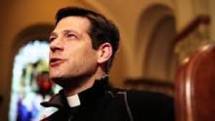
Fr Joshua Johnson Fr Joshua Johnson was ordained in 2014,                                                                                         while Fr. MIke Schmitz was ordained in 2003.Fr Mike Schmitz

This post details Msgr. Charles Pope’s narrative of his discernment process 26 years ago and his reflection on ‘The Mystery of being a Priest.’  As a parent, you may identify with his  history of coming of age in the ‘beige Catholicism’ of the 1970’s and 80’s. He was ordained in 1989 and blogs regularly HERE at the Archdiocese of Washington DC blog

The Mystery of Being a Priest
Msgr. Charles Pope • June 23, 2015
Each year I concelebrate with hundreds of others priests in the ordination Mass of new priests. I find such Masses deeply spiritual. I have no role other than to quietly Monsignor Charles Popeconcelebrate, so the readings and the rites move me deeply. As I sit quietly, I ponder the mystery of my own priesthood.

When I was growing up, there was little to indicate that I would ever become a priest. I was not a particularly spiritual child (at least not after age 7). I did not “play Mass.” In fact, I did not like church at all. At the end of Mass when the priest said, “The Mass is ended, go in peace,” I responded, “Thanks be to God!” much more vigorously than necessary.

My teenage years were marked by rebellion and pride. And while it is true that I joined the parish youth choir, it was only so that I could meet girls. It was not an evil intent, but not particularly spiritual. I did indeed date a few of them, two of them seriously.

But sometime during college a strange and uncomfortable notion came over me that I was being called to the priesthood. It was an odd desire, one I could not explain.

It was true that by that time I had become a Church musician, organist, cantor, and choir director. But again, I do not think I was particularly spiritual.  Music was something I enjoyed, but my involvement was more about leadership and impressing others, especially girls.

The growing desire to be a priest was inexplicable to me. At the time I was dating a real beauty queen, Denise. She was pretty, kind, and did not bring a heavy agenda to the relationship. Her greatest desire was just to get married and start raising children. I was two years away from graduation from college. I already had a job lined up with the Army Corps of Engineers. My life seemed pretty well set. And now this? The priesthood? How crazy is that?

And it wasn’t just a fleeting thought; it was a desire and it was growing. It was so mysterious, so strange, so unexpected. Somehow in my most honest moments I knew that the desire for the priesthood was stronger than the desire for marriage. But it seemed disloyal to Denise and I wasn’t going to break her heart, no way! And frankly I did not respect most of the priests I knew at that time. It was the late 70s and early 80s, the era of beige Catholicism, and the priests I knew seemed worse than irrelevant. I often fought with the pastor about music. He couldn’t think past Carey Landry and the St. Louis Jesuits, while I had met Palestrina, Bach, Mozart, and Victoria.

What on earth (or in Heaven?) was this thinking about being a priest? I just couldn’t make sense of it.

I will spare you all the details, but God won. Denise had a change of heart (or maybe she got glasses and saw that I wasn’t all that great   ). Or maybe she sensed my growing ambivalence. I won’t go into the details, but our dating ended. The troublesome pastor and I also parted ways (he later left the priesthood).

Two years later I entered the seminary.  And now here I am, today, celebrating my 26th anniversary as a priest.

Sitting in the Basilica the other day seeing nine new priests ordained was a great joy. And there again were those words that spoke to the mystery of the call: Before I formed you in the womb, I knew you, before you were born I set you apart; I appointed you as a prophet (Jer 1:4). Well, God always knew, but it sure was news to me before I was 22.

Yes, the call of God is a great mystery to me. Before I was born, God knew I would become a priest, but surely I did not know until long after birth.

Even after my ordination I would not have selected most the assignments I was given over the years. I came forth from the seminary as a Thomist, a Moral theologian. I graduated at the top of my class. I was skilled in Latin and the ancient liturgy, a lover of chant and polyphony. But my assignments were in African-American parishes that knew little of these, and where Gospel music was the mainstay.

Yet I could not be happier. I lost nothing of what I had; I only gained more. The mystery of God’s call makes our own notions and plans seem laughable in retrospect.

The second reading at ordination this past Saturday also speaks volumes to my experience. Paul wrote to Timothy, Until I come, attend to the reading (or Sacred Scripture) exhortation and teaching … Be diligent in these matters, be absorbed in them, so that your progress may be evident to everyone. Attend to yourself and to your teaching (1 Tim 4:12ff).

Here, too, God has been good to me. I can only say that for 30 years now, 26 of them as a priest, I have prayed every day, celebrated the liturgy every day, read and studied God’s word every day, and confessed every week. And through it all I am a changed man. I’m not what I want to be, but I’m not what I used to be. A wonderful change has come over me. I am more confident and serene. I have seen sins put to death and graces come alive. I love God more than ever. I love to pray and to teach. I have come to love God’s people so much more.

Surely my faults are still quite manifest. I am proud, opinionated, and too rash in many of my judgments. My zeal makes me impatient and too quick to judge. Have mercy on me, Lord and dear people of God!

But so many good things have come to change my life and to make a new man of me. Thank you, Lord. I do not boast, except in the Lord, for it is He who has accomplished all through the means above and by the prayers of his Holy people.

Please know that the authors of this blog pray daily for parents of discerning sons and daughters to find understanding and peace.

A Vision of the Future

One of the problems with a son discerning a vocation to the priesthood is the unknown.  What is in his future?  What will his life be like?   If your son was going to be an accountant, you would have a pretty good idea what his life would be like.  An individual’s view of priesthood is limited by their own experiences for better or for worse.

Parents need to see authentic examples of a discernment road that has led to priesthood.  Perhaps you don’t have a view of what a joyful, fulfilling life of a priest looks like.  Knowing that you are doing exactly what God put you on this earth to do yields a peace, contentment and joy that is difficult to describe, but is plain to see.

This video shares the story of 2 young men who grew up with the typical life experiences of girlfriends, sports and school.   They share how, over time, they grew to understand that God was calling them to a different way of life; something totally unexpected and unknown.

Yes, the road ahead is filled with question marks for you and your son.  The difference is that your son wants to take the road of questions with a trust in the Lord that you may not be able to understand at this moment.

So what should you do?  If your son is willing to travel that road with trust; it is your role to trust your son, the vocation director, your bishop, the seminary and the discernment process.

If you want to see more examples of the daily life of a priest, go to Youtube and type in “A Day in the Life of a Priest.”

Please know that the authors of the blog pray daily for parents of discerning sons and daughters to find understanding and peace

Objection Series: “He’s Throwing His Life Away!”

Although this statement sounds pretty harsh, you may have heard this about your son’s interest in priesthood or religious life.  Maybe you worry that you are going to hear it from a family member, a friend, a co-worker, your spouse or even yourself.

I heard variations on this comment a few times from acquaintances when they first heard the news that my son was going to college seminary right out of high school. Among the variations were:

car off bridge1

Why would you let him throw his life away like that?

I would never let my son throw his life away!

Why does he want to throw his life away?

But he’ll never have a normal life with a wife and children!

At first I was shocked at how rude these comments were.  Once the news was out, I had heard some negative and less than supportive comments, but this was the most severe response I heard.   The first time I heard it, I was taken aback and managed to stammer, “Oh, no, we’re very happy with his decision and proud of him.”  Then they would give me that ‘Are you crazy?’ look or just roll their eyes.

None of these negative comments came from Catholics.  I heard nothing but positive comments from the people in our parish and other Catholic friends and relatives.  The phrases “wasting his life” and “throwing his life away” have given me a lot to think about.  How is it that some people view the very idea of a young man considering becoming a priest as so terrible that they liken it to wasting his life?  Are these people so materialistic and achievement focused that they view a life of service to others as a waste?

After I got past being judgmental, I began to have empathy for these people who have so little awareness or appreciation of the spiritual needs of others and serving these needs. Then it occurred to me that I should pray for them to come to an understanding of the value of spirituality in their own lives.

Other comments have not been as overtly negative, but have an undertone of disapproval or express a lack of value in my son’s choice.  Over time, I began to see that the comments I received gave me an indication of the individual’s misunderstanding about the priesthood, religious life and seminary.  I got to the point, that when I heard a comment, I was able to counter with a little bit of information to provide some reality to their false assumptions.  Here are a few samples.  Help yourself to any of these responses when you find yourself on the receiving end of a less than enthusiastic comment.

Comment: “What happened to computer science?  He would have a great career if he stayed in computers.”

Response:  “If he is called to be a priest, I’m sure he will have the opportunity to do many different things in his life.”

False Assumption: Only a career with a high income and career opportunities are valuable and worth pursing.


Comment:  “I thought he went to the prom with Susan?  She was gorgeous!  What happened?”

Response:  “They went to the prom as friends and still are friends.”

False Assumption:  Going to seminary means you can’t have any contact with girls.


Comment:  “Couldn’t he get into the state university?”

Response:  “As a matter of fact, he was accepted into a computer science program at State, but he decided not to go.  Actually, it was much harder to be accepted as a seminarian for the diocese and the college seminary than getting into State.”

False Assumption:  Guys who go to seminary are those who can’t get into a regular college.


Comment:  “You mean, no sex? Ever? And you’re okay with that?”

Response:  Okay, you try explaining the gift of celibacy in 2 minutes or less. I tried. I think I went with “…if he does have a vocation to priesthood, he will be given the grace to be able to handle it…..” and  “Yes, I am okay with that if he does become a priest. It’s part of the package.”

False Assumption:  Living a celibate lifestyle is impossible.


Comment:   “Is he gay?”

Response:  “No, that has nothing to do with it.  He is going to seminary to determine if God wants him to be a priest.”

False Assumption:  A healthy male attitude toward girls cannot be compatible with going to seminary.


Comment:  “Doesn’t he like girls?”

Response:  “Of course he does.   He has lots of friends that are girls.”

False Assumption:  A healthy male attitude toward girls cannot be compatible with going to seminary.


Comment:  “Don’t worry, he just hasn’t found the right girl yet.”

Response:  “I’m not worried.  He is just trying to figure out if God wants him to be a priest. If he doesn’t, I am sure the right girl will find him!  If he does determine he is not called to be a priest, he will be a great catch!”

False Assumption:  The “right” girl is an antidote to these thoughts of being a priest.

 
Please leave a comment if you  have had any experiences like this and had a good response or if you did not know what to say!  We will help you come up with a response.

Please know that the authors of this blog pray every day for parents of discerning sons and daughter to find peace and understanding.

What is a Vocation Story?

I have heard my son give his “vocation story” many times in different settings.  This is the story of how he decided to go to seminary and how he felt that God may be calling him to the priesthood.  I have heard many variations depending on the person asking and the situation.Asian man giving speech

The first time I heard my son give this talk in public was from the pulpit during a seminary appeal weekend for the diocese where the seminary is located.  It was interesting to hear him describe our family and how he grew up.  In that situation, I was surprised to hear something I did not know.

He explained that the first time the thought of priesthood came into his head was in 5th grade at the weekly school mass.  He said “I thought to myself:  A priest?  I don’t’ want to be a priest.  I want to get married and have a wife, kids, a family.”  Then he promptly dismissed the idea.  I had never heard that little detail before and realized he never spoke about it while in grade school.

When a friend or acquaintance meets my son and hears that he is in seminary, it is common for them to ask him “How did you know?”  When he is in a situation where it is not really appropriate to go into a long explanation, I have heard him say:  “Well, there was this burning bush….”  Then he pauses just long enough to crack a mischievous smile and say “Just kidding.”

My son’s first serious idea of a vocation started at a high school retreat during his Junior year.  In this retreat program, the Juniors from the previous years can act as student leaders the following year.  By the spring of his senior year, he was applying to the diocese.  Only a small, close circle of friends knew about his plans.  He did not want to make the news public until he was accepted by the diocese.  As a student leader at the retreat, I am sure it took no small amount of courage to tell his story to his peers who had no idea this was in the works.

I was there when my son told my mother about his plans to enter seminary.  He gave great detail and answered her questions.  I was sure my mother would say what she always did about priesthood: “It is such a hard life” with an extremely heavy sigh.   She didn’t.   She just cried and said how happy she was for him.  Of course, she said it to me, right after he left the room.

I was there when he told his Aunt, my sister, who is his godmother and confirmation sponsor.  She cried through the entire story and kept asking him “Really? Are you sure?”  This is where more information about the discernment process was needed to clarify. “No, he’s not sure, that’s why he is going to seminary.” (Note: Aunt Becky was crying because she was happy for him!)

Listening to your son talk about his vocation story gives a parent new insight into his mind and heart.  You may be surprised by what you learn as you hear his story repeated over time.

Please know that the contributing authors on the blog pray daily for parents of discerning sons and daughters to find peace and understanding.
Everyone has 3 Vocations

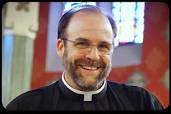
With all the talk on this blog about vocations and discernment, you may enjoy a video by Fr Mike Schmitz who provides a little different explanation of the 3 (yes, three) vocations that every person on earth has.

Years ago when our generation was coming of age, a vocation meant religious life, married or single.   A vocation to religious life was always referred to as a “calling”.  I never heard of marriage or single life as being a “calling”.  The inference was that marriage was a choice and single life was a default.  The idea of choosing a single state in life for a specific purpose was unheard of.

The universal call to holiness was a major concept to come out of Vatican 2.  It is too bad that this news and its’ application to everyday life took decades to get to the people.  I am glad that young people are hearing this information now, but for those of us who grew up with out it, it is nothing short of revolutionary. It is a realistic prescription to make you into a saint.

Fr. Mike gives a clear explanation about how all 3 of your vocations come together for you to become the saint God wants you to be.

Fr Mike Schmitz, Director of Youth and Young Adult ministry in Duluth, Minnesota is also the chaplain at the Newman Center at the University of Minnesota Duluth. You can listen to his archived and current homilies HERE or find him on Youtube with both short and long presentations.

Please know that the authors of the blog pray everyday for all parents of discerning sons and daughters to find peace and understanding.

Advantages of Going to Seminary or What is the Next Right Step?

If you are reading this, most likely, you and your son have had some contact with the vocations director for your diocese or religious order.  There is talk of applying to seminary, but it seems like such a dramatic step at this point in his life.

Mt St Mary's Sem.

This post will describe the significant advantages for any young man to go to seminary to continue to discern his vocation.


2 sems talking to priest

Do you think he will be wasting his time if he discerns that he is not called to the priesthood?  I can assure you, that no time spent in the seminary is ever wasted.  It has been said that there should be a lot more former seminarians.


The advantages of attending seminary for any length of time will last a lifetime for your son.  If he determines he is not called to priesthood,the time spent in seminary will make him a better man, husband and father.  If your son has been thinking about the priesthood and is not sure, he will never know for sure outside of a seminary environment designed to support him on this path of discernment.  The goal here is to help your son determine if he is being called to the priesthood.  Your son can only discern young-man-praying-church-handsome-41152818to a point outside of a seminary environment.  Inside, there are significant opportunities and advantages to help him come to an understanding of whether or not he is called to priesthood. The advantages of seminary described here can help you understand that going to seminary may be the next right step Those who do not take this next step may spend the rest of their life wondering if they were called to be a priest.  No one wants their son to live with a lifetime of questions and regret.

So what are the advantages of going to seminary?

Spiritual Direction

The opportunity to have a Spiritual Director walk with your son through the discernment experience may be the biggest advantage in going to seminary.  A Spiritual Director is a trusted mentor who cares about your son and helps him grow over an extended period of time in faith, virtue and maturity.  This is an enormous advantage that seminarians are priest talking to manprivileged to experience.  You can think of it as coaching in order to determine what God wants you to do with your life and become a better person.  The environment at seminary is conducive to this discernment by having the time and resources available in a structured, positive environment.  Every year, seminarians come to the decision, with the assistance of their spiritual director that they are not called to be a priest and decide to leave the seminary.  Some refer to this as “discerning out.”  When they leave may have more to do with finishing the semester to finish academic credit than anything else.
The vocation director is not a recruiter trying to talk your son into this.   A spiritual director will not coerce or brainwash your son into “signing up”.  No one, not the vocation director, your bishop or the seminary wants your son to continue in seminary if he is truly not called to it.  This is not like an Army recruiter who is trying to get as many recruits as possible to meet a quota.  Besides growing up in your family, this may be the only time in life where your son will be surrounded by people who only want what is best for him and determine what God wants him to do with his life.

The Environment

Several aspects of the seminary environment itself provide advantages to a young man discerning.

“Everybody gets it”

The summer before starting seminary, my son would frequently say that he couldn’t wait to get there so he could stop explaining himself to people all the time. He said “Everybody there gets it.  Everyone is there for the same reason.”  In seminary, no one thinks you’re crazy or strange.  No one gives you that questioning look when you tell them what your major is.

men taking selfie


It is true that having a group of young men live together with a common purpose is a positive environment.  They study and learn together, pray and attend mass together, play and eat together or just hang out like any other guys their age. Sounds sort of like a college fraternity without the  girls, alcohol, drugs and other near occasions of sin.

Accountability

Seminary has a structured environment designed to grow your son in self-discipline, prayer, virtue, and knowledge of the faith.  Which one of these do you not want for your son?

The environment at seminary is not as austere as you may think.  Seminarians play sports, watch TV, go to movies, hang out with friends playing footballand drink alcohol in moderation if over 21 years old.  They aren’t roaming  the halls singing Gregorian chant.  They do have mass every day and pray the liturgy of the seminarians in churchhours together and have curfews.  Faculty take note if someone is not in class and they look into it.  You can’t hide in seminary.   Even as his mother, I am not allowed in my son’s room if he needs something from home.

Does the seminary environment have boundaries, requirements & expectations?

Yes.

Is this a bad thing?

No

Compare seminary environment with a typical college environment today

As a parent, you may remember the way that college was back in the day.   There were curfews, at least for freshman, and dorms were single sex.  Boys were not allowed on the girls’ floor or in the girls’ dorm at all.  Students signed in and out of the dorm on weekends and evenings.

Today, it is a complete free for all.  No curfews and all dorms are co-ed, so there is no need for rules about “visitation”.  In the name of frat partyconfidentiality, parents have absolutely no right to knowledge about the
student’s grades, academic progress, attendance, health care issues or even situations involving campus or local police.  The typical college environment today requires a significant level of self-discipline to manage all the competing activities and opportunities available.  It is common for students to “crash and burn” when they cannot manage so much freedom with no accountability.

Sending my older 2 children off to a state university, I had many worries and sleepless nights.  When you send a son to seminary you may have different concerns, but you will not have to worry about the following:

I am not worried:

       That he will get mixed up with the wrong kind of girl.

       That he will end up at a drunken Frat party at 2am.

       That he will never go to mass on Sunday.

       That he will never go to confession.

       That he will cut one too many classes and get behind.

       That he will have too many distractions on campus and most of them a   bad  influence.

Even one year in college seminary can provide your son with a lifetime of perspective on his vocation, an increase in his faith and prayer life as well as personal maturity and character.  Every year increases these benefits exponentially.  If your son is thinking about going to the seminary, these advantages can help you have more peace about taking the next right step with your son.

Please know that the authors of this blog pray daily for the parents of discerning sons and daughter to find understanding and peace.

Come and See!

Pam’s post about visiting the seminary with her son reminded me that I’ve never mentioned the “Come and See” weekends.

A “Come and See” is a retreat which offers discerners the opportunity to taste religious life.  The Dominican website OpCentral.org describes it this way:

Information is always helpful, digitally, in print, or otherwise, but there is no substitute for a real human encounter. That’s why a Come and See Weekend is a must for anyone seriously discerning their vocation. Dominican Come and Sees are a sixty-four hour immersion experience into the very rhythm of religious life. It’s that “gut” experience which offers the visceral clarity that is the goal of discernment and the only true test of whether or not your home is here.

Fr. Larry Rice, the Vocations Director for the Paulists, confirms this:

When a man is contemplating a vocation to the priesthood or religious life, most of the discernment is internal work: prayer, reading, prayer, spiritual direction, and prayer. This is a good and necessary process. But it can also feel a bit isolating, as if no one else is wrestling with these issues and questions. And it can also take on a hypothetical and imaginative quality. What will life in the novitiate be like? Is the seminary a strange place where I’ll feel uncomfortable? Will I be out of place, surrounded by people who are so much holier than I am? Can anything good come from Nazareth?

Come and see. That’s the invitation that the Paulist Fathers make three times each year. Come for a visit. See and experience our common life. Pray with us. Dine with us. Come to class. Come to the chapel. Have a soda or a beer, and ask your questions.

Evan participated in a couple of these weekends early in his discernment.  He came back enthused about the community and taken with the beauty of the liturgy of the hours.  Each visit increased his conviction that he needed to pursue the call.

Now that he’s a member of the community, Evan gets to experience these weekends from the other side.  Meeting potential seminarians is a great opportunity for him to share part of his journey and to remember his early days of discernment.

“Come and See” weekends are pretty common.  A quick Google search turns up a long list of possibilities.  Some of them are associated with particular communities like the Dominicans, Paulist and Mercedarian Sisters — yes, there are “Come and See” retreats for women discerning religious life as well.  Some of them are associated with diocesan seminaries.   All of them follow the same basic pattern of welcome, prayer and participation.

The point, I guess, is that discernment is something to be lived.  That means actively exploring religious life.  Don’t just sit in a pew and say “I think God is calling me”.  Get up and answer the call.    Find a “Come and See” weekend, talk to a vocations director, immerse yourself in experiences that will let you encounter God.  You might be surprised at what you learn!

— Dad (Evan)

A Summer Visit to the Seminary

This time of year, you and your son may be thinking about making a visit to a seminary.  He may be accepted for the fall term or still thinking about it.  After so much talk and talk about what seminary would be like, my son and I went for a visit in late June prior to his entrance in the fall.   I did not want to see the place for the first time when he was moving in.   I think I needed to take some of the mystery away so I could envision his life there.

We went in the summer to get a first look and had a very nice guy entering 4th college show us around and answer questions about seminary life.   It was good to visit during the summer because we were able to tour all areas of the seminary.  If school had been in session, our tour would have been more limited as some areas were off limits for the privacy of the seminarians.

Our tour guide introduced us to everyone from the cafeteria ladies to the dean.  Everyone was happy to meet my son and welcome new men 2welcome him.  Our guide would introduce him as one of the “new men”.   I was not accustom to hearing my 18 year old son called a “man”.  But I have come to see that if you call them men and expect them to act like men, they will respond.  I can guarantee you that at the tour for the state university, male students were never referred to as new men, but incoming freshman.  The cultural expectations of a freshman in a traditional college are a far cry from the expectations of the new men in the seminary.

If you want to visit the seminary, call ahead and make arrangements.  It was great to have another seminarian give us a tour and answer our many questions.  He was candid and provided lots of little details and suggestions from bringing a fan and an extra lamp to how the refrigerator in the common room was shared.  He told us about the opportunities for intramural basketball and other sports when we stopped at the gym.  Since it was just the 3 of us, we could stop and ask questions when we had them.  I am sure my son was rolling his eyes at my practical and possibly “politically incorrect” questions, but the answers put my mind at ease.

If the seminary has an open house or orientation day, you may have the opportunity to meet faculty, administrators and other seminarians.   During an orientation day in August, we were welcomed by seminarians and faculty at an informal coffee and donuts session.   Then, we went on another tour with other parents and new seminarians.   I was impressed with the other seminarians there to assist in welcoming the new guys.  They were friendly, outgoing, joking around, joyful, sincere, helpful, kind and empathetic.  I know it sounds like boy scouts, but they really seemed like great guys.  Some were in “clerics” and others in t-shirts and shorts looking like they were going to play basketball after they finished giving the tour.  This may not have been what the seminary wanted our tour guide to wear, but it made him seem more real, approachable and a regular guy.  He was easy going, encouraged questions and answered candidly.  There were no taboo topics or questions.  Some parents on our tour asked him questions on the side.

By the end of both of these visits to the seminary, I felt much more comfortable seeing and experiencing the seminary environment.  Sure there were a few tears when we said good bye, but I did that when we took the older siblings to college.   Taking them to a state university, I worried they would not get to mass on Sundays.  In this case, I knew this son would be at mass 7 days per week.  One less thing  to worry about.

Dinner with a Side of Answers

meat-569073_320Want to know what seminary is like?  Ask someone who’s been there.  Ask a priest.

Cathy and I stumbled into this accidentally a few months after Evan told us he was in discernment with the Paulists.  Our pastor, Fr. Clarence, had invited Fr. James DiLuzio, CSP to come to the parish to present the Luke Live mission.  A couple of weeks before the mission date, the parish office put out a call for people willing to feed Fr. DiLuzio a meal.  If circumstances had been different, we might have glanced past the notice and hoped that somebody stepped up to help out.

As it was (and since Fr. DiLuzio is a Paulist) we jumped on the opportunity and scheduled a lunch and a dinner with him.  The lunch was Saturday at noon, so Evan came down to join us.  At lunch we talked about the seminary, the discernment process, and life as a priest.  We continued the conversation over dinner a couple of nights later.  It set our minds at ease on many of the questions we’d been asking.

Since then, we’ve taken advantage of every opportunity to dine with visiting priests.  We’ve talked Star Trek with a geek priest, interfaith politics with a priest who worked at the Vatican for ten years, genealogy with a priest who has traced his family back to the Mayflower, life in the Holy Land with a Franciscan, formation with a man who attended minor seminary (high school seminary), travel with a retired priest from California and seminary with several.  We’re learned about their backgrounds, how they were called to the priesthood and what their formation was like.

To a man, they’ve all been good company and we’ve enjoyed our time with them.  Getting to know them has given us insight into Evan’s journey and let us see the human side of the priesthood.  Those informal conversations have been a real blessing for us and I imagine they’d be a blessing for you as well.

So…next time you have a visiting priest in your parish, offer to take them to dinner.  Oh, and don’t forget your pastor as well.  You’ll be surprised at what you can learn from him.

— Dad (Evan)

P.S.

We took the Franciscan — in full habit — to a lovely restaurant with outdoor seating.  The habit got all of the looks.  In Utah (where the LDS church makes up the majority of the population) you just don’t see men in habits that often.

— D

Discernment: How long is this going to take?

I don’t know how many times I have heard the word “discern ” or “discernment” in the last 2 years. Even so, this word still has a vaguely mysterious quality.  It seems that it requires a certain amount of openness and getting  comfortable with some level of woman-watching-hourglassuncertainty.  As a parent, I don’t like uncertainty.  I get it, but I don’t like it.  You may be thinking, “When will he know for sure? How long is this going to take?”

How long…. is a relative question.  Discerning a vocation is not like deciding between going to one college vs another. That kind of decision weighs pros and cons and evaluates data like student/faculty ratios and graduation rates. Discernment is completely different. It is not a once and done decision.  I was surprised to learn that the individual discerns one year at a time in collaboration with his Spiritual Director and Vocation Director.  Discernment is taken one step at a time with input from experienced mentors who want your son to make the decision which is right for him.

Michael Bollinger is a college seminarian at St Charles Borromeo Seminary in Philadelphia.  Below is a portion of a blog post on the seminary website on the reality of a “timetable” for discernment..

Easily the most misunderstood thing about seminarians is why we are at the seminary. More times than not, when a Catholic comes up and talks to me, knowing that I’m a seminarian, he or she speaks as if I’m undoubtedly going to be a priest.

However, the reality is that guys go into the seminary precisely because they don’t know if God wants them to be a priest or not. They’re at the seminary to figure that out. I first learned that the hard way when I first entered seminary this past fall.

It was a Friday night, and I went out to dinner with four or five older guys (seniors in the college seminary) and as the conversation got going, I asked each of them if they “knew” that God was calling them to the priesthood (expecting a resounding “yes”). To my surprise and embarrassment, as they went around the table answering the question, the answers were a repeated “no”.

The fact is, I had the perception of most people—I figured guys that had been in the seminary for two, three, or four years had a fairly firm understanding of God calling them to be priests. But that’s just not the case.

Click here to continue reading the full article St Charles Seminary blog: Wait, We’re Discerning?

wasting timeIt is understandable for a parent to want some kind of assurance or timetable on their son’s discernment path.   Whatever your age, it seems the older you get, the faster time goes.  We may see time passing quickly.  Is the time in seminary going to be wasted?

Consider this: your son will probably live well into his 90’s or longer without any serious illness or injury.  Taking a few years in seminary to determine if he has a religious vocation is not a long time considering it will provide an opportunity to develop virtue, self-discipline, a deeper knowledge of the faith and a strong prayer life.  Which one of these things do you not want for your son?  These are all benefits for men who have spent time in seminary and discerned out to discover their true vocation.

Please know that the contributing authors of this blog pray for parents of discerning sons and daughters to find understanding and peace.

How to Discern: For Young and Old Alike

Discernment can seem almost like a foreign word at first.  It is not a term you hear everyday.   As parents, you probably have heard this word thrown around quite a bit.  What exactly is discernment?   How is my son going to know if he has a vocation to the priesthood?

How to Discern  is a  7:30 video by Fr. Mike Schmitz, Director of Youth and Young Adult Ministry in Duluth Minnesota.   Fr.Mike provides some basic truths to keep in mind when discerning what is God’s will for you.   Then he describes 3 simple practices to follow  in order to “never miss God’s call for your life.”

These are simply good spiritual practices for anyone.  So although this video is focused on discerning a vocation (married, single or religious), I can see these practices being a useful tool for anyone who is trying to know what God’s will is in any given situation of life.  So if you are a younger person discerning God’s will for your life or a more “mature” person trying to decide how to spend your retirement years, these practices can be used to bring God into any decision throughout your life.

If you would like to hear more from Fr Mike Schmitz, look for him on You tube as well as the University of Minnesota at Duluth Newman Center website where he posts homilies at www.bulldogcatholic.org