Blog

News from the Paulists!

Evan pointed out that the blog hasn’t been updated in a while.

He’s right.

I’ve missed several important events in the life of the Paulist Community. So, let me (with a firm purpose of amendment) get the blog up-to-date on a few important things.

Let’s start with this great article over at First Things about the oldest living Paulist priest, Fr. James Lloyd. The article highlights his years of service including time as a television host and seminary rector. I found this tidbit about his training as a psychologist.

Upon his return to the United States, his opportunities increased, as he earned a Ph.D. in psychology from New York University—a degree he believes enhanced his ministry as a priest. A philosopher by training, Fr. Lloyd had been instructing people in the faith with a classic theological approach. But while this logical process was effective in many cases, it ran into trouble with people who responded, “I can’t believe what the Church teaches.” Fr. Lloyd discovered that the reason these people couldn’t accept Christianity, and Catholicism in particular, was due not to intellectual factors, but to emotional ones. Deep resentments and unconscious biases had built up over many years, making them unable to see what Fr. Lloyd was teaching. He had to approach people differently, exploring their emotional worlds. That’s where his psychology degree paid off.

By combining sound psychology with traditional Catholic spirituality, Fr. Lloyd was able to remove the brambles in these people’s lives, which were blocking their path toward truth. Once those obstacles were removed, the logic of the faith became clearer, and reluctant souls under his care began flowing back into the Church once again.

The article concludes with this encouraging paragraph:

Speaking as a priest who has lived almost a century, he concludes, “I’m surprised the seminaries aren’t bulging with young men who want to have a wonderful and enriching life.” Fr. Lloyd feels blessed to have lived one.

Over at Paulist Press, they inaugurated the Elequenta Perfecta award, which was instituted “to celebrate people in communications who take their vocation seriously, live their faith life and can serve as an inspiration to others.” The award was given to Jeanne Gaffigan for her work as the writer and producer of The Jim Gaffigan Show. The cable-based sitcom chronicles the lives and foibles of a fiercely Catholic family living in New York City. Jeanne sees the program as a vehicle for sharing the faith:

She said the couple tries, “in our own imperfect way, to present a household of faith in one of the most culturally diverse places in our country.” The television show is loosely based on their experiences working in the comedy field and raising children in a two-bedroom apartment in New York.

Speaking of Paulist Press, just yesterday Paulist Press was awarded the Lumen Ex Libris by the Vatican Publish Office. Well done!

Finally, the biggest news happened back in September when Matthew Berrios, Steven Petroff and Stuart Wilson-Smith were all ordained as transitional deacons. This major milestone is one of the last before priestly ordination. Please keep them in your prayers as they finish this last year of training and formation before assuming their duties as priests.

–Dad of Evan

Priests/Monks, Nuns/Sisters – What’s the Difference?

The Catholic church has two-thousand years of history behind it. In that time we’ve developed a highly specialized language. Like all jargon it can be confusing — for those on the inside and the outside alike.  (Spend ten minutes with your local IT or medical professional and you’ll know what I mean.)

Even simple things, like the designation of certain roles in the church, can be perplexing. Do you know the difference between a nun and a sister? What is a monk? Are all monks priests? Are all priests monks? What about Deacons?

In the spirit of simplification, let me share a way to think about the different roles of religious life in the church.

Broadly speaking, religious vocations in the Catholic church can be categorized as “contemplative” or “active”.  Those who are called to a contemplative life live apart from society in a monastery or cloister.  A recent Aleteia article explains it this way:

This usually involves living and working within a designated “enclosed” space, off-limits to all but priests, medical personnel and workmen, and leaving the enclosure only for medical issues or business involving the monastery. As with monks, a nun’s “work,” aside from what helps to materially support the house, is prayer, which is ongoing throughout the day and offered for the sake of the Church and the world.

Like many things in the church, there are shadings and variations of how the general norms are applied. A post over at CatholicEducation.org clarifies the rules with regards to cloistered nuns:

In some cases, the cloister restrictions are not as strictly enforced. Some orders of nuns, while technically cloistered, conduct works of charity or education, interacting with the public. For example, the Visitation Sisters are technically cloistered nuns but teach school.

On the other hand, those with an active vocation are called to live in the world and provide direct service.  Perhaps the most famous of these would be Mother Teres’a Missionaries of Charity.

As a general rule, if you see a woman wearing a habit or some other distinctive mark of religious life, you’re probably seeing a “sister”.  The term “nun” is more often reserved for those living the contemplative life.

Similar rules hold true for monks, priests and friars with a couple of additional complications. Priests can be attached to the local diocese — these are called “secular” or “diocesan” priests.  Or, they can be attached to a particular community or order — think “Franciscan”, “Jesuit”, or “Paulist”.  Or they can be monastic — think “Benedictine”.

Aleteia summed it up this way:

Diocesan priests do not take vows of poverty and may possess and inherit property.

Priests vowed to a religious order (like the Franciscans, Dominicans, etc) or a monastic community (like the Benedictines or Cistercians) do make vows of poverty, surrendering any income they generate through their works to their superiors. So a Dominican writer earning profits from his books will turn those royalty checks over to the Order of Preachers. A Trappist writer will turn his earnings over to his abbot or prior, for the benefit of the whole community.

In an order or a monastery, some of the men may be ordained as priests which allows them to perform the sacraments, while others are brothers who have taken vows.  The Aleteia article goes more into depth of the various shadings of meaning.

If you meet someone in religious life and are curious about the details of their particular calling, the best and simplest way to learn more is to ask them.  The overwhelming majority of religious I’ve met are more than happy to tell you all about their vocation.

— Dad of Evan

Spiritual Direction

Did you know that all seminarians are required to have a spiritual director?

Do you know what a spiritual director does?

I certainly didn’t when Evan started his journey of formation.  A couple of years ago, I wrote a post about the role a spiritual director plays in formation and how everyone might benefit from having one.

Back then I summed it up by saying:

A spiritual director is a guide to interior growth and renewal, not counselor or therapist.  The discussions center on the relationship between the directee and God.

You might still wonder what the personal experience is like.  (Which brings me to the point of today’s brief post.)

On a recent Busted Halo broadcast, Fr. Dave Dwyer talked with producer (Brett) about the experience of interacting with a spiritual director.  If you’re interested, it’s well worth your time to give it a listen.

— Dad (of Evan)

Advice from a Seminarian

A few weeks ago an article entitled The Inside Scoop on Seminary: 3 Things You Should Know Before Entering turned up in my feed.

It makes interesting reading, so I’ll encourage you just to follow the link above and see what those “3 things” are.  I will tell you that I shared the article with Evan and he said it was pretty consistent with his experience — and the experience of his Paulist brothers.

What is most encouraging about the article is the end.  After dispensing insight and advice, the author finishes with:

In short, be the man God made you to be and then He’ll make you into the Priest He wants you to be. Don’t worry about anything, because if Jesus Christ wants you to be His priest, then no power on earth or in hell can stop that from happening.

— Dad

Holy Acolytes!

254px-Solomon_Abraham_The_Acolyte.jpgA few days ago the Aleteia blog ran an article about a group of deacon candidates who were being installed as “acolytes”.  This reminded me of a piece we ran a couple of years ago about the “minor orders” and their role in priestly formation.

Back then, I wrote:

During formation, the candidate would go through the four minor orders — porter, lector, exorcist and acolyte. The progression through the minor orders was a bit like gaining rank in the military, each of them brought the candidate new responsibilities.

I went on to point out that two of the orders — lector and acolyte — are still used today in formation for both priests and deacons.  What I failed to do was to explain these to important offices.

You may already be familiar with lectors — those who read a portion of the scriptures at Mass — but it may surprise you to learn that this can be a formally instituted ministry.  The Code of Canon law (the law which governs the Church) states:

Can. 1035 §1 Before anyone may be promoted to the diaconate, whether permanent or transitory, he must have received the ministries of lector and acolyte, and have exercised them for an appropriate time.

§2 Between the conferring of the ministry of acolyte and the diaconate there is to be an interval of at least six months.

These ministries are important steps on the way to ordination as a deacon which, in
turn, is an important step on the way to priestly ordination.

Lectors, as you would expect, are tasked with reading the scriptures at Mass.  This practice goes back to the Jewish church where the scriptures were read as a matter of course in worship.  In the early days of the church, it was necessary to find someone who had sufficient education to be able to read.  The origins of the office are found there.

Candidates for the priesthood or deaconate are installed as lectors (typically) by a bishop.  In a lector’s installation, he is given a lectionary or book  of Gospels while the bishop says, “Take this book of holy Scripture and be faithful in handing on the word of God, so that it may grow strong in the hearts of his people.”

There are lay lectors as well, of course.  Men and women who have been identified as fit for this service to the church.  They are not instituted by a bishop, but rather trained at the local parish.  They fill the role  of lector, but are not formally installed in the ministry.

The role of the acolyte is somewhat more complicated and represents a more technical level of service during the Mass.  The General Instruction of the Roman Missal — the book which outlines all of the rules and rubrics for Mass– explains the role of the acolyte this way:

The acolyte is instituted for service at the altar and to assist the Priest and Deacon. It is his place principally to prepare the altar and the sacred vessels and, if necessary, to distribute the Eucharist to the faithful as an extraordinary minister. In the ministry of the altar, the acolyte has his own proper functions, which he must carry out in person.

It goes on to list specific duties including carrying the thurible if necessary and purifying the vessels used for the Eucharist.  There’s a nice summary of the duties at CatholicAcolyte.com.

Acolytes are instituted by a bishop, who places the sacred vessels in the hands of the candidate and says “Take this vessel with bread for the celebration of the eucharist. Make your life worthy of your service at the table of the Lord and of his Church.”

People often express surprise at how long the process of priestly formation takes.  To someone outside of the Catholic church it can seem a long road, indeed.  Yet there are milestones as the young men move through their training and find themselves growing in both skill and dedication.  Lector and acolyte are two of the more visible milestones and it is worth remembering that each plays an important role in both formation and service to the people of God.

–Dad


The Miracle of Priesthood

prayer-card-jesus-prayer-for-vocations


As it turns out, today (April 17,2016) is the World Day of Prayer for Vocations.

Over at Aleteia.org Deacon Greg Kandra made vocations the focus of his homily.  He leads off with a quote from a letter that he received from a friend in Philadelphia:

“This morning we received devastating news at Mass. Our beloved Augustinian pastor has been diagnosed with liver cancer that has spread to his lungs. The priest who told us said that he was visiting him yesterday when a cousin came into the hospital room and told him that they are all praying for a miracle. His response was, ‘I have already received a miracle. I am a priest.’”

This is probably the best – and most honest – answer to those who have an objection to a man entering the priesthood.  Ordination is an extraordinary event and being allowed to share in the priesthood of Christ in a special way is, indeed, a miracle.

Deacon Greg speaks with great reverence and love about his own call and ordination as a permanent deacon and talks of it as an on-going source of grace and blessing in his life:

Surveys tell us again and again that clergy and religious report among the greatest job satisfaction in the world.

That’s because it’s not a job. It’s a vocation.

As that priest in Philadelphia knew: it is, in fact, a miracle.

Finally, he suggests ways of introducing young men to the idea of the priesthood.  The best advice he gives is that you should ask God if you (or someone you know) is called.  He points to Pope Francis who advises young people to “Ask Jesus what he wants and be brave!

In an address to seminarians in Rome this week, Pope Francis outlined the appropriate way to respond to God’s call — to be all in and not “half-way” priests.

“We respond to this vocation in the same way as the Virgin Mary does to the angel: “How is this possible?” Becoming “good shepherds” in the image of Jesus “is something very great and we are so small.”

“Yes, it is true, it is too great; but it is not our work! It is the work of the Holy Spirit, with our collaboration,” Francis said in his address to the College, adding spontaneous comments here and there to his prepared speech.

“It is about humbly giving oneself, like clay that is to be moulded, letting God the potter work the clay with fire and water, with the Word and the Holy Spirit.”

It is true that “at the beginning intentions are not completely righteous, and it is hard for them to be so. All of us have had moments when our intentions were not completely righteous but in time this changes with everyday conversion. Think of the apostles! Think of James and John. One of them wanted to be prime minister and the other a minister of the economy because it was a more important role. The apostles’ mind was elsewhere but the Lord patiently corrected their intention and in the end the intention of their preaching and martyrdom was incredibly righteous.”

So, on this World Day of Prayer for Vocations, take a moment to ask God to call those whom he chooses to the priesthood and offer to be the bearer of that message if you can.

Meet the Parents Part 2: On this road with your son.

Do  you feel alone sometimes while your son is on this path of discernment?  Hopefully, this blog is one way for you to see that you are not alone and that other parents have had the same concerns and worries, hopes and dreams for their son.  The first Meet the Parents  post on this blog was about taking advantage of any opportunities your diocese provides for parents to meet or attend other events like ordinations.


2mothers2If the idea of a group of parents is too much, your vocation director can put you in touch with  1 or more parents that can address your individual concerns.  You will be surprised how “normal” the parents of seminarians can be.  The post Objection  Series:  “How could this happen in our family?  We aren’t the model Catholic family!”  can give you a preview of what other families of  seminarians  are like.

This post takes a different view of the experience of parents as they follow their son on his discernment/vocation journey.

This article appeared in the Catholic Sun, a newspaper for the diocese of Phoenix AZ in November 2015.

Priests’ Moms Find Peace Within Group

Carla Sperry never expected to be looked at as an expert in the Catholic faith. “Sometimes, even when my son was in the seminary, people would come up to me and say, ‘Oh, you’re the mother of a seminarian!’ and they would think that I would know so much about our religion.”

A growing group of moms is finding solidarity with other mothers who not only understand that, but ride the same roller coaster of emotions as their children further discern or live a religious vocation. Sperry, whose son — Fr. Scott Michael Sperry — was ordained to the priesthood last year, is part of this group of moms who cling to their rosaries and each other every first Saturday of the month.

The group doesn’t have a formal name, but its purpose is clear: to pray the Joyful Mysteries for their children discerning or living a religious vocation.

Mom at son's diaconate ord 2015-11-17-at-12.49.54-PMRita Lee prays silently near her son, transitional Dcn. Ryan Lee, shortly after his ordination May 31. Lee organized a prayer group for moms whose children are discerning religious vocations. (Catholic Sun file photo)

Rita Lee, a parishioner of St. Thomas the Apostle in Phoenix and the group’s founder, sits right in the middle of the group’s target audience. Her son, Dcn. Ryan Lee, is in his final year of discerning the priesthood and is living the vows of a deacon in that transition period. She learned during annual meetings of seminarian parents with the diocesan vocations director that some mothers felt sad about their sons’ calling, while others felt mad and many felt blessed.

“Fast forward a number of years and I guess the Holy Spirit finally spoke to me and gave me the grace to think that possibly we could come together as a group of mothers of seminarians, priests and religious, to pray specifically the rosary for our children,” Lee said.

The group currently consists of 30-35 members, who meet at a different parish each month, ensuring that no one has to consistently drive a long distance.

Anne Sanfilippo, a parishioner of St. Bernard of Clairvaux in Scottsdale, enjoys interacting with mothers of newly ordained priests and seminarians in the group. Her son, Fr. David Sanfilippo, has been a priest for 21 years and currently serves as the diocese’s Vicar of Priests.

“If they have any questions, it’s nice that they have somebody to fall back on … to say, ‘I’m feeling kind of sad and happy at the same time about the vocation. Did you feel that?’ And yes we did,” she said. “In our humanity, in our worldly thinking, we tend to think of it as a loss, but in the heavenly thinking, it’s truly, truly a blessing beyond words.”

Mothers who attend the meetings come to talk and laugh but mainly to pray. “We came together and we wanted to have our main focus be specifically on prayer, we didn’t want to be just another social group,” Lee said. “We pray the Rosary and we talk about problems, issues, challenges or graces that we or our children might have.”

Patty Bolding, co-organizer of the group, noted that the group meetings help ease her worries about her son, Fr. Robert Bolding, who serves as the President Rector of St. Mary’s High School.

“There’s nothing you can do for them, other than pray for them, so that’s probably what this group has been most rewarding for,” she said.

All mothers are welcome to join the group, Lee said, “Every mother whose son is a priest or seminarian anywhere in the world, any mom whose daughter is a consecrated religious, all are very welcome to join our group and we would love to have them.”

— By Lindsay Wantland


Giving Up For Lent

Last night we were having dinner with friends and the question came up.

“What are you giving up for Lent?”

We went around the table sharing the sacrifices we’d planned and pretty quickly we had a list of the usual suspects; chocolates, sweets, fast food, alcohol, and swearing.

That conversation and this post on a Mormon blog have gotten me thinking about the character of Lent and what is means (or should mean to me.)

The danger of Lent is that it too easily becomes a mirror.  We undertake the disciplines of Lent because they are good for us.  We eat less or cut out sweets or alcohol because they are distracting us from God, but also because they are bad for us.  Or we engage in various prayers and sacrifices on the premise that God see us in a more favorable light or might be more inclined to grant our requests.

Both of these approaches are comfortably uncomfortable because they keep the focus on us.  Even if our intention is purely to grow closer to God, we risk navel-gazing so long as we think our will power makes any real difference to the sacrifice.

As I get older, I’ve begun to understand that Lent isn’t about giving something up.  It’s about giving up.

Monestir_de_Montserrat_vista_Roca_de_St._JaumeOne of my favorite saints is Ignatius of Loyola.  As a young man, he dreamed of being a valiant knight.  He had read romantic stories and his head was stuffed with images of himself, sword in hand, vanquishing foes.  To me, it seems that he was a 16th century fan-boy.

His life took a dark turn on May 20, 1521 when he was part of a Spanish force fighting the French at Navarre.  A cannonball wounded his legs — one of the quite badly.  He was shipped back to his parent’s castle to recover.  While convalescing, he had two books to keep him entertained — a book on the life of Christ and a book about the lives of the saints.  As he read and re-read them he gradually shifted his focus from glory for himself to bringing glory to God.

After he healed, set out on a pilgrimage to the Holy Land.  Before going very gar, he stopped at the Abbey of Santa Maria de Monsterrat.  There, in the chapel, he held a solitary night-long vigil at the altar.  This was common for those about to be knighted, but Ignatius had a different idea in mind.

When dawn came, he took of his sword and laid it on the altar.  He literally disarmed himself, surrendering to God.  He was giving up.

Ignatius went on to become one of the great figures in salvation history. He eventually founded the Society of Jesus which we know today as the Jesuits.

So, maybe instead of giving something up for Lent, we should follow Ignatius’ example and just give up.

— Kevin

Objection Series: “But people are so critical of priests!” Super Human or A Human of Faith?

It must be hard to live your life and do your job while under a microscope. When every human failing is on display for others to comment and judge, you can lean toward one of 2 extremes:  defensive, self righteous arrogance on one end and humility on the other. Humility is a virtue everyone needs to work on and some of us have to work harder than others. During seminary formation  and ongoing spiritual direction, priests have to work on this just like everyone else.

Priests are not the only ones under a microscope today.  Police officers arepolice traffic stop under scrutiny on a daily basis.  In some areas, there is suspicion and mistrust with or without provocation.  How would you like to wear a body camera at work  documenting everything you say and do which could easily end up on the 6 o’clock news?   Since  priests won’t be wearing body cameras any time soon, perception is reality for people.  Many people find it necessary to voice their unsolicited opinion of their priest whether it is charitable or not.  “Who am I to judge?”  is not heard very often in our culture.

Whether you are a priest, police officer or politician, you have to accept the fact that you can’t please everyone and someone will always be less than satisfied.  How can you be expected to hit the perfect balance in every interaction with every personality across the spectrum of human experience?  You can’t; it is impossible.

So what do you do when everyone expects you to be “super” human?   A good place to start is to find where your heart is on the continuum between defensive, self righteous arrogance and  humility. Since this can be a moving target, we should make it a practice to check our location periodically.   Having the humility to know who you are and what you are called to do goes a long way  in dealing with this reality in the workplace, with your family or in a life spent serving  others.   Below is a post that describes this beautifully to give you a different perspective on this objection.


NewPriestNJ
Super Humans
06/26/2015

by Matthew Higgins

When I was a kid, I thought it was extremely odd that the priests at my parish took vacation time. I had no clue that they were allowed to do that. I did not see priesthood as a typical career, but something that took a great deal of sacrifice—including sacrificing any personal time for the service of the Church. For instance I knew that a priest could not get married and have children of his own. I knew that a priest lived simply and was at the service of the Church, mostly through the parish where he was assigned. To me, that meant he was at the service of the Church 24/7.

Now that I am older and understand a little bit more about the workings of the Church and parish as an institution as well as the Body of Christ, it makes perfect sense to me that priests are “allowed” to take time off. From my professional and personal relationships with priests, I know how important it is for priests to take time off—whether that means a day during the week or a
week’s vacation.

My childhood image of the priest and one that is shared by too manysuperman flag people is that these men are super human. The priest is not super human, but a human of faith. Not being super human does not mean he does not do super human things. In fact, through faith in God (who is very super human—not contained or restricted by human limitations), humans can do some super human things.
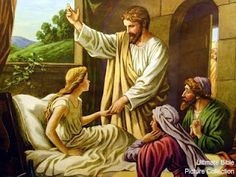
In the Gospel… we encounter something that is very super-human: faith and the consequences of faith known as miracles.  What is important to look at in these readings is who displays their faith and who does not. First, Jairus comes in faith to Christ on behalf of his jesus and little girldaughter. Jairus is looking for Christ to help. He has faith in Jesus’ power to heal and that faith has a consequence—healing for his daughter. Think for a second of the tremendous faith and courage it took for this man to leave his daughter’s side as she was at the point of death. With full knowledge that he may not be there with his daughter until the very last moment, he leaves and goes to Jesus. What selfless faith!

Second, the woman suffering from a hemorrhage has tremendous faith in Christ’s power. Her faith has a consequencewoman with hemorrhage—healing and salvation.  Each act of faith draws people to Christ. Each act of faith results in a miracle. Sometimes, like in the case of this woman, it is our own faith that moves us to act, that moves us toward Jesus. Other times, like in the case of Jairus, it is the great faith of others that leads us closer to Him and allows Him to miraculously heal us in big and small ways.

When we look at this connection between faith and healing through the lens of the life of the priest, we can see how these men can sometimes be mistaken for being super human….Fr Johnson at mass

Every time a priest says Mass, a miracle takes place. Through the priest, Christ becomes present on the Altars of our Churches and through faith we draw nearer and nearer to Him.  

Through the priest, Christ brings healing to those weighed down by sin in the Confessional and those sick and dying through the Sacrament of Anointing.

When a man, who is all things worldly and impure, through the constant prayers from his mother or grandmother, has an encounter with Jesus and repents…that’s a miracle. (When that man enters the seminary and becomes later becomes a priest…that’s a miracle too)

When society makes champions of sexual immodesty and immorality and then a priest, through His faith in Christ, makes a promise to and lives out a life of celibacy…that’s a miracle.

priest and  preachingWhen society becomes more and more divided under a false flag of hateful relativism disguised as “equality” and “tolerance” making others feel discouraged or afraid to speak the truth and a priest stands up and preaches God’s love strengthening our faith…that’s a miracle.
When a loved one dies suddenly, and your priest is there to help you not only in celebrating the funeral Liturgy but also on a personal level, following up with you as the months go by when it seems like everyone else is going on with their lives…giving you hope and encouraging you in faith…that’s a miracle.

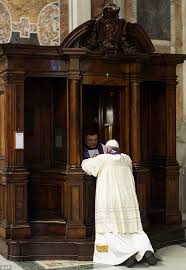
Yes, a priest is human—a human with sins, struggles, and pope frances going to confessionbrokenness. But he is also a human that recognizes he needs to go to Jesus in faith to heal his brokenness. He is a human that allows Christ to work in and through him in these various situations. He is a human that shows an example of faith, attracting others to the super human person of Christ, increasing our faith in the one, true God—God who performs miracles big and small in those who have faith in Him.

Please know the authors of this blog pray daily for parents of discerning sons and daughters to find understanding and peace.

Objection  Series:  “How could this happen in our family?  We aren’t the model Catholic family!”

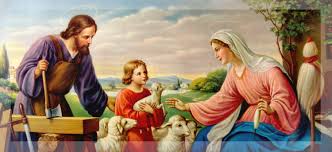
The first Sunday after Christmas celebrates the feast of the Holy Family. This is one of my favorite feasts of the church because it always gives me hope that our family can be better.  When you think about it, it really is amazing that Jesus chose to be  born into a poor family with all the struggles of living in a small village under Roman rule.  Even today, a family can relate to the struggles surrounding Jesus’s birth and life before his public ministry.

Holy Family rectangle

Now you can look at the Holy Family and say, “Well, Jesus was perfect, Mary never sinned and Joseph must have been the perfect husband.” Our families are not perfect and will never be perfect.  But the Holy Family gives us a model of the ideal in family life and marriage.  With the Holy Family, we see how the family is the place to learn to love, serve, respect and support each other in order to take it out to serve the world.


So if there are no perfect families, where do seminarians come from?  Not from under a rock, but from families, just like yours and mine. They are born into and grow up in couple silent
typical families with flawed parents, strained marriages, periods of
unemployment, relatives with drug and alcohol addiction and sick grandparents.  These families fight and argue over the remote, among other things, and whose turn it is to take out the garbage.


Black family cookoutThey celebrate holidays and birthdays and have cook outs in the summer.

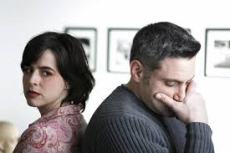
Parents work to provide what they feel is the best they can afford for their children.  Older children hand down clothes to younger siblings and want the latest electronic device because “everyone has one.”


Vacations are planned and cancelled at the last minute.   Parents try to manage the family finances and then the refrigerator breaks down.  Doors get slammed and harsh words are exchanged.  Apologies are either generously offered or coaxed out of the offender.   Misunderstandings and outright lies, broken promises and letting each other down happen with varying degrees of frequency over the years.


Teenagers break curfew, get into to trouble at school and fall in and out of man injury-accident
love before  graduating from high school. More trouble ensues in college with learning money management, underage drinking, minor car accidents and repeating college courses more than once to pass.  Now the fighting is about using the car, whose turn it is to mow the lawn and still taking out the garbage.  Teens and young adults at home are prodded to get to Sunday mass and reminded when confessions are scheduled even though they’ve been at the same time for the last 15 years.


These families have relatives who don’t talk to each other and others who
strained marriagehave not had contact for 20 years.  There have been sudden deaths and unexpected pregnancies in and out of  marriage, divorces and broken engagements.  Some have not been to church in 15 years and others are verbally hypercritical of the Church and certain teachings.

 

Does any part of this sound like your family?  Well, most of these troubles have happened in our family over the years.  That’s why the example of the Holy Family gives hope to keep moving forward.


So they next time you say that seminarians or priests don’t know what it is like to live in the real world, just remember that they grew up in a family with all the problems and stresses, joys and sorrows this world provides.

Family with adult sons

Please know  the authors on this blog, pray daily for the parents of discerning sons and daughters to find understanding and peace.


Pope Francis on Formation

At a conference sponsored by the Congregation for the Clergy, Pope Francis shared a few thoughts on the formation and role of priests.

One thing that he said struck me as particularly important:

“A good priest is first of all a man with his own humanity, who knows his own history – with its treasures and wounds – and has learned to make peace with it, gaining a profound serenity, characteristic of a disciple of the Lord,” he said. “Human formation is therefore needed for priests, so they may learn not to be dominated by their limits, but rather to put their talents to use.”

The idea of that priests are in need of human formation is important and I think that many people don’t see priests as human.  Each priest is a man who has his own particular set of limitations and talents.  Some are great homilists.  Others are gentle and thorough confessors.  Others have the gift of communicating the Gospel to a wider audience.  Still others toil quietly in administrative jobs behind the scenes.

Whatever their gifts, these men need to take the time to understand themselves and find their place as servants in God’s kingdom.  Pope Francis’ words on human formation emphasize that formation goes well beyond theological training and the practicalities of being a priest and pastor.  The process of formation — in a way that doesn’t seem to exist in secular training — addresses the totality of the person being formed.

Objection Series: Celibacy or “He’ll never have his own children!”

Letting  Go

When you look back, parenting feels like a long series of letting go of your school_bus_image
child.  The first day of school is a day of pride and tears for parents. As  the years go by, your child starts to take bigger, more serious steps away: getting a driver’s license, starting to date, working a summer job.  Leaving for college feels like the last nail in the coffin when you finally say that last good bye, give that last hug and  wipe that last tear away.

Even when they come home for vacation, their lives are not at home, but with their friends and activities at college.  Every one of these acts of letting go are a normal part of a child’s growth and maturation.  These milestones are happy but bittersweet for a parent.
large-lego-blocks

It can take years to realize that your child is not your own, they are given to you for only a  short time. It just doesn’t feel like that when you are up to your ears in diapers and  Lego’s trying to get through the afternoon.

Control

At birth, you start with being responsible for meeting their every need: physical,  emotional, psychological. Between birth and age 5, parenting is exhausting, but you can pretty much  direct their lives, their friends and their activities.   Once they take those first steps away: going off to school, choosing their own friends, you come to the realization that you can’t control every part of their lives.  With every passing year, the stakes only get higher as they take bigger steps away until one day you realize: they are not yours to hold onto forever.
mom and teen sonThey have been given to you to nurture, love, educate until you send them on their way.  This is a difficult realization for any parent and can be much harder for some parents than others.  Thankfully, the Father has designed this so that we have to learn to let go little by little over many years.  Eventually, you  realize, it takes a lot more love to let go than to hold on.


Are you worried that if your son becomes a priest, he”ll miss out on all the joys of being a parent? Below is an exert from a post by a Catholic mom on Ignitum Today who addresses this very question.

Celibates Make Great Parents                          6/02/2014

by Lauren Meyers

There are a few things that I do every day. I brush my teeth. I drink a cup, of coffee… and I kiss and pinch the cheeks of my two sons. As most parents would testify, I love my children. I love their laughs, their hugs. I love seeing them learn and watching them grow. I cherish every day with them, and I wonder how I ever lived without them. I want to take them in my arms and never let them go.

It’s times when I think about this joy that I wonder about those priests, religious, and other members of the Church who have taken a vow of celibacy. I don’t mean to make assumptions or to judge, but I wonder if it’s lonely. I wonder if they feel regret. I wonder if they feel that they are missing out by not being parents.

I get my answer when my four-year-old son opens up a new toy from his grandparents. He immediately says, “I need to show Father Kevin!” His first desire is to share the pride and joy of his new dinosaur with our parish priest. I get my answer when we are at the mall. My two-year-old sees a sister in a habit and, without ever having seen her, yells out, “Mary!” He is instantly comfortable and happy in her presence, and smiles as he reaches out his hands to her. I get my answer when another parish priest wags a finger with a smile and reminds my son not to run near the front steps of the rectory. He returns the smile and walks back to the vestibule.

I get my answer: They are parents. That’s not to say that they are parents in the same way that a man or woman who changes diapers in the middle of the night, packs lunch boxes, or spends countless hours driving to practices and recitals is a parent. These men and women, though, love immensely. They nurture, teach, and admonish. They pray for and provide guidance for countless children, youth, and adults. They care for others in any way that is needed. They are called to love in ways that are motherly and fatherly. Just like any parent, their presence is irreplaceable.

Those who are called to celibacy are not exempt from parenthood, and in some ways make the greatest parents. They are, perhaps, best equipped to be parents because they are conscious of a fact that I know I overlook all the time:

My children are not my own. My children do not exist for the sake of my personal fulfillment. Their lives are not meant to serve my own desires. My call as a parent is to protect and nurture a soul which belongs to God, so that soul might remain in the presence of God for all eternity. My vocation is to love immensely and to let go with trust.

Those who are celibate display true love and abandon. They love and are loved by God so dearly, and have abandoned themselves with complete trust in God’s will. Who better to help me return my children to God than those who have given themselves to God in such an intense way? Who better to remind me of my call to love with abandon and to return to the Lord every gift I have been given, including my children? I hope, in my life, to express true gratitude for those celibates who have vowed to love all the sons and daughters of the Church as their mothers and fathers. I hope to learn from them how to be a great parent.

Please know the authors on this blog pray daily for parents of discerning sons and daughters to find understanding and peace.

Objection Series: Celibacy or “You mean, no sex? Ever?”

As part of the Objection Series, I did not think I would be writing specifically about celibacy, although it can be an objection for parents.  I referred to celibacy in the Objection Series post: He’s throwing his life away!  I  was surprised to hear “You mean, no sex? Ever?” as the  very first objection from a well meaning friend responding to the news that my son was entering college seminary.

Now, I won’t begin to claim I have any understanding of celibacy as a discipline of the priesthood. There are so many facets to celibacy: physical, emotional, psychological and spiritual.  I imagine it would take a long time to come to an understanding and appreciation of celibacy by the individual and even longer for their family.  It doesn’t help that the culture is so over sexualized from every direction, type of media and passing billboard.  It is almost impossible to get away from the culture’s slant on sexuality.

Perhaps understanding the concept of celibacy is like eating an elephant; you need to take it one bite at time.  So as part of a small bite of understanding, here is  a post from a seminarian related to the desires of the heart of every man and woman. He provides a glimpse at the evolving understanding of celibacy in this post from the blog:  Seminarian Casual

Why I Want To Be a Priest     Posted November 20, 2015

by 

Thomas-Rhett-200x200Thomas Rhett, my favorite country artist, just came out with a new music video for his song “Die A Happy Man.” The video features Rhett and his gorgeous wife enjoying all the pleasures that a vacation in Hawaii can offer. And all of that paints the picture for his lines:

If I never get to see the Northern Lights
If I never get to see the Eiffel Tower at night
If all I got is your hand in my hand
Baby I could die a happy man. 

couple on horse3I think that song speaks to everyone. Everyone wants intimacy, a relationship, and to share one’s life with another. What’s more, everyone wants that on the beaches of Hawaii while horseback riding with the dog tagging along and a cold one in your hand.


I had my life pointing in that direction: I was set to make a lot of money as an engineer and I had the gorgeous girlfriend, what more can the world offer?

I think that was the mindset of a guy I met this summer who asked me “Why do you want to be a priest? Do you like public speaking?”I went into shock and I wasn’t sure why.  At this point I had been thinking about that question for years—throughout high school, at college, and now for a whole year at seminary. I’ve even given my vocation story countless times to total strangers. But for some reason the question caught me off guard and it left me with a pit in my stomach wondering whether or not I knew the answer.


The thing about that situation was that the guy that asked me was looking at the priesthood from a utilitarian standpoint. To someone like that, the priesthood is just another career path that you would only choose if you liked it and it fit what you thought the ideal life is.


Now, that’s not entirely wrong. The priesthood is a profession in some sense, but I think what the man asked me neglects the whole “God” dimension to the question. Because without God, the priesthood does seem best fitted for someone that likes public speaking, or likes being a leading community figure, or even likes to live by himself.

I think another part of it is that some people think that someone who coupone on beach3wants to be a priest just isn’t into the whole marriage thing. They don’t want that wife on the sun setting shores of Hawaii.  And to all of those pretenses I want to scream “No! I do want those things! I’m a normal guy!”


The thing that people have to remember is that discernment is choosing between two goods. Marriage is a good and priesthood is a good. It’s not that I don’t have a desire to get married, it’s that I have a longing for something more than that. It’s precisely that longing for more that comes from God, and because that longing is deep in your heart it’s difficult to explain to people.


That’s what I wish people knew. It’s not that I don’t want the girl on the beach, it’s that I want something more than that. And if God is truly calling me to more, then that’s the only way that I’ll die a happy man.

Please know that the authors of the blog pray for parents of discerning sons and daughters to find understanding and peace.

Advice for Discerners — And A Thought for Parents

One of the blogs that I follow regularly is “Co-Author Your Life With God“.  The author, Sr. Marie Paul Curley, describes the blog’s purpose this way:

…interactive, accessible exploration about discernment as a spiritual art that helps us the everyday Catholic discover and live God’s will.

It’s worth remembering that just as all of us have a vocation, all of us have an obligation to discern God’s will for our lives.  And discernment is an on-going process.  Sr. Marie’s posts give great insight into discernment in general and, at times, into religious discernment specifically.  Her storytelling approach resonates with me and I always look forward to what she has to share.

Today she posted about dealing with disapproval from your family.  The whole piece is worth reading, but I found her conclusion to be particularly powerful.

Our vocation is a sacred calling that is too important to let the resistance or disapproval of family and friends stand in the way. Countless priests, brothers, and sisters had to go against their parents wishes to follow their vocation. (The family of Saint Thomas Aquinas’s family kidnapped and imprisoned him to prevent him from following his vocation in the Dominican Order.) This is not an easy path to walk, but if we possess sufficient maturity and have discerned well, it is more important to follow God’s call than to give in to our family’s opinions. Jesus himself called his disciples to leave their parents and families behind to follow him.

Thinking about this in light of Pam’s recent post from a mom who struggled with her son’s vocation, it occurred to me that the parents of a discerner have a difficult task.  We have to cooperate with God’s grace, without trying to force it one way or another.  We have to create a space within ourselves — and within our relationship with our child — that will permit everyone involved an inner freedom.

This involves an abandonment of self; a great letting-go which allows God to grab the wheel and steer our lives.

Fortunately, we have a great model in Mary.  Her consent to God’s plan, “Behold, I am the handmaid of the Lord. May it be done to me according to your word”, is nothing less than willing assent to abandon herself to God’s will.

May we all have the grace to follow her example.