Minor Orders

320px-StMarysWestMelbAltarThe holidays are over and it’s time to get back to ordinary time — which, for me, includes blogging.

While Evan was home (we had him for the better part of a month) we spent some time talking about the seminary and what’s he’s been learning and doing.  Among other things, this past fall he was working at drop-in shelter/soup kitchen.  When they found out that he could bake, they set him to work making cookies and pies and such — anything that didn’t need to rise to be cooked.  We also spent a little time talking about how religious formation has changed over time.

This might sound a bit esoteric, but it actually gives an interesting peek inside the history of the church in the post Vatican II era.

Prior to 1973, candidates for the priesthood went through several well-defined steps during their training.  It started with the tonsure — a ceremonial haircut to mark the candidate’s entry into religious life.  Think of the bowl cut you associate with Friar Tuck or Brother Cadfael.  It was considered a sign that the candidate no longer cared about worldly fashion.  By the middle of the last century, though, the bowl cut had given way to a ceremonial clipping of five tiny tufts of hair as the points of a cross on top of the candidate’s head.

During formation, the candidate would go through the four minor ordersporter, lector, exorcist and acolyte.  The progression through the minor orders was a bit like gaining rank in the military, each of them brought the candidate new responsibilities.  None of them were Divine or Apostolic in origin and they were added to the church at different times.

Formal ordination began with the order of the subdeacon.  As the name implies, the subdeacon shares in some of the responsibilities, but not the full authority of an ordained deacon.

Candidates then — and now — go through ordination to the deaconate before making their final vows as priests.

In 1973 Pope Paul VI issued the Ministeria Quaedam which changed the minor orders into ministries.  In doing so, he said:

Nevertheless, since the minor orders have not always been the same and many functions connected with them, as at present, have also been exercised by the laity, it seems fitting to reexamine this practice and to adapt it to contemporary needs. What is obsolete in these offices will thus be removed and what is useful retained; also anything new that is needed will be introduced and at the same time the requirements for candidates for holy orders will be established.

Two of the minor orders — Lector and Acolyte — have been retained as ministries in formation programs to mark the candidate’s progress.

Many of the tasks which had been reserved for those in training have been taken over by the laity.  This reflects the goal of Vatican II to encourage “full, conscious and active participation” by “all of the faithful”.

What’s interesting to me is that there are groups seeking a return to the use of minor orders.  They feel that we have somehow lost something important.  I wouldn’t want to interfere with anyone’s personal piety, but I think they may be missing the larger picture.  Minor orders were never dogma nor did they reflect core theology.  They were simply a process which reflected the needs of the church at the time.  I would even suggest that the minor orders made it possible for the laity to sit back in the pews and treat the church as something to be observed rather than experienced; an inactive religion that kept faith at a distance from life.

For myself, getting involved has helped grow my faith.  When you dedicate time to an activity — a job, a hobby, a cause or a religion — you naturally engage more fully in it.  You learn, you question and you grow.  Which, I guess, is my ultimate point.

The formation for Holy Orders is vital to the future of the church.  We need the religious to fulfill their particular roles.  But we’re fooling ourselves if we think that we shouldn’t be in constant formation as well.

— Dad

Luke Live – A Paulist Mission!

Luke-Live

The first Paulist priest that we met — at least knowingly — was Fr. James DiLuzio.  Fr. James performs a mission called “Luke Live” which is built around a recitation (from memory) of the book of Luke along with popular songs and an invitation to personal reflection.

Our pastor, Fr. Clarence, invited Fr. James to bring his mission to St. Rose two years ago.  This was a few months after Evan had told us of his discernment toward the priesthood and, specifically, the Paulists.  We jumped at the opportunity to meet Fr. James and to get to know him.

He’s a great example of the Paulist charism, using his talents as a performer (his resume includes SAG/AFTRA membership) and storyteller to make the Gospel of Luke meaningful and personal.  Interspersed with the performance, he walks his audiences through a series of exercises designed to bring deeper understanding of the scripture.

We’ve attend the past two years and are looking forward to attending this year’s presentation.  It’s difficult to capture in words, the feeling of refreshment and spiritual nourishment that we’ve gotten from attending Luke Live.

If you’re in the area — or in any of the areas that Fr. James will be visiting — it’s worth your time to attend this mission.

I’ll leave you with a press release describing the mission in a bit more detail and with the hope that you’ll be able to attend Luke Live some day.

FOR IMMEDIATE RELEASE

Live Gospel Proclamation to Return to Davis County Parish

Layton, Utah — January 5, 2014

Residents of northern Utah will have the opportunity to hear parts of the Gospel of Luke proclaimed live, from memory, along with Broadway-style singing and guided reflections.  Paulist Fr. James DiLuzio from New York will offer the presentation on February 3, 4 and 5 with sessions at 9:00 a.m. and 7:00 p.m. at St. Rose of Lima parish in Layton, Utah. The event is free to the public and is fitting for all ages — Families with children age 10+, teens, singles, and seniors.

The event is part of the “Luke Live” mission which is performed all over the country.  Fr. DiLuzio has committed the book of Luke to memory and performs it as a one man show, incorporating popular music along with reflections on the meaning of scripture in relation to modern life.  The performances come naturally to Fr. DiLuzio who once dreamed of becoming a professional actor and completed a masters degree in drama at the University of Southern California.

In the early 1980s, when he was working in customer service at the Metropolitan Opera in New York, DiLuzio began attending Mass at the church of St. Paul the Apostle.  He found himself drawn to the Paulist mission of evangelization through engagement.  The attraction drew him into the order and he was ordained a priest on May 8, 1993.

After serving nine years in parish and campus ministry, he wanted to find a way to integrate his dramatic training with evangelization.  Returning to the early days of the church — when the Gospels were shared from memory — he developed Luke Live.

“It’s not the kind of evangelization that says, ‘I have the truth and I am going to convince you’,” DiLuzio says.  “It’s really about sharing, about dialogue.  It’s about transforming not only the listener, but the person who is doing the sharing.”

Luke Live is ecumenical in nature, respectful of people of all faiths and creeds.  Although the majority of Fr. DiLuzio’s performances have been in Catholic parishes, this past year he was invited to share the Gospel at St. Luke’s United Methodist church in Memphis, Tennessee and his audiences have included people of many different faiths.

The program has resonated with audiences.  Speaking of a performance at St. Thomas Aquinas parish in Logan, St. Rose pastor Fr. Clarence Sandoval said, “It was interesting to watch the people listen — maybe for the first time — to the Gospel, God’s Word.”  Members of other parishes who have participated have described Luke Live as “a new and exciting way of hearing the book of Luke” and “inspired and inspiring.”

This year’s presentation at St. Rose will continue the work, focusing on Luke chapters 13 through 18.  Each day of the mission will focus on two chapters with the morning and evening sessions offering the same content.  The event is free to the public.

— Dad

God’s Dreams

Do you want your dreams for your life
or
God’s dreams for your life?

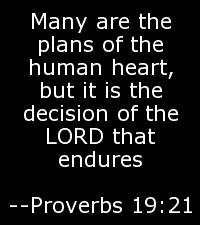
proverbs_quoteWell.  Really.  That’s not the sort of question you expect to be asked in the confessional.  The deal is that you go in, confess, get a penance to help point you in the right direction, pray the Act of Contrition, hear the prayer of Absolution, and head back out.

Unless the confessor thinks you might benefit from a bit of counsel.

Which left me sitting with a kindly priest faced with a pretty blunt question.  And, in truth, after nearly a half century on the planet I’m slowly moving to the place of wanting God’s dreams for my life.  (The obvious “right” answer is that I want God’s dreams.  The more honest answer is that I often put my dreams ahead of God’s.)

If you’re like me, answering that question correctly only raises others.  Most specifically, how do you discover God’s dreams for your life?

The Bible is full of stories of angelic visitations and divinely inspired visions.  While that might seem to simplify the question, I doubt that most of us are actually prepared for that level of openness and directness in our relationship with God.  So, we must find other ways to discern what God dreams for us.

Ironically, I think the key lies exactly in seeking a relationship of openness and honesty with God.  It involves being vulnerable and willing to listen and take in what God is trying to communicate to us.  Blogger Will Duquette puts it this way:

For me, listening to God means sitting and pondering about things: my problems, a scripture reading, a book I’m studying, the weather, or what have you. And as I ponder, I need to pay attention to the ideas that occur to me, and follow the threads to see where they go. It’s about testing the conclusions I come to, to see if they are consistent with what I know about God’s word, and God’s character, and that involves more pondering. And the essential thing is that when I sit down to ponder, I invite God to come along and I make Him welcome.

This sounds like solid advice, but as before, it still raises that next question; even if you’re determined to invite God to communicate, how do you do that?  Fortunately, there are some good folks who have already walked this path and sent back field reports to point us in the right direction.

St. Ignatius of Loyola starts with the idea of a personal relationship with God.  A structure for achieving this is laid out step-by-step in the Spiritual Exercises.  One of the key elements of the exercises is prayer.  Makes sense.  After all, if you’re going to enter into a relationship with someone, you have to talk to them.  This also helps with what St. Ignatius calls the orientation of your life.  Are you trying to stay on the right path?  Are you trying to live a decent Christian life?

With that as a starting point, you can begin to listen to “the movements of your heart.”  What do you feel when you pray?  What are the thoughts that come to mind then and throughout the day?  Test them to see if they are consistent with what you know of God.

One of the interesting things that St. Ignatius pointed out is that these movement (he called them “spirits”) change depending on where you are in your spiritual journey.  William A. Barry, SJ, puts it like this:

Now let’s take up the orientation of most of us, who are trying to live honestly and uprightly to the best of our ability. In this case, Ignatius says, the good and bad spirits act in ways opposite to how they act with those turned away from God’s path. The bad spirit raises doubts and questions that cause inner turmoil and self-­absorption, while the good spirit tries to encourage us and to increase our peace, joy, faith, hope, and love.

If you are trying to live as a good Christian, you might have thoughts like these: “Who do you think you are—some kind of saint?” “Everyone else cuts corners in this office. What’s the matter with you? Are you ­holier-than-thou?” “God doesn’t have time for the likes of you.” “Most people, even if they believe in God, don’t try to live the way you do.” Such questions and thoughts have only one aim, to trouble your spirit and keep you troubled and questioning. Moreover, you will notice that all the questions and doubts focus on you, not on God or God’s people.

The good spirit, on the other hand, might inspire thoughts like these: “I’m genuinely happy with my decision to make amends with my estranged sister.” “I wish that I had stopped drinking a long time ago. I’m much happier and healthier now, and easier to live with.” “God seems so much closer to me since I began to take some time every day for prayer, and I feel less anxious and insecure.” I hope you can see in your own experience how these two spirits have led you.

Sometimes, that spirit that wants to distract you from God’s will comes dressed in pious clothes.  It’s easy to get distracted by that voice and decide that God doesn’t have any big dreams for you.  It’s safer and easier just to sit quietly.  Along the way, Ignatius tells us that we will likely experience Spiritual Consolation and Spiritual Desolation.  These, too, are part of that journey of understanding God’s dreams for us.

As a practical matter, you can take St. Ignatius’ road map and put it into practice with a low tech tool; a notebook.  Over at www.godinallthings.com , Andy Otto outlines a simple practice which involves jotting down your thoughts and feelings during the day and reviewing them regularly to see where God might be speaking to you.

Like they used to say, “Knowing is half the battle”.  Once you know (or have a good idea) you can begin to seek out ways to cooperate with God in bringing about his dreams for your life.  You might be surprised by what you discover.  The theologian Parker Palmer understood that when he said:

Discovering vocation does not mean scrambling toward some prize just beyond my reach but accepting the treasure of true self I already possess. Vocation does not come from a voice out there calling me to be something I am not. It comes from a voice in here calling me to be the person I was born to be, to fulfill the original selfhood given me at birth by God.

–Dad

With Great Power Comes Great Humility?

180px-ScholasticNarniaA little over a week ago, my friend Mette posted a link on her Facebook page to an article entitled “Finding a Feminist Theology in C.S. Lewis’s Narnia.”  I was sufficiently intrigued — since C.S. Lewis didn’t seem to be an especially feminist writer — to click through.

The article starts out recounting Lewis’s many critics who call him out for fearing and disliking women, disliking sexuality, and equating “ultimate good” with “ultimate masculinity”.  Then it moves on to talk about a new view of Lewis’s work which is presented in Monika Hilder’s book The Feminine Ethos is C.S. Lewis’s Chronicles of Narnia.  So far this all sounds like an academic cat fight, right?  A clutch of post-modern professors and lit crit snobs mixing up it for the sake of entertainment.

Except that (echoing Hilder’s text) the authors suggest that the modern idea of feminism misses the point.

In an age that worships the cult of personality and aggrandizes the “virtues” of the energetic, the magnetic, the stunning, and the forceful – because these traits lead to more materialistic wealth and power – what room left is there for the fruit of the Spirit? Qualities such as self-control, meekness, patience, and peace sound quite out of vogue; “Let’s see how far the meek, patient, and peace-loving female can succeed,” I can hear the cynic ask. Hilder, though, suggests that our struggle for independence, power, and autonomy echo Satan’s thirst for domination more than Christ’s model of humble servanthood.

Take a moment to consider that last line.  When was the last time you heard someone — anyone — praised for being a good and humble servant?  That’s crazy talk, right?

If we are uncomfortable with some of the female characterizations throughout Lewis’s series, perhaps we should reconsider where this discomfort stems from. While we as women are right to strive for gender equality, we are wrong to measure it according to mere chauvinistic ideas of accomplishment. As Hilder states, “to the extent we have not examined our own chauvinism, we demean the ‘feminine’ qualities and extol the ‘masculine’—not noticing that Lewis does the opposite.” And indeed, it is in doing exactly that opposite that Hilder suggests Lewis’s radical theological feminism can be found.

More importantly, Lewis seems to be saying that the servant-minded approach cuts both ways.  Men, as well as women, should strive to live up to that lofty standard.

Lewis’s idea of true spiritual strength— for both men and women— rests in openness to our Father, community, submission, compassion, truth, grace, and humility. So, when Lewis has Lucy run towards Eustace-the-dragon and bestow upon him grace only expressible in a child’s unrestrained kisses, or Lucy and Susan weep with Aslan while he is on the stone table, or, even Mrs. Beaver demonstrate foresight and responsibility for those in her care (or one could even dare say, community mindedness) in bringing along her domestically stigmatized sewing machine, Lewis wasn’t belittling these characters. I can learn that true spiritual strength, or spiritual heroism as Hilder terms it, “establishes the kingdom of heaven through humility,” not independence.

The article goes on to talk about how much of what we perceive to be sexism reflects our own biases more than the objective truth.  That wasn’t what stayed with me after reading the article, though.  I kept coming back to the idea of servanthood being the mark of a successful adult.

I encountered that idea again a few days later when we attended a Mass for the Admission to the Candidacy for the new Deaconate class in Utah.  (A friend from our parish is one of the candidates.)  The second reading was from Matthew.

But Jesus summoned them and said, “You know that the rulers of the Gentiles lord it over them, and the great ones make their authority over them felt. But it shall not be so among you. Rather, whoever wishes to be great among you shall be your servant; whoever wishes to be first among you shall be your slave.  Just so, the Son of Man did not come to be served but to serve and to give his life as a ransom for many.”

Oh.  Right.  Jesus mentioned this idea a couple of millennia back.  At the time it was clearly a challenging idea; unusual and non-intuitive enough that he felt a need to address it with his disciples.  You would think that in the past 2,000 years this idea would have caught on.  I’ve read a goodly number of books about leadership and management and I’ve attended lectures and seminars and institutes, but all of them focused on ways to consolidate exploit power.  Sure, there’s been talk of “servant leadership“, but it’s always in the context of “getting the job done”.  The implication is that there is some goal to be achieved or target to be hit and it’s the leader’s responsibility to make sure that happens.  If servant leadership can get you there, great.  If not, find some other tool and keep pressing forward.

In other words, the modern ideal of leadership is the accumulation and application of power.  Whether you’re a man or a woman, your goal should be to reach the top.

Except there’s this one guy who keeps telling a different story.  In case you’ve missed the theme of humility in the homilies, interviews, and public talks Pope Francis has given in the past several months, he kindly included it in Evangelii Gaudium — his first Apostolic Exhortation.

I’m a long way from having read all 244 pages, but I’ve skimmed a bit of it and read some reliable commentaries from trusted sources, and the thing which sticks out is how deeply counter-cultural it is.  In a world which judges us largely on how well we “succeed”, Pope Francis is calling for us to step out of the game.  He’s not telling us to lose the game.  He’s telling us to get out and spend our energy on something better.  He even goes so far as to point out that we are guilty of this kind of thinking within the bounds of our religious practices.

(93) Spiritual worldliness, which hides behind the appearance of piety and even love for the Church, consists in seeking not the Lord’s glory but human glory and personal well-being. It is what the Lord reprimanded the Pharisees for: “How can you believe, who receive glory from one another and do not seek the glory that comes from the only God?” (Jn 5:44).

(94) …those who ultimately trust only in their own powers and feel superior to others because they observe certain rules or remain intransigently faithful to a particular Catholic style from the past. A supposed soundness of doctrine or discipline leads instead to a narcissistic and authoritarian elitism, whereby instead of evangelizing, one analyzes and classifies others, and instead of opening the door to grace, one exhausts his or her energies in inspecting and verifying.

(271)  It is true that in our dealings with the world, we are told to give reasons for our hope, but not as an enemy who critiques and condemns. We are told quite clearly: “do so with gentleness and reverence” (1 Pet 3:15) and “if possible, so far as it depends upon you, live peaceably with all” (Rom 12:18). We are also told to overcome “evil with good” (Rom 12:21) and to “work for the good of all” (Gal 6:10). Far from trying to appear better than others, we should “in humility count others better” than ourselves (Phil 2:3). The Lord’s apostles themselves enjoyed “favour with all the people” (Acts 2:47; 4:21, 33; 5:13). Clearly Jesus does not want us to be grandees who look down upon others, but men and women of the people. This is not an idea of the Pope, or one pastoral option among others; they are injunctions contained in the word of God which are so clear, direct and convincing that they need no interpretations which might diminish their power to challenge us. Let us live them sine glossa, without commentaries. By so doing we will know the missionary joy of sharing life with God’s faithful people as we strive to light a fire in the heart of the world.

When he was first elected, we knew there was something different about Pope Francis.  His humility was refreshing and his simplicity endearing.  Now he is asking the same as us; he is inviting us to follow him in humility.  For those of us who grew up in western nations where “success” as a human being is defined by power and wealth, this is tremendously challenging idea.  I wonder how many of us will be willing to follow through?

— Dad

Question: Who Pays for Seminary?

stack of dollars

Not all the questions about the seminary experience deal with weighty theological issues.  Some of them are, in fact, pretty mundane.

Seminary — like most higher education — isn’t cheap.  So, who is paying for the training for the next generation of priests and religious?

The answer is: it depends.

As we mentioned a while back, there are two kinds of priests:  diocesan and order.  (Sometimes referred to as secular and religious priests — toss out that bit of trivia at a party and watch your friends try to puzzle out the difference.)  Among the other differences, diocesan priests generally draw a salary and are expected to pay for their own food, transportation, etc.  Order priests generally do not draw a salary and are dependent on their order for all of their material needs.  In practice, this means that diocesan priests need to be careful managers of their money as the salary isn’t that great while order priests rely on the order to balance needs the of the entire community.  As our previous pastor put it (with tongue firmly in cheek), “Order priests take the vow of poverty, diocesan priests live it.”

This is important because diocesan seminarians often attend seminaries which aren’t associated with the diocese and will be assessed tuition.  This responsibility may be picked up by the seminarian, their parents or the diocese or some combination thereof.  The Office for Vocations for the Archdiocese of Saint Paul and Minneapolis addresses the question by saying:

How much does it cost?  Who pays?
Everyone is concerned about the high cost of education, including potential seminarians and their families.  In the Archdiocese of St. Paul and Minneapolis, the archdiocese will pay for the room and board cost of our college seminarians as a scholarship. This does not need to be paid back. In addition, the University of St. Thomas offers a 35% discount on tuition for seminary students. The seminarian and his family are required to fund the rest of the cost through regular scholarships, financial aid, and loans.

There are (not surprisingly) many scholarships available to seminarians.  Often, there is also a distinction between those entering “college seminary” for the purpose of earning an undergraduate degree and those who have earned a bachelors degree and are moving to the next level of formation.  The Diocese of Des Moines outlines such a program:

How much will it cost to go to the seminary?

This depends on which level of Seminary formation you enter.  For those that enter as college seminarians, the cost will be the responsibility of the seminarian.  As would be typical for any other college student, you will fill out FAFSA forms for student loans.  The college seminary programs we use typically have reduced tuition for seminarians as well as scholarships that are available.  One college seminary program gives a scholarship that covers your full tuition.  Regardless, you can expect significant expenses for college, which will remain your responsibility regardless of whether you are ordained for the diocese.  The rationale behind this policy is that college is a pre-requisite for professional life in any capacity in our culture, and whether or not you become a priest your degree will serve you well into the future.  The Diocese does provide college seminarians with re-imbursement for books and certain travel required by the diocese, as well as a monthly stipend.  You are encouraged to work during the summer for extra spending money.

The policy is different for men that enter seminary for Pre-Theology (those with a college degree but in need of required philosophy before studying Theology) or Theology.  The Diocese will cover the entire amount of your tuition, room and board, as well reimburse you for books, certain travel required by the diocese, and will provide a monthly stipend.   These expenses do not have to be re-paid in the event you discern out of seminary formation.

What do I do if I have previous student loans that are not fully paid off yet?

The diocese, while it provides for much of your training as a seminarian, cannot offer assistance in paying off previous college loans. However, many loans can be deferred, some without accruing extra interest, until the time you finish seminary training and are ordained a priest, at which time you receive a salary and can pay off your loans.

As much as possible, Vocations Offices and Seminaries try to remove the obstacle of money.  And there are plenty of private donors who are doing what they can to aid in preparing the next generation of priests. An article on the Vision Vocation Network website notes:

Fortunately there are many benefactors who donate directly to seminaries or make funds available through scholarships or grants. Two Catholic organizations that have generously supported vocations are the Knights of Columbus (contact your local council) and the Laboure Society (www.labourefoundation.org).

At the diocesan level, the Vocations Director would be able to provide better information for a particular case.

Seminarians who enter as part of an order, often have their training provided for (in whole or in part) by the order.  The Priestly Fraternity of St. Peter’s Our Lady of Guadalupe Seminary uses a mixed approach:

How much does it cost to educate a seminarian?

he actual cost is about $22,000 per year. Most of this cost is paid through the generosity of our benefactors, who deserve our prayers every day. The cost that FSSP seminarians currently are responsible for is $7,000 per year for tuition, room and board.

What if I cannot pay for my annual tuition and room/board?

We ask all seminarians to do their best to pay everything they are able to pay. This includes actively seeking benefactors, running an ad in your home parish bulletin, asking priests for financial help, and applying for scholarships with various Catholic support groups. However, if you do not come up with all of the tuition money you will not be required to leave. Nor do we deny entrance to men due to an inability to pay these costs.

In Evan’s case, he was required to be debt-free (with the exception of his student loans) before he could be accepted as a novice.  His room, board, and training are all provided by the order and he is given a small stipend each month for incidentals such as toiletries, clothing, and personal transportation.  Living in DC (and having to switch for a college wardrobe of jeans and t-shirts to a wardrobe of business casual) the stipend is adequate, but not excessive.  Fortunately, two different Utah Councils of the Knights of Columbus (St. Olaf’s in Bountiful and St. Mary of the Assumption in Park City) have adopted Evan under the RSVP program.  He wasn’t aware of the program until they contacted him.  He was (and is) touched by their generosity.

— Dad

Following Francis’ Lead

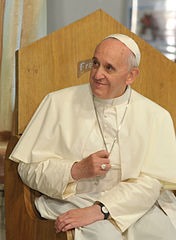
Papa_Francisco_na_JMJ_-_24072013 (This photograph was produced by Agência Brasil, a public Brazilian news agency. Used with attribution under a Creative Commons 3.0 License.)A while back, I noted that Cathy and I had been invited to take part in a catechist training course offered by our diocese.   We’re following the Echoes of Faith (Plus) curriculum and each week we prepare by watching a couple of videos and complete homework out of the workbook.  The real meat of the course, though, comes in the discussions we have when we meet with the other students — some from our parish and some from other parishes in the area.

The mix of people in the class is fascinating.  Some ar very young, others have been around the block a few times.  Some are cradle Catholics and others are converts.  There are representatives of various cultures and occupations and world views.  The first couple of meetings felt a bit like Junior High dances — everybody sat on the edges and didn’t seem to want to get too involved.  The last few weeks, though, the conversation has gotten much more energetic.

A couple of weeks back, the topic of discussion turned to our involvement in our various parishes and someone asked Cathy how much Evan’s process of discernment influenced our own involvement in the church.

I’ve thought a lot about that question since then.

First of all, if you’re being honest with yourself, you can’t have a child working through discernment without calling into question your own commitment to the Faith.  The same would be true if you had a good friend discerning a vocation or contemplating marriage or thinking about moving across the country to take up a new career or applying to grad school or whatever.  We live in relationship with others and, while comparing ourselves to others isn’t necessarily a healthy thing, it is useful to learn from their experiences.  So, yes, Evan’s discernment has given us pause to reflect.

There’s another influence, though.  Pope Francis is an inspiring leader.  His humility, patience and authentic Christian love are both comforting and challenging.  Most of all, his admission that he is a sinner as much as any of us, is a provocative statement that requires us to make a self-assessment of our own response to God’s call to personal holiness.

Pope Francis shows disarming honesty when he talks about how he was formed into the leader he has become.  In an article covering the incident with the child who approached him during Mass on October 26th, the author cites an incident from Francis’ past:

This kind of patience is something the pope has said he learned over time, according to his biographers Sergio Rubin and Francesca Ambrogetti. As the auxiliary bishop in Buenos Aires, Jorge Mario Bergoglio once had a train to catch to a retreat at a convent on the outskirts of Buenos Aires. After finishing his work in the diocese, he had given himself just enough time to walk to the cathedral to pray for a few minutes before getting to the train station. As he left, a young man who appeared to have mental health problems approached him and asked for a confession.

He says he felt annoyed, but tried to hide it. Bishop Bergoglio told him to find a father to confess to because he had to go – even though he knew a father wouldn’t be in right away (admitting to his biographers that because the man appeared to be medicated he probably wouldn’t notice). The auxiliary bishop walked away, but then after a few steps turned around with a “tremendous sense of shame.” He recalled later that he was “playing Tarzan,” trying to do too many things, that he had “an attitude of superiority.”

Today he uses it as a lesson to “travel through patience,” he told the two Argentine journalists. “Traveling with patience is allowing time to rule and shape our lives.”

Most of us would likely forget such a moment — perhaps intentionally. Few of us would take it as an opportunity to learn.  To his credit, Pope Francis is trying to spare us the pain of learning such lessons through unpleasant experience.  One of the constant themes in his homilies is the need for inclusion, for ensuring that everyone has a seat at the table of the Lord.

The Church is not the Church only for good people. Do we want to describe who belongs to the Church, to this feast? The sinners. All of us sinners are invited. At this point there is a community that has diverse gifts: one has the gift of prophecy, another of ministry, who teaching. . . We all have qualities and strengths. But each of us brings to the feast a common gift. Each of us is called to participate fully in the feast. Christian existence cannot be understood without this participation. ‘I go to the feast, but I don’t go beyond the antechamber, because I want to be only with the three or four people that I familiar with. . .’ You can’t do this in the Church! You either participate fully or you remain outside. You can’t pick and choose: the Church is for everyone, beginning with those I’ve already mentioned, the most marginalized. It is everyone’s Church!

And there it is.  Right in the middle of the paragraph.  Each of us is called to participate fully in the feast.

In case any of us missed it, the Pope goes on to say:

To enter into the Church is to become part of a community, the community of the Church. To enter into the Church is to participate in all the virtues, the qualities that the Lord has given us in our service of one for the other. To enter into the Church means to be responsible for those things that the Lord asks of us.

Like I said, challenging.  The natural human reaction when called to serve is, “Gee, I’d like to help, but I don’t have the time.”  If that’s your go-to move for getting out of service, Pope Francis has your number.

Open up your heart and listen to what God is saying to you. Allow your life to “written” by God”. Just as the Good Samaritan did when he stopped to help the stranger, we must all listen to God’s voice and sometimes put our own projects on hold to do his will.

Another common objection is, “I’m not really good at that sort of thing.  You don’t want me to mess it up.”  Um…hate to be the one to tell you, but Pope Francis anticipated that little dodge, too.

“The future of a people is right here…in the elderly and in the children,” he said. “A people who does not take care of the elderly and children has no future because it will have no memory and it will have no promise! The elderly and children are the future of a people!”

Pope Francis warned that it is all too easy to shoo a child away or make them calm down with a candy or a game – or to tune out the elderly and ignore their advice with the excuse that “they’re old, poor people.”

“The disciples wanted efficacy; they wanted the Church to go forward without problems and this can become a temptation for the Church: the Church of functionalism! The well-organized Church! Everything in its place, but without memory and without promise! This Church, in this way, cannot move ahead. It will be the Church of the fight for power; it will be the Church of jealousies between the baptized and many other things that occur when there is no memory and no promise.”

So…God doesn’t want our perfection, he wants our service.

And, by the way, am I the only one who thinks it’s kind of cool that the Pope talked about it being “too easy to shoo a child away” in a homily about a month before he was faced with that very situation during a Mass in St. Peter’s square?  Not that it was prophetic, but that he laid out exactly how he thought it should be handled and then handled it exactly as he had laid it out?  There, again, is the authenticity which makes him so inspiring as a leader and such an example of the lives we are to lead.

So, in our own way, following the lead of Pope Francis and acknowledging the call of our pastor, Cathy and I try to find ways to be open and accepting and to put ourselves in service of others.

— Dad

Catholics and Mormons Working Together

This past week, a small film premiered in Salt Lake City.  What’s remarkable about the film is that it was created as a collaboration between Paulist Productions and Covenant Communications.  The local news featured a short segment highlighting the event and introducing some of the people behind the project.

What’s cool about this is that it so fully expresses the Paulist commitment to ecumenism and the use of modern media to “reveal God’s presence in the contemporary human experience.”

The film is called “Christmas for a Dollar“.  It tells the tale of a poor, Depression-era family that is seeking to find joy in a (forcibly) non-material Christmas.  It’s the sort of story you expect to see at Christmas and I imagine it’ll play well when it runs on the UP Network on December 15, 2013.

Cathy and I were excited to hear about it because the current President of Paulist Productions — Fr. Eric Andrews — is the President Elect of the Order.  Even if it was a brief glimpse of him on the news, it was nice to see and hear him.

— Dad

Catechesis

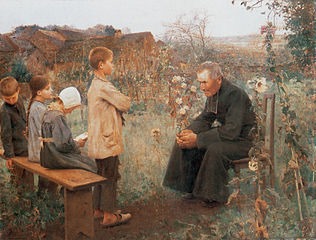
Catechism Lesson - Jules-Alexis MuenierThe Pope says that Cathy and I are special.

Well, not really.  What he said was that catechists are “pillars” for education in the faith.  This came in the context of his remarks to the participants in the International Conference on Catechesis.

This was a neat article for Cathy and I as we are both catechists.  Cathy is in her second year teaching a fifth grade formation class for our parish.  She does sword drills with them (an idea we borrowed from our Protestant friends), has crafts, lets the journal privately and works to help them understand the sacraments.  It’s been a great experience for her.

I’ve been asked to take on a special class for a group of young people who have never had any of the sacraments.  I’ll be meeting them soon to set a schedule and get started.  They range in age (I think) from about eight to about fourteen, so it should be an interesting challenge.  I’m looking forward to it.

Cathy and I have also been invited to take formal catechist training through the Salt Lake Diocese.

So, the article resonated with us.  As is his way, Pope Francis also dropped a challenge in along with the praise.

“This is a beautiful experience, and a bit paradoxical…Why? Because the person who puts Christ at the centre of his life is off-centre. The more you unite with Jesus and make Him the centre of your life, the more He makes you abandon yourself, decentralize yourself, and open yourself to others…In the heart of the catechist, there always lives this ‘systolic- diastolic’ movement: union with Jesus; encounter with the other…If at one of these two movements is no longer beating, then you do not live.”

This reminds me a bit of a story that Fr. Rolheiser shared in a recent column.

A priest friend of mine who teaches at a secular university was once asked by one of his students: “Father, have you met Jesus Christ?” His answer, no doubt, reflected some fatigue: “Yes,” he replied, “I have met Jesus Christ, and it messed-up my whole life! There are days when I wish I hadn’t met him!” What his answer, in its irreverence, correctly highlights is that meeting Jesus implies a lot more than a private, romantic, affective, and safe encounter with him and that meeting Jesus is more than having a private feeling in the soul that we are loved by and secure with God.

Like that tired priest, Pope Francis is reminding us that following Jesus is deeply countercultural and challenging and we cannot expect it to be easy.  As catechists, we have to accept that challenge and expect that we will have moments of doubt and difficulty.  At the same time, Pope Francis reminds us in his gentle, pastoral tone:

This is our beauty and our strength: If we go, if we go out to bring his Gospel with love, with true apostolic spirit , with frankness , He walks with us , before us always [preceding] us.

— Dad

Question: What is the Paulist Mission?

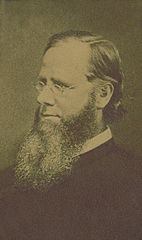
Hecker1This past week the novices spent some time with Fr. Colgan learning more about the Paulist mission.  Seemed a good excuse to post a few words about what make the Paulists unique.

In short, the Paulists are a missionary order who work primarily in North America.

Their three-fold mission is:

— Evangelization, by giving the Word of God a voice “using tools of the modern age”

— Reconciliation with Catholics who have left the church

— Ecumenical outreach to build bridges with other faiths

All of this relates back to Fr. Isaac Hecker, a Redemptorist priest who was called by the Holy Spirit as a missionary to the people of North America.  This puts the Paulist priests out into the community as much as possible, finding ways to build bridges and understanding.

A couple of notable examples of this ministry include The Busted Halo and Fr. James DiLuzio’s Luke Live.

Busted Halo is a far reaching ministry designed to reach out to the young who have questions of faith.  (Although those of us who are “older” can learn a lot there as well.)  Among the tools of Busted Halo you’ll find a comprehensive and frequently-updated website, a daily radio program on Sirius XM, and a variety of podcasts which include homilies and a more-or-less-weekly Q&A show with Fr. Dave Dwyer and Fr. Steven Bell.

Luke Live is a parish mission in which Fr. James brings his considerable vocal and theatrical talents into play to illuminate and instruct around the Gospel of Luke.  We’ve been privileged to have him bring the mission to our parish twice now and both visits were remarkable and uplifting.

And, of course, I’d be remiss if I didn’t mention two of their more well-known ministries; Paulist Press and Paulist Productions.  The first of these is a publishing house and the second a film production company.

One last note, this week Evan will be meeting with a Sulpician priest.  I had never heard of the Sulpicians and was surprised to discover that they are an order which is dedicated to the formation of priests.  Kind of neat that such and order exists.  I look forward to hearing more about them in the future.

— Dad

Question: What Does A Novice Do?

The first few weeks of Evan’s Novitiate have been somewhat busy, but things are beginning to settle down.

In addition to the initial retreat, his unexpected trip back to Utah, and his brief stay in New York City, he’s had the privilege of attending Jimmy Hsu’s Final Promise Mass and Mass of Ordination as a Transitional Deacon.  The participation of the entire Paulist Community in DC in these events underscores the deep commitment these men have to the order and their connectedness and it was — by all accounts — a joyous celebration.

With that past, the novices are beginning to settle into the routine that will serve them in their discernment during the coming months.  I’m going to share (as best I can) a snapshot of that life.  If I miss something, I’ll ask that the novices be generous and gentle in correcting my errors.

7:45 a.m. — Morning prayer from the Liturgy of the Hours.  (If you’re interested in sharing that experience, you can find out more at Universalis.com and DivineOffice.org)

Breakfast after prayer

9:30 a.m. — Conference with other novices.  This may be discussions of the texts the novices have been reading, current issues facing the Church or the order, events of the day, explorations of different forms of prayer and spirituality, and theology discussions.  From what I gather, this is sort of an updated version of the old academic notion of a colloquy or seminar.

Noon — Lunch, like all meals, taken in common with the community.

The afternoon is free time during which the novices engage in personal prayer and study as they seek to enter into a deeper relationship with God.  They have all been given a number of books — some of which are mandatory reading and some of which they selected themselves.  The mandatory reading includes 101 Questions and Answers on Paul and the biography of Isaac Hecker (founder of the order), among other books.  For the self-selected reading, Evan just finished a book on Native Meso-American Spirituality and Dan (another novice whom I have gotten to know through Facebook) is reading Where the Hell is God?

4:50 p.m.  — Prayer in front of the Blessed Sacrament in the Blessed Sacrament chapel.

5:15 p.m. — Mass in the adjacent St. Paul chapel.

5:45 p.m. — Pre-Dinner Social.

6:15 p.m. — Dinner, again taken with the community.

7:30 p.m. — Communal prayer, led by the novices.  Each day (in rotation) one of the novices selects the prayer.  Sometimes they pray the Liturgy of the Hours for the evening, sometimes other prayers.  Evan chose the Chaplet of St. Michael last week when it was his turn.

In addition to the daily routine, there are certain special days during the week.

On Wednesday, the schedule is altered to accommodate Mass at noon in the Holy Spirit Chapel and the evening prayer at 5:15 is led by the students.  (Once a candidate complete the novice year and make his first promise, he is considered a student.)

On Friday, Mass and prayer are at 7:30 a.m. and the novices have the rest of the day free.  Evan has been using his time to explore DC a bit and spent last Friday visiting the Air and Space Museum at the Smithsonian.

Saturday is the work period for the novices when they are assigned chores such as cleaning and mopping.

Evan also tells me that a Paulist Father (Tom Ryan, I believe) has generously allowed the novices to participate in his class “Body, Mind and Heart” which connects Christian prayer to the meditative practices of yoga.

They novices are also being trained for their apostolates.  These involve the novices working the local community and parishes to help out.  I don’t have a clear idea of what Evan will be assigned yet, but once I do I’ll be back with another post.

As always, questions are welcome.

— Dad

So, Where’ve You Been?

Our boots, showing the red dust from Zion's National ParkIt’s been a little quiet around here this past week.

In celebration of 28 years of marriage, Cathy and I took off on Southwestern vacation; revisiting two of our favorite parks and making our first visit to another.

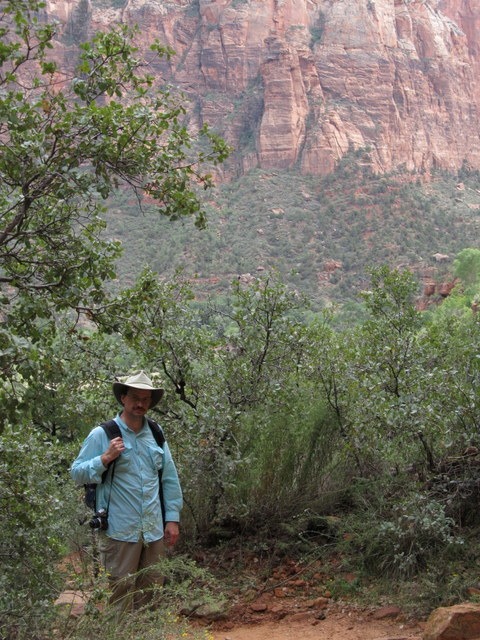
We hiked the familiar Rim Trail at Bryce Canyon, took in the Emerald Pools and explored Watchman in Zions, and visited the North Rim of the Grand Canyon.  We love the rugged, surreal scenery of the southwest and relished the opportunity to get out in it again.

Along  the way, God watched out for us — despite the fact that it rained every day, it never rained on us.  When our Jeep’s battery died, we were stopped at an actual gas station which actually did service.  So, we had a crisis-free vacation which gave us a chance to relax.

We’ll leave you with a few of our favorite pictures from the trip.

— Dad

The view from Rim Trail in Bryce

Cathy resting at the top of Watchman

A view from a bridge near the Zion Park Lodge

Kevin on the Emerald Pools Trail

Sunset at the North Rim

A Panoramic View of the North Rim Lodge

Question: What is a Vocation?

imageWhen I set out to write this particular post, I thought it would be easy.  You hear about “vocations” all the time.  Except, when I started researching, it seemed to be more subtle and complex than I expected.

I’m going to take my best shot and hope that if I stray, someone will be kind enough to correct me.

I’ll start with a quote from St. John Paul II.

What is a vocation? It is an interior call of grace, which falls into the soul like a seed, to mature within it. (Angelus message, December 14, 1980)

The Lumen Gentium, (one of the principle documents to come out of the Second Vatican Council) explains that there is a sort of universal vocation:

Thus it is evident to everyone, that all the faithful of Christ of whatever rank or status, are called to the fullness of the Christian life and to the perfection of charity; by this holiness as such a more human manner of living is promoted in this earthly society. In order that the faithful may reach this perfection, they must use their strength accordingly as they have received it, as a gift from Christ. They must follow in His footsteps and conform themselves to His image seeking the will of the Father in all things. They must devote themselves with all their being to the glory of God and the service of their neighbor. In this way, the holiness of the People of God will grow into an abundant harvest of good, as is admirably shown by the life of so many saints in Church history. (40)

My first thought was, “Oh.  Is that all?”  The “perfection of charity” and “holiness” seems like something of a tall order.  But it’s right there in black-and-white and (just in case you missed it) there’s a reference to this in paragraph 2013 of the Catechism.

Both those quotes contain within them the notion of a “call” from God; an invitation to live a life of holiness.  What’s interesting is that the Lumen Gentium acknowledges that there are many different ways that this life of holiness can be lived.  Section 41 speaks eloquently about bishops and priests, other consecrated clerics, lay ministers, married couples, widows, single people, “those who engage in labor”, the poor, the infirm, and the sick.  It concludes by sweeping them all up into a final paragraph:

Finally all Christ’s faithful, whatever be the conditions, duties and circumstances of their lives—and indeed through all these, will daily increase in holiness, if they receive all things with faith from the hand of their heavenly Father and if they cooperate with the divine will. In this temporal service, they will manifest to all men the love with which God loved the world. (41)

This is often referred to as the “universal vocation” and I’m taken with this notion that we are all encouraged to pursue holiness as our primary vocation, by acting out our calling.  It’s the word “calling” that most Catholics think of when they hear the word “vocation”.

Traditionally, Catholic thought turns to three different vocations as “primary” vocations or callings; holy orders, consecrated life, or marriage.  Holy orders refers to those who are ordained as deacons, priests and bishops.  Consecrated life refers to those who have taken vows to live “the evangelical councils of poverty, chastity and obedience“; the most common of which are those who live in religious communities such as monks or nuns.  Marriage is also a vocation, although one that is often held in too little regard in the common culture.

All of these primary vocations — these paths to holiness — are a response to God’s call and all of them involve a total gift of self.  For married couples, we are called to give ourselves wholly and unreservedly to our spouse.  For those taking vows, they are giving themselves totally to God.

I found a wonderful article on OSV.COM that explains it very eloquently:

In the case of each primary vocation, that gift of self is not a transitory or temporary thing. It’s not given one day and taken back the next. Rather, the central relationship of each is spousal. It’s exclusive, total and enduring. When the gift of self is made to God, enduring is a “for all eternity” kind of enduring. When the gift of self is made to another person, it’s just an “until death to us part” kind of enduring. Nevertheless, the idea is the same: You fully and freely give yourself to another, and through that giving you pursue your universal vocation, holiness.

One of the keys — if not the key — to working toward holiness is surrender.  It’s that wonderful paradox that comes up again and again in Christ’s teachings — the idea that to attain the most that God has for us, we have to give up our self.

Then he said to all, “If anyone wishes to come after me, he must deny himself and take up his cross daily* and follow me. For whoever wishes to save his life will lose it, but whoever loses his life for my sake will save it. (Luke 9:23-24)

Which doesn’t mean that we turn our backs on life.  Most of us have bills to pay and families to raise and (yes!) parishes to support and that means taking up some form of worldly labor.  You’ll sometimes see this referred to as a “secondary vocation”. Having a job (or even a career) facilitates our survival and it can also be part of our journey toward holiness  The Lumen Gentium recognizes this when it says:

Finally, those who engage in labor—and frequently it is of a heavy nature—should better themselves by their human labors. They should be of aid to their fellow citizens. They should raise all of society, and even creation itself, to a better mode of existence. Indeed, they should imitate by their lively charity, in their joyous hope and by their voluntary sharing of each others’ burdens, the very Christ who plied His hands with carpenter’s tools and Who in union with His Father, is continually working for the salvation of all men. In this, then, their daily work they should climb to the heights of holiness and apostolic activity. (41)

There is — as I discovered in writing this — a lot more territory to cover when it comes to vocations including the question of discerning God’s will for our lives.  I’ll end this now, though, with an encouraging quote from Thomas Merton.

Discovering vocation does not mean scrambling toward some prize just beyond my reach but accepting the treasure of true self I already possess. Vocation does not come from a voice out there calling me to be something I am not. It comes from a voice in here calling me to be the person I was born to be, to fulfill the original selfhood given me at birth by God.

Thomas Merton

–Dad

Sad News

Tuesday, while busy at work, I received an unexpected call from Evan.

“Hi Evan, what’s up?”

“My friend Doug died.  They just called to tell me.”

That morning on the news, I’d heard about an accident at Utah State, but the student’s name hadn’t resonated with me.

The media reported his real name — Eric — not the name he’d been given by his circle of friends — Doug.

“We called him that because we decided there were too many Erics in the world and he looked like the cartoon character,” Evan explained.

Doug was part of the group that Evan ran with at Utah State.  They were close friends who supported one another through school and life and developed a tight bond.  And now one of them was gone.

Evan felt the loss deeply and had already been given permission to return for the weekend for the funeral.

“You’re part of a community back there,” I said.  “Embrace them and let them support you.”

And the Paulist community did, indeed embrace Evan.  They modified the retreat to include a prayer service for Doug (from the Paulist prayer book).  They have supported Evan and helped him with ground transportation.

Once Evan had the time for the funeral, we set about arranging his air travel.  Given that it was the Wednesday before a holiday weekend and Evan had to leave from Albany and return to New York, I was not optimistic about finding available seats.  Praise God, Expedia coughed up a flight that matched Evan’s scheduling and geographical requirements.  We booked it and sent him the confirmation.  He’ll be arriving late tonight and leaving early Monday.

This experience, too, is part of Evan’s formation.  I’ve been reading Just Call Me Lopez (a sort of novel that serves as an introduction to the life of St. Ignatius and Ignatian Spirituality) and I was struck by this passage from the introduction:

Miracles so often happen in the midst of brokenness, inadequacy, and failure. In fact, those experiences would seem to be God’s preferred location for the work of transformation.

So I pray.

I pray for Eric and his family.  I pray for Evan and all of Eric’s friends and ask God to use this experience to let them feel the embrace of His love.

Eternal rest grant unto him, O Lord, and let perpetual light shine upon him. Requiescat in pace.

Edit: Forgot to mention.  Please join us in praying for Eric and his family and, if you want to express your condolences please click here to access the obituary and guest book.

–Dad

God, Moral Decisions, Compassion, and Video Games

MasseffectlogoOne of the appealing tenants of Ignatian Spirituality is that you should find God in all things. Somehow, I didn’t expect to encounter Him in a video game.

Last spring Ian started playing the Mass Effect trilogy of games. The games are a sprawling space opera involving villains, aliens, ancient races, cool futuristic technology, and a singular hero. As the player you take the role of Commander Shepard — the hero and a sort of space-going special forces soldier — in his (or her — you can choose whether Shepard is a man or a woman) quest to unravel various plots and defend the galaxy. Much of the gameplay is built around the notion of making choices and living with the consequences and that makes the game different for each player. Thinking (correctly) that it’s the sort of thing I’d enjoy, the boys conspired to buy me the trilogy as a birthday gift. On Sunday afternoons I play as a break from the workaday world.

A week or so ago I was playing a side mission that involved preventing a group of terrorists from dropping an asteroid on a highly populated planet. Doing my best John McClane, I slaughtered my way through dozens of enemies, shut off the fusion engines driving the asteroid toward the planet, and hunted down the terrorist leader. (The game has very cinematic pacing and each episode builds nicely to a climactic moment.)

The terrorist had captured three scientists and locked them in a cell with a remotely-detonated bomb. I had a simple choice. I could let the terrorist go and he’d release the hostages, or I could take him into custody knowing that he’d detonate the bomb before I could get to him.

The game waited patiently while I weighed the alternatives. On the one hand, he was a lying terrorist who had been trying to wipe out millions of peaceful humans. On the other hand, the scientist would surely die. But…terrorist!

I reasoned that he was certainly lying about releasing the hostages and I’d wind up with dead hostages and an escaped terrorist. If I captured him, I could put a stop to his unprovoked attacks on civilians and save countless lives. That seemed a fair trade.

The hostages died and I captured the bad guy. The game gave me ample opportunities to shoot him and I resisted because that wasn’t the moral thing to do. Instead, I arrested him and shipped him off for trail.

Since Ian has shown a keen interest in my progress, I sent him a text. He responded almost immediately, very surprised at my choice.

Bad guy blew up the hostages. At least he’s in custody now.

You chose to let the hostages die?

The needs of the many outweigh the needs of the few.

You chose wrong. He and the rock are stopped either way. He just slips custody.

Ahh…oh well. Now that’s a part of my character’s story.

It’s just funny because I asked you about that choice when I first played it.

Interesting.

And you said freeing the hostages was more important than capturing the terrorist. Did you think the asteroid would hit if you didn’t capture him?

No. I assumed he was lying and would kill the hostages anyway. Poor thinking on my part.

Funny how being in the moment changes things.

I feel there is a lesson in this.

I think so…must ruminate.

You’re going to be a cow?

Yes. Yes I am.

Ian’s wacky sense of wordplay aside, I did ruminate and I came to some interesting conclusions.

First of all, the game had given me a way to practice my faith — albeit in a simulation.

Second of all, I didn’t do very well.

When Ian called me last spring and asked my thoughts on whether or not to free the hostages, it all seemed very clear. In fact, the Catechism addresses this type of question in chapter 1, article 4, The Morality of Human Acts. The article lays out a standard for judging morality which includes the object, the intention and the circumstances. The meat of it shows up in paragraph 1753:

1753 A good intention (for example, that of helping one’s neighbor) does not make behavior that is intrinsically disordered, such as lying and calumny, good or just. The end does not justify the means. Thus the condemnation of an innocent person cannot be justified as a legitimate means of saving the nation. On the other hand, an added bad intention (such as vainglory) makes an act evil that, in and of itself, can be good (such as almsgiving).

That was core of the issue right there. The good intention — stopping the terrorist — did not make it acceptable to intentionally sacrifice the hostages’ lives. By making that choice, I objectified the hostages and stripped them of humanity in favor of achieving my goal. In the words of the catechism, my behavior was “intrinsically disordered.” (That’s fancy talk for “just plain wrong.”)

What had been so easy to answer in the abstract during a telephone conversation with Ian, suddenly seemed very difficult in the heat of the moment.

I’m unlikely to ever face such a choice in real life, but Ian was right to say there was a lesson in the experience.

The first lesson is the importance of formation and a deep understanding of the faith. I’m pretty sure I had a solid basic grasp of the faith and I was certainly able to answer the question for Ian when he called. But in the heat of the moment I forgot what I knew and my answer came from a gut hunch instead of informed reasoning. Had my formation (formal and informal) included more contemplation of how the catechism played out in the real world — or in the simulated world of a video game — I might have had the presence of mind to make the right choice.

Which was the essence of the second lesson. I made the wrong decision even though I knew better. Sometimes real life is like that. Even when we should know better, we do the wrong thing. The Apostle Paul referenced this very issue in Romans 7:19.

For I do not do the good I want, but I do the evil I do not want.

As human beings, we are all subject to concupiscence. That is, we are inclined toward sin despite our better desires. And, if it was true for me in a relatively trivial decision in a video game, how much more true is it for people facing difficult moral decisions in real life? It is easy to sit in the pews and condemn people who face difficult choices such as abortion. (I’m using abortion as an example, but given the wide range of human behaviors and opportunities to miss the mark, there are plenty of other situations I could have chosen.)

It’s easy to convince yourself that you would make the correct moral choice; after all you have a well-formed conscience. Perhaps that is true. But you’ll never really know until find yourself living that moment.

That truth calls us to be caring in our response to people who make those choices. As I noted, condemnation is easy, compassion is hard. The decisions which seem so obvious and simple on the outside can be very difficult for those who live them.

Not that sin should be excused — far from it — we have the Sacrament of Reconciliation for the very purpose of addressing sin. Rather, in addressing the sinner we need to have appropriate concern for the humanity and dignity of that person. Failure to do that is a different sort of moral lapse.

Which brings me back to the game. I had saved an earlier play session and had the option to re-load from that point, reconsider my decision and act in the way I should have acted all along. The terrorist got away and set a timer on the bomb (my instincts weren’t entirely wrong) but I saved the hostages. Unlike real life, the game gave me a chance to undo my mistake; to make it as if it had never happened. And — maybe — the opportunity to repent of an error and return to do better the next time is the model that should encourage us all to trust in God’s Grace.

–Dad