
Advantages of Going to Seminary or What is the Next Right Step?

If you are reading this, most likely, you and your son have had some contact with the vocations director for your diocese or religious order.  There is talk of applying to seminary, but it seems like such a dramatic step at this point in his life.

Mt St Mary's Sem.

This post will describe the significant advantages for any young man to go to seminary to continue to discern his vocation.


2 sems talking to priest

Do you think he will be wasting his time if he discerns that he is not called to the priesthood?  I can assure you, that no time spent in the seminary is ever wasted.  It has been said that there should be a lot more former seminarians.


The advantages of attending seminary for any length of time will last a lifetime for your son.  If he determines he is not called to priesthood,the time spent in seminary will make him a better man, husband and father.  If your son has been thinking about the priesthood and is not sure, he will never know for sure outside of a seminary environment designed to support him on this path of discernment.  The goal here is to help your son determine if he is being called to the priesthood.  Your son can only discern young-man-praying-church-handsome-41152818to a point outside of a seminary environment.  Inside, there are significant opportunities and advantages to help him come to an understanding of whether or not he is called to priesthood. The advantages of seminary described here can help you understand that going to seminary may be the next right step Those who do not take this next step may spend the rest of their life wondering if they were called to be a priest.  No one wants their son to live with a lifetime of questions and regret.

So what are the advantages of going to seminary?

Spiritual Direction

The opportunity to have a Spiritual Director walk with your son through the discernment experience may be the biggest advantage in going to seminary.  A Spiritual Director is a trusted mentor who cares about your son and helps him grow over an extended period of time in faith, virtue and maturity.  This is an enormous advantage that seminarians are priest talking to manprivileged to experience.  You can think of it as coaching in order to determine what God wants you to do with your life and become a better person.  The environment at seminary is conducive to this discernment by having the time and resources available in a structured, positive environment.  Every year, seminarians come to the decision, with the assistance of their spiritual director that they are not called to be a priest and decide to leave the seminary.  Some refer to this as “discerning out.”  When they leave may have more to do with finishing the semester to finish academic credit than anything else.

The vocation director is not a recruiter trying to talk your son into this.   A spiritual director will not coerce or brainwash your son into “signing up”.  No one, not the vocation director, your bishop or the seminary wants your son to continue in seminary if he is truly not called to it.  This is not like an Army recruiter who is trying to get as many recruits as possible to meet a quota.  Besides growing up in your family, this may be the only time in life where your son will be surrounded by people who only want what is best for him and determine what God wants him to do with his life.

The Environment

Several aspects of the seminary environment itself provide advantages to a young man discerning.

“Everybody gets it”

The summer before starting seminary, my son would frequently say that he couldn’t wait to get there so he could stop explaining himself to people all the time. He said “Everybody there gets it.  Everyone is there for the same reason.”  In seminary, no one thinks you’re crazy or strange.  No one gives you that questioning look when you tell them what your major is.

men taking selfie


It is true that having a group of young men live together with a common purpose is a positive environment.  They study and learn together, pray and attend mass together, play and eat together or just hang out like any other guys their age. Sounds sort of like a college fraternity without the  girls, alcohol, drugs and other near occasions of sin.

Accountability

Seminary has a structured environment designed to grow your son in self-discipline, prayer, virtue, and knowledge of the faith.  Which one of these do you not want for your son?

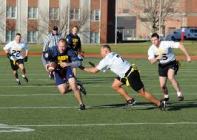
The environment at seminary is not as austere as you may think.  Seminarians play sports, watch TV, go to movies, hang out with friends playing footballand drink alcohol in moderation if over 21 years old.  They aren’t roaming  the halls singing Gregorian chant.  They do have mass every day and pray the liturgy of the seminarians in churchhours together and have curfews.  Faculty take note if someone is not in class and they look into it.  You can’t hide in seminary.   Even as his mother, I am not allowed in my son’s room if he needs something from home.
Does the seminary environment have boundaries, requirements & expectations?

Yes.

Is this a bad thing?

No

Compare seminary environment with a typical college environment today

As a parent, you may remember the way that college was back in the day.   There were curfews, at least for freshman, and dorms were single sex.  Boys were not allowed on the girls’ floor or in the girls’ dorm at all.  Students signed in and out of the dorm on weekends and evenings.

Today, it is a complete free for all.  No curfews and all dorms are co-ed, so there is no need for rules about “visitation”.  In the name of frat partyconfidentiality, parents have absolutely no right to knowledge about the

student’s grades, academic progress, attendance, health care issues or even situations involving campus or local police.  The typical college environment today requires a significant level of self-discipline to manage all the competing activities and opportunities available.  It is common for students to “crash and burn” when they cannot manage so much freedom with no accountability.

Sending my older 2 children off to a state university, I had many worries and sleepless nights.  When you send a son to seminary you may have different concerns, but you will not have to worry about the following:

I am not worried:

       That he will get mixed up with the wrong kind of girl.

       That he will end up at a drunken Frat party at 2am.

       That he will never go to mass on Sunday.

       That he will never go to confession.

       That he will cut one too many classes and get behind.

       That he will have too many distractions on campus and most of them a   bad  influence.

Even one year in college seminary can provide your son with a lifetime of perspective on his vocation, an increase in his faith and prayer life as well as personal maturity and character.  Every year increases these benefits exponentially.  If your son is thinking about going to the seminary, these advantages can help you have more peace about taking the next right step with your son.

Please know that the authors of this blog pray daily for the parents of discerning sons and daughter to find understanding and peace.

Come and See!

Pam’s post about visiting the seminary with her son reminded me that I’ve never mentioned the “Come and See” weekends.

A “Come and See” is a retreat which offers discerners the opportunity to taste religious life.  The Dominican website OpCentral.org describes it this way:

Information is always helpful, digitally, in print, or otherwise, but there is no substitute for a real human encounter. That’s why a Come and See Weekend is a must for anyone seriously discerning their vocation. Dominican Come and Sees are a sixty-four hour immersion experience into the very rhythm of religious life. It’s that “gut” experience which offers the visceral clarity that is the goal of discernment and the only true test of whether or not your home is here.

Fr. Larry Rice, the Vocations Director for the Paulists, confirms this:

When a man is contemplating a vocation to the priesthood or religious life, most of the discernment is internal work: prayer, reading, prayer, spiritual direction, and prayer. This is a good and necessary process. But it can also feel a bit isolating, as if no one else is wrestling with these issues and questions. And it can also take on a hypothetical and imaginative quality. What will life in the novitiate be like? Is the seminary a strange place where I’ll feel uncomfortable? Will I be out of place, surrounded by people who are so much holier than I am? Can anything good come from Nazareth?

Come and see. That’s the invitation that the Paulist Fathers make three times each year. Come for a visit. See and experience our common life. Pray with us. Dine with us. Come to class. Come to the chapel. Have a soda or a beer, and ask your questions.

Evan participated in a couple of these weekends early in his discernment.  He came back enthused about the community and taken with the beauty of the liturgy of the hours.  Each visit increased his conviction that he needed to pursue the call.

Now that he’s a member of the community, Evan gets to experience these weekends from the other side.  Meeting potential seminarians is a great opportunity for him to share part of his journey and to remember his early days of discernment.

“Come and See” weekends are pretty common.  A quick Google search turns up a long list of possibilities.  Some of them are associated with particular communities like the Dominicans, Paulist and Mercedarian Sisters — yes, there are “Come and See” retreats for women discerning religious life as well.  Some of them are associated with diocesan seminaries.   All of them follow the same basic pattern of welcome, prayer and participation.

The point, I guess, is that discernment is something to be lived.  That means actively exploring religious life.  Don’t just sit in a pew and say “I think God is calling me”.  Get up and answer the call.    Find a “Come and See” weekend, talk to a vocations director, immerse yourself in experiences that will let you encounter God.  You might be surprised at what you learn!

— Dad (Evan)

A Summer Visit to the Seminary

This time of year, you and your son may be thinking about making a visit to a seminary.  He may be accepted for the fall term or still thinking about it.  After so much talk and talk about what seminary would be like, my son and I went for a visit in late June prior to his entrance in the fall.   I did not want to see the place for the first time when he was moving in.   I think I needed to take some of the mystery away so I could envision his life there.

We went in the summer to get a first look and had a very nice guy entering 4th college show us around and answer questions about seminary life.   It was good to visit during the summer because we were able to tour all areas of the seminary.  If school had been in session, our tour would have been more limited as some areas were off limits for the privacy of the seminarians.

Our tour guide introduced us to everyone from the cafeteria ladies to the dean.  Everyone was happy to meet my son and welcome new men 2welcome him.  Our guide would introduce him as one of the “new men”.   I was not accustom to hearing my 18 year old son called a “man”.  But I have come to see that if you call them men and expect them to act like men, they will respond.  I can guarantee you that at the tour for the state university, male students were never referred to as new men, but incoming freshman.  The cultural expectations of a freshman in a traditional college are a far cry from the expectations of the new men in the seminary.

If you want to visit the seminary, call ahead and make arrangements.  It was great to have another seminarian give us a tour and answer our many questions.  He was candid and provided lots of little details and suggestions from bringing a fan and an extra lamp to how the refrigerator in the common room was shared.  He told us about the opportunities for intramural basketball and other sports when we stopped at the gym.  Since it was just the 3 of us, we could stop and ask questions when we had them.  I am sure my son was rolling his eyes at my practical and possibly “politically incorrect” questions, but the answers put my mind at ease.

If the seminary has an open house or orientation day, you may have the opportunity to meet faculty, administrators and other seminarians.   During an orientation day in August, we were welcomed by seminarians and faculty at an informal coffee and donuts session.   Then, we went on another tour with other parents and new seminarians.   I was impressed with the other seminarians there to assist in welcoming the new guys.  They were friendly, outgoing, joking around, joyful, sincere, helpful, kind and empathetic.  I know it sounds like boy scouts, but they really seemed like great guys.  Some were in “clerics” and others in t-shirts and shorts looking like they were going to play basketball after they finished giving the tour.  This may not have been what the seminary wanted our tour guide to wear, but it made him seem more real, approachable and a regular guy.  He was easy going, encouraged questions and answered candidly.  There were no taboo topics or questions.  Some parents on our tour asked him questions on the side.

By the end of both of these visits to the seminary, I felt much more comfortable seeing and experiencing the seminary environment.  Sure there were a few tears when we said good bye, but I did that when we took the older siblings to college.   Taking them to a state university, I worried they would not get to mass on Sundays.  In this case, I knew this son would be at mass 7 days per week.  One less thing  to worry about.

Dinner with a Side of Answers

meat-569073_320Want to know what seminary is like?  Ask someone who’s been there.  Ask a priest.

Cathy and I stumbled into this accidentally a few months after Evan told us he was in discernment with the Paulists.  Our pastor, Fr. Clarence, had invited Fr. James DiLuzio, CSP to come to the parish to present the Luke Live mission.  A couple of weeks before the mission date, the parish office put out a call for people willing to feed Fr. DiLuzio a meal.  If circumstances had been different, we might have glanced past the notice and hoped that somebody stepped up to help out.

As it was (and since Fr. DiLuzio is a Paulist) we jumped on the opportunity and scheduled a lunch and a dinner with him.  The lunch was Saturday at noon, so Evan came down to join us.  At lunch we talked about the seminary, the discernment process, and life as a priest.  We continued the conversation over dinner a couple of nights later.  It set our minds at ease on many of the questions we’d been asking.

Since then, we’ve taken advantage of every opportunity to dine with visiting priests.  We’ve talked Star Trek with a geek priest, interfaith politics with a priest who worked at the Vatican for ten years, genealogy with a priest who has traced his family back to the Mayflower, life in the Holy Land with a Franciscan, formation with a man who attended minor seminary (high school seminary), travel with a retired priest from California and seminary with several.  We’re learned about their backgrounds, how they were called to the priesthood and what their formation was like.

To a man, they’ve all been good company and we’ve enjoyed our time with them.  Getting to know them has given us insight into Evan’s journey and let us see the human side of the priesthood.  Those informal conversations have been a real blessing for us and I imagine they’d be a blessing for you as well.

So…next time you have a visiting priest in your parish, offer to take them to dinner.  Oh, and don’t forget your pastor as well.  You’ll be surprised at what you can learn from him.

— Dad (Evan)

P.S.

We took the Franciscan — in full habit — to a lovely restaurant with outdoor seating.  The habit got all of the looks.  In Utah (where the LDS church makes up the majority of the population) you just don’t see men in habits that often.

— D

Discernment: How long is this going to take?

I don’t know how many times I have heard the word “discern ” or “discernment” in the last 2 years. Even so, this word still has a vaguely mysterious quality.  It seems that it requires a certain amount of openness and getting  comfortable with some level of woman-watching-hourglassuncertainty.  As a parent, I don’t like uncertainty.  I get it, but I don’t like it.  You may be thinking, “When will he know for sure? How long is this going to take?”

How long…. is a relative question.  Discerning a vocation is not like deciding between going to one college vs another. That kind of decision weighs pros and cons and evaluates data like student/faculty ratios and graduation rates. Discernment is completely different. It is not a once and done decision.  I was surprised to learn that the individual discerns one year at a time in collaboration with his Spiritual Director and Vocation Director.  Discernment is taken one step at a time with input from experienced mentors who want your son to make the decision which is right for him.

Michael Bollinger is a college seminarian at St Charles Borromeo Seminary in Philadelphia.  Below is a portion of a blog post on the seminary website on the reality of a “timetable” for discernment..

Easily the most misunderstood thing about seminarians is why we are at the seminary. More times than not, when a Catholic comes up and talks to me, knowing that I’m a seminarian, he or she speaks as if I’m undoubtedly going to be a priest.

However, the reality is that guys go into the seminary precisely because they don’t know if God wants them to be a priest or not. They’re at the seminary to figure that out. I first learned that the hard way when I first entered seminary this past fall.

It was a Friday night, and I went out to dinner with four or five older guys (seniors in the college seminary) and as the conversation got going, I asked each of them if they “knew” that God was calling them to the priesthood (expecting a resounding “yes”). To my surprise and embarrassment, as they went around the table answering the question, the answers were a repeated “no”.

The fact is, I had the perception of most people—I figured guys that had been in the seminary for two, three, or four years had a fairly firm understanding of God calling them to be priests. But that’s just not the case.

Click here to continue reading the full article St Charles Seminary blog: Wait, We’re Discerning?

wasting timeIt is understandable for a parent to want some kind of assurance or timetable on their son’s discernment path.   Whatever your age, it seems the older you get, the faster time goes.  We may see time passing quickly.  Is the time in seminary going to be wasted?

Consider this: your son will probably live well into his 90’s or longer without any serious illness or injury.  Taking a few years in seminary to determine if he has a religious vocation is not a long time considering it will provide an opportunity to develop virtue, self-discipline, a deeper knowledge of the faith and a strong prayer life.  Which one of these things do you not want for your son?  These are all benefits for men who have spent time in seminary and discerned out to discover their true vocation.

Please know that the contributing authors of this blog pray for parents of discerning sons and daughters to find understanding and peace.

How to Discern: For Young and Old Alike

Discernment can seem almost like a foreign word at first.  It is not a term you hear everyday.   As parents, you probably have heard this word thrown around quite a bit.  What exactly is discernment?   How is my son going to know if he has a vocation to the priesthood?

How to Discern  is a  7:30 video by Fr. Mike Schmitz, Director of Youth and Young Adult Ministry in Duluth Minnesota.   Fr.Mike provides some basic truths to keep in mind when discerning what is God’s will for you.   Then he describes 3 simple practices to follow  in order to “never miss God’s call for your life.”

These are simply good spiritual practices for anyone.  So although this video is focused on discerning a vocation (married, single or religious), I can see these practices being a useful tool for anyone who is trying to know what God’s will is in any given situation of life.  So if you are a younger person discerning God’s will for your life or a more “mature” person trying to decide how to spend your retirement years, these practices can be used to bring God into any decision throughout your life.

If you would like to hear more from Fr Mike Schmitz, look for him on You tube as well as the University of Minnesota at Duluth Newman Center website where he posts homilies at www.bulldogcatholic.org

5 Myths and Facts about Discernment or Isn’t there a book about this somewhere?


When my son first told me he thought God was calling him to be a priest, I had no real family meetingunderstanding of the discernment process.   Being a cradle catholic, I was surprised to realize that all of my questions and concerns were based on misunderstandings, false information or myths.  Within 2 weeks of my son’s announcement, I found a book that answered all my questions and some I had not thought of yet:  “To Save a Thousand Souls” by Fr. Brett Brannen. Although the book is written for the young man discerning, I found it gave me accurate information, interesting anecdotes and a better understanding of the discernment process. Here is how Amazon.com describes it:

In what has been hailed as “a groundbreaking work” Fr. Brett Brannen compiles all the wisdom of a master VSave a thousand soulsocation Director into one volume. Using powerful and entertaining stories, the book explains in down-to-earth language how to discern a vocation to diocesan priesthood.

The book has received universal praise from bishops and vocation directors: “Fr. Brannen’s book is tremendous—inspirational, imminently practical, and amazingly comprehensive. It is a clearly written ‘how to’ manual filled with solid advice for men discerning the priesthood. A marvelous work of immense value.” – Fr. Len Plazewski, President, National Conference of Diocesan Vocation Directors

Fr. Brannen has since published another very good book to specifically address the concerns and questions of parents, “A Priest in the Family”.  Here is a description:

“A Priest in the Family is a comprehensive resource for the parents …. thoughtfully addressingPriest in Family common questions and concerns about seminary, celibacy, and the life of a priest. Whether you’re uneasy or elated about your son’s interest in the priesthood, this book is for you.”

and

Like his previous book, To Save a Thousand Souls, Fr. Brannen’s new book for parents is filled with humor, anecdotes, and dramatic stories from his own life as a priest. In twelve short, easy-to-read chapters, he explains priesthood, seminary, celibacy, and how a man discerns his vocation—all while keeping in mind parents’ legitimate concerns.

Readers have praised A Priest in the Family as an entertaining read that manages to allay parents’ fears and show them how to support their son, while offering a few laughs and a dose of inspiration along the way.

If you are struggling to understand what is going on with your son or have some questions that are just too embarrassing to ask,  I urge you to open up a new window in your browser and go to  vianneyvocations.com  and order one or both of these books today.  Until you can read these books for yourself, here is a brief summary of what I learned:

 5 Things I Learned about the Discernment Process:

Myth:
Once you enter seminary, you are pretty sure that you will become a priest.
Fact:
Discernment is a long, gradual process that is ongoing. Many people are involved with helping an individual during the discernment process: spiritual director, vocation director, seminary faculty and others.

Myth:
Once you enter seminary, you are expected to go all the way through to ordination. Leaving seminary is a failure, shameful and humiliating. Everyone will be disappointed if you leave.
Fact:
“Discerning out” of seminary is actually a good thing. A few rough weeks in seminary is not a reason to discern out. The decision to “discern out” is made in conjunction with the Spiritual Director, Vocation Director and others involved in his discernment process. It means the man has determined that priesthood is not his true vocation. For the rest of his life, he will not need to wonder if he should have been a priest. This is not considered a failure or an embarrassment. Others at the seminary are actually happy for the man to be able to pursue his true vocation. Guys do not sneak out in the middle of the night. The seminary community, faculty and peers wish him well. The time spent in seminary is not wasted. The growth and maturity in his faith can only be a benefit to a young man as a future husband or single man.

Myth:
You are too young to go into college seminary right out of high school.
Fact:
The Father calls men at many different ages and at different times in their life. If your son feels called, he should take the time to discern if this is his vocation.  There are significant advantages in going to college seminary right out of high school that are outlined in the book for parents by Fr Brannen.  A post on this website also addresses this: Advantages of Going to Seminary

Myth:
You need to go to college, date more and live in the “real world” before you go to seminary.
Fact:
If your son is feeling called now, it is best to discern now rather than try to put it on the back burner or push it away. Going to seminary is not leaving the “real world.”   Seminarians do have a more structured, healthy environment than a typical college. This environment allows more opportunity to focus on courses, strengthen their prayer life, increase knowledge of the faith and self-discipline. These are all good things for any young man to learn. Seminarians still hang out with friends, go to movies and parties, work summer jobs, drink beer and play sports. Finding the” right girl” is not a “remedy” for discerning a priestly vocation.

Myth:
You should go to college and get a degree first. Then you can go to seminary if you still want to.   If this priest thing doesn’t work out, you’ll have something to fall back on.

Fact:
Priesthood is a vocation that God has designed for the individual  where he will find the most happiness in his life. It is not something that “works out.”  He will find he either has a priestly vocation or he doesn’t. You can’t put discernment on hold for 4 years just so he can have something to “fall back on”.

Forest road. Landscape for backgroundAlthough this post is all about getting factual information, please do not let gathering data be your only method of understanding. As a parent, you will never be able to understand this with only your head.  You must take your concerns and questions of the heart to prayer consistently until you find some peace which the Father will give you.  Please know that the contributing authors of this blog pray for all parents of discerning sons and daughters to find understanding and peace.

How long does it take to become a priest? Part 2 or How does the average high school graduate adapt to academic life in the seminary?

When we first learned that the undergraduate degree at college seminary is Philosophy, I was surprised. Educationally, I understand the need for an in depth knowledge of philosophy as a framework to build the graduate Theology coursework.Guy with books But my first reaction was “Philosophy? Really?” It sounded like a very tough course of study. I knew this kind of degree would require an enormous amount of reading and writing as well as being able to express your thoughts cogently in discussions by having an in depth grasp of the subject. Would he be able to handle it?

I must digress here to tell you a little about my son’s academic history.

My son has never been what I would call a “scholar”. Since grade school, he was the one who would “forget” that he had homework, or “forget” it at home, or “forget” to turn it in. This was a constant battle all through grade school and even high school. We like to joke that as soon as he learned there was no math in being a priest, then he was all for it.

My husband and I are voracious readers. Our children have grown up with books and magazines in every room of the house. Truly, from infancy we were reading to them. We had vinyl books for the bathtub and the touch and feel books like “Pat the Bunny.” As they grew up, we would snuggle up on the couch after bath time in pajamas to read from the Little House book series. Our other 2 children developed a habit of reading for pleasure and had no difficulty keeping up with reading in college. Somehow, this son never learned to read for pleasure.

Many times as he was growing up, I would take him to the bookstore to find something, anything, that would spark an interest in reading. I tried every book series from “The Magic Tree House” books to Harry Potter. Nothing worked.

So imagine my surprise to hear that the next 8 years of his life would be filled with reading. Not novels or interesting case studies, but philosophy and theology books. Many of these seminal works have been written hundreds if not thousands of years ago. At this point, my son was just starting his senior year in high school and I did not know how his new focus on attending seminary would impact his school work.

In his final year of high school, he did his homework without reminder, worked on long term projects and brought home mostly A’s and a few B’s including an A in Latin. He would complain if a course was boring because it was so easy. This was a complete reversal in behavior and attitude. It seems that once my son knew what he wanted to do, he developed more focus and a reason to strive to do well in his classes.

Once he started at the seminary, he would come home on his monthly weekend off campus ready to quiz us on concepts in Theology and Philosophy. This was a new experience to see our son so interested in a subject that he would talk about it outside of school.

As any parent knows, motivation and desire can only get a student so far. Clearly, the environment in college seminary is a contributing factor to academic success. In contrast to the state university where my son  would have attended, seminary actually had a “curfew” 7 days per week, no visitors in the dorms, and a strict zero tolerance policy on drugs or alcohol.

Although there are plenty of diversions and recreation available on campus, seminarians are not overwhelmed with 100’s of options to divide their time on any given day. School days are structured and predictable to allow for sleep, mass, prayer, class, study hours, recreation and just hanging out. Weekends even have structure with free time from after morning prayer and mass in the morning until curfew. On weekends, students can leave campus to shop, go to a movie, visit friends or go out to eat. The curfew is reasonable and is what I probably would impose if my son was living at home and going to a local college.

The freshman class had 12 students and the entire college seminary had less than 50 students. This means that if you cut class, oversleep and miss morning prayer or mass, it will be noticed and addressed. You can’t fly under the radar in seminary. Class sizes are small so the faculty actually get to know the students. Most freshmen are taking the same classes so it is common to study together and help someone who is struggling. Obviously, this is worlds away from the state university with 27,000 students on campus.

Based on my experience, I can say that an average high school student can adapt to the academic rigors of college seminary with the right motivation and attitude with environmental structure and support.

How long does it take to become a priest? Part 1

Mundelein Seminary in Chicago has posted a video on the academic steps to become a priest: from College Seminary or Pre-Theology to Major Seminary to Transitional Diaconate to Ordination.   This is a very clear explanation of the process.

Being an Educator for 25 years, I was very interested in reviewing the coursework my son would take as part of the intellectual formation in seminary.

After  reviewing the curriculum, I was struck by how well educated our priests are through this process. I always knew priests had a graduate (Masters) degree, but the course work seems longer and more in depth than most Master’s degrees.   Most full time graduate programs such as an MBA, MHA, MSW, MSN are only 2 years beyond a bachelor’s degree.

Typically, a priest graduates with a Masters in Divinity degree.  Some students also take course work to earn an additional graduate degree in Theology.  It is not uncommon for a priest to be sent for further education to earn a degree in Canon Law or a doctorate by his bishop.

When learning about the academic road to priesthood, some people have commented that it seems like a long time to go to school “just to be a priest.”  Others have expressed dismay that it would take so long with an air of “is it really worth it?”  In my experience, these people identify as Protestant or Evangelical where bible college, mission trips and service projects may be the extent of the formation process.

Other well respected career options can take as long or longer than priestly formation. The road to become a doctor is 4 years of college, 4 years of medical school and then at least 2 years or more to complete a clinical Residency. A Surgical Residency is at least 6 years!  That’s a total of at least 14 years without further specialization.  Lawyers spend 4 years in college and 3 years in law school. No one seems to mind how long it takes to be a doctor or a lawyer. Scientists, college professors and others spend many more years doing research to earn a PhD.  The length of academic preparation for these careers is respected for its perseverance and advanced knowledge. These careers are attained through mainly intellectual “formation” and skill application.

For seminarians, intellectual formation is only one of the four pillars of formation.  The road to priesthood also requires the development of  personal maturity, knowledge and skills in the spiritual, pastoral and human pillars of formation.  Progress in these 3 pillars tends to develop slowly as behavior, judgement and skills become integrated into one’s personality. The 6 – 8 years required for priestly formation is a growth process that is far more than learning an advanced level of content and skill application. It is a highly structured program of comprehensive development of the entire person. The bar is set high for our future priests  which is no less than what the people of God deserve.

I will post Part 2 soon on how an average high school student adapted to the rigors of academic life in the seminary.